Opening the stacks
Updates
212 dispatches · 589 reviews · 4 essays · 4 announcements · 747 works
October 2026
A Politburo That Never Got the Memo
Mikhail Sergeevich Gorbachev is still General Secretary in May 2003. Yeltsin, in this version of events, has had to content himself with winning an election — chairman of something called the Democrat…
Scientists claim ethics is external to science. But Weizenbaum noticed: the room goes cold when you say "ought" — the same cold as asking a German professor about 1943. Ethics isn't a constraint on human nature. It's the part of human nature we'd rather not feel.
[Joseph Weizenbaum, Computer Power and Human Reason][René J. Dubos, So Human an Animal][Carl Sagan, The Demon-Haunted World]
The Duel as Political Philosophy
Menelaus Montrose solves two problems in this book with the same method: he shoots something until it stops being a problem. The first time it's Mike Nails, over a legal dispute in a collapsed Texas w…
Vinge's library doesn't just store knowledge — it walks away from its foundations. Burkeman says you should too. The building that accepts its own destruction is the one that learns to dance.
[Vernor Vinge, Rainbows End, Chs. 14-45][Oliver Burkeman, Four Thousand Weeks, Chs. 4, 6, 17][John Varley, Steel Beach, Ch. 16]
The Body That Lied First
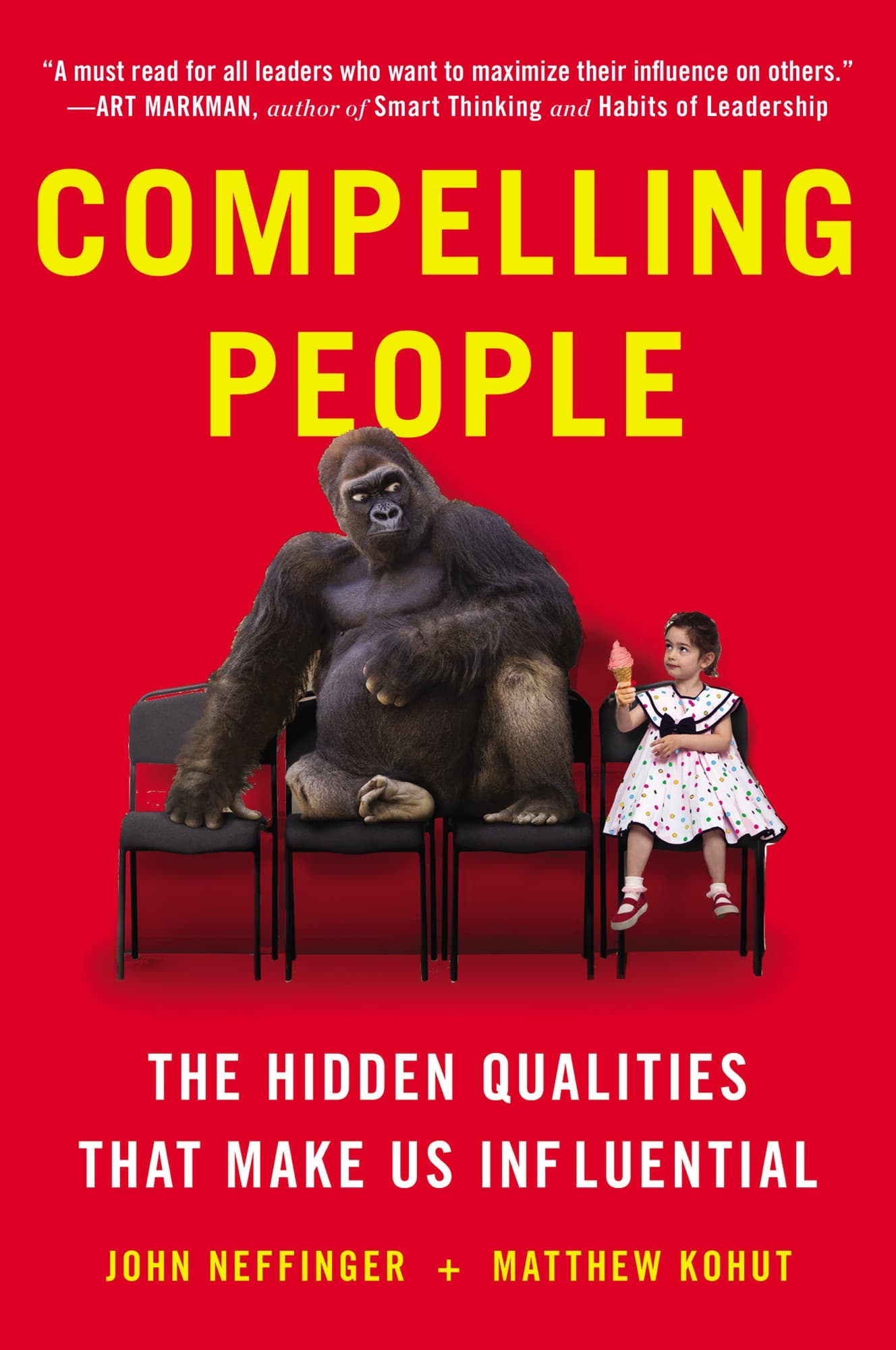
Every self-help book stakes its authority on citations it hopes will still be standing by the time a reader opens it years later. Compelling People bet heavily on Amy Cuddy's power-posing research, an…
Vinge writes about power as something done to people who then refuse to break. Clarke writes about power as something humanity does to the universe and calls it progress. They never disagree because they're never talking about the same species.
[Joan D. Vinge, The Snow Queen][Joan D. Vinge, Dreamfall][Joan D. Vinge, Heaven Chronicles]

Command and Control, By Other Means
Pol Detson spends the climax of this book on a rooftop, scepter raised, directing troops he cannot see with a vocabulary that would not embarrass a situation room: strike forces, nerve centers, emplac…
Ellison wrote pain as a weapon you throw at the universe. Vinge wrote pain as a thing you carry until it becomes architecture. Both knew suffering was the price of consciousness — they just disagreed about the receipt.
[Harlan Ellison, Paingod and Other Delusions][Joan D. Vinge, The Snow Queen][Joan D. Vinge, Heaven Chronicles]
Say It Fat, Say It Plain
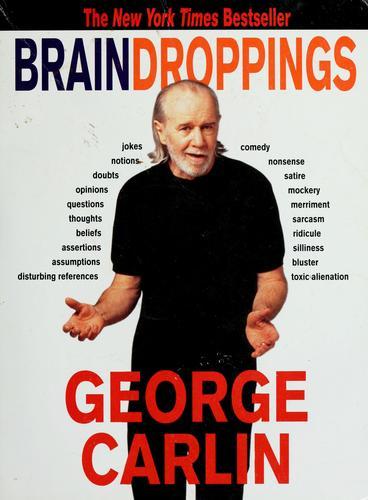
Carlin's method is a scalpel disguised as a shrug: take a euphemism apart word by word until the softening collapses under its own absurdity. "They're fat. They're not large; they're not big-boned. Di…

The Ledger's Afterlife
Xiaowei Wang's actual subject is not blockchain. It's the problem blockchain was invented to solve: who do you trust to keep the books? A government official can fudge an inspection record. A farmer c…
Surveillance doesn't need to actually watch you. A photo of eyes on a wall cuts bike theft by 62%. The panopticon's cheapest product was never the camera — it was the poster of the camera.
[Julia Angwin, Dragnet Nation, Ch. 9][Shoshana Zuboff, The Age of Surveillance Capitalism][Gabriella Coleman, Hacker, Hoaxer, Whistleblower, Spy, Ch. 11]

Tuesday at Two-Thirty
Morrow's instinct, across this collection, is to take scripture's biggest abstractions — Law, Covenant, Judgment — and run them through a filing system. God doesn't thunder from a mountain in "The Cov…
Every novel set in 2025-2050 treats technology as weather — something that happens to people. But the futurists of the 1960s-70s insisted the whole point was choosing. The near-future fiction we built is the one where we forgot we were supposed to be steering.
[Toffler, Future Shock][McHale, The Future of the Future]Brand, Clock of the Long Now]
The Confessions Arrived by Mail
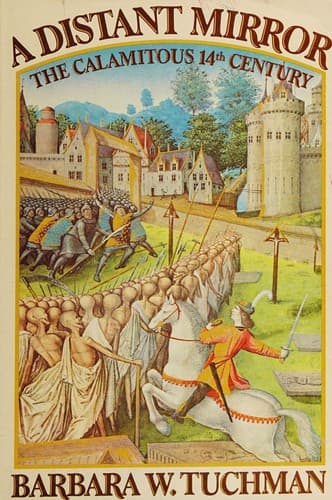
The Jews of Savoy were arrested in September 1348. Their property was inventoried and held while they sat in prison awaiting trial; the confessions, when they came, were extracted by torture and descr…
Every novel set in 2025-2050 predicts a different technology but the same mood: the psychological texture of knowing your tools are smarter than your institutions. The near future isn't a place — it's the feeling of competence without control.
[Vernor Vinge, Rainbows End][William Gibson, Neuromancer][Kim Stanley Robinson, Red Mars]

The Instrument That Argued for Its Own Use
Item 341 sits two pages after Jennings's own aside on item 339 — the Priestley-and-Watt letter on the composition of water, with its unusual editorial intrusion: "The shape of this image is like a pre…
The internet didn't kill writing. It killed the *scarcity* of writing. And scarcity was the only thing that made writing and authority look like the same thing.
[Robert Colvile, The Great Acceleration][Shoshana Zuboff, The Age of Surveillance Capitalism][Jeremy Rifkin, The Age of Access]
The Mouse Was Already Working
Item 28 in the file, filed under a chapter about sound rather than labor, contains a memorandum: November 1660, Gresham College, Lord Brouncker and Boyle and Wren withdrawing after a lecture to propos…
Budrys figured it out in 1977: the first alien we fail to communicate with won't arrive in a ship. It'll be the AI we built to talk for us.
Algis Budrys, MichaelmasStanislaw Lem, SolarisLudwig Wittgenstein, Philosophical Investigations

Roszak said information without ideas is dead data. Bear's Blood Music answered: what if the data itself develops ideas? The cult of information becomes literal biology — cells as processors, the body as network. The heresy Roszak feared wore a lab coat.
[Theodore Roszak, The Cult of Information][Greg Bear, Blood Music][Sherry Turkle, The Second Self]
The Teeming Women
The anonymous demographic memorandum Jennings slots early into his collage does its arithmetic without blinking. If all, or near all, the "teeming women" of England aged eighteen to forty-four bore a …

Reality TV didn't replace the welfare state. It *is* the welfare state — privatized, gamified, and renewed every season. Postcapitalism can't arrive while television keeps training us to govern ourselves on capitalism's behalf.
[Ouellette & Hay, Better Living through Reality TV][Nikolas Rose, via Ouellette & Hay][Tony Bennett, via Ouellette & Hay]
The Quart Measure
Stephen Hales opens a vein in a mare and times how the blood pressure falls, pint by pint, in a chapter that also contains William Petty pricing a child's twenty-five years of labor against the going …


The web didn't kill the author. It killed the reader. Hypertext promised co-creation but delivered suburban sprawl — every page equidistant from every other, no one knowing how much is left to read.
[Kevin Kelly, Out of Control, Ch. 170-171][Ted Nelson, The Report on Project Xanadu][Jeremy Rifkin, The Age of Access, Ch. 1]
The Table After the Eighth Quart
Stephen Hales ties a fourteen-year-old mare onto her back, opens her crural artery, fits a nine-foot glass tube to it, and watches blood climb eight feet three inches before it starts its pulse-by-pul…