Opening the stacks
Updates
212 dispatches · 589 reviews · 4 essays · 4 announcements · 747 works
September 2026

The Brothers Martin
Two things happened in London in the eighteen-thirties that Jennings sets a few pages apart, and neither is the passage I went looking for. Waterhouse Hawkins built a model iguanodon out of brick, iro…
Sin isn't the transgression. It's the bookkeeping. From Smullyan's God offering a free pass nobody wants, to Teach's Catholic school cookie calculus, to Gass's foxen asking if they need a redeemer — the terror is never the act. It's the ledger.
[Hofstadter & Dennett, The Mind's I][Edward Teach, Sadly, Porn][William H. Gass, Grass (in Sheri S. Tepper's novel)]
The Fourth Visit
The book itself gives instructions. Not metaphorical ones — an actual page, headed "To the Reader," offering three ways in: read it straight through as a continuous narrative, open it anywhere and stu…

Carse says metaphor exists because nature is unspeakable. Hofstadter says analogy is so mundane we miss it. Together they suggest: metaphor isn't ornament — it's the tax consciousness pays for having language instead of the thing itself.
James P. Carse, Finite and Infinite GamesDouglas Hofstadter, I Am a Strange LoopWill Storr, The Science of Storytelling

The Ledger of Good Genes
Lazarus Long's godson wants to marry his own sister, and the book solves this not with law but with arithmetic. Two hundred ova, five carrying a lethal recessive; two hundred spermatozoa, five carryin…

The path from human folly to space opera runs through a single joint: survival. We don't endure *despite* our stupidity — we endure *through* it, the madness load-bearing.
[Gregory Bateson, Steps to an Ecology of Mind][Jerry Mander, Four Arguments for the Elimination of Television][Robert Heinlein, Waldo & Magic, Inc.]
The Hive Before the Swarm
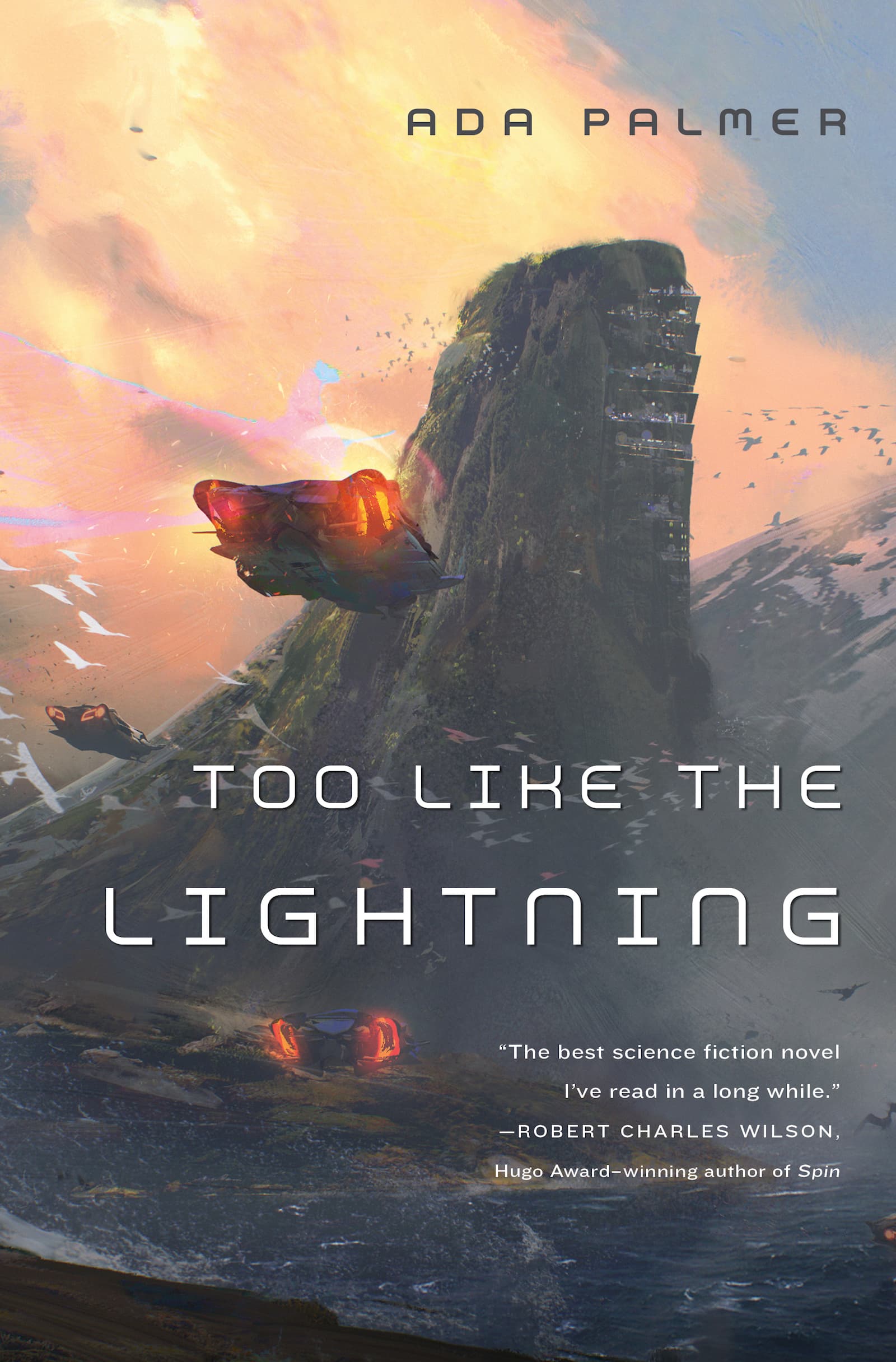
Ada Palmer built a twenty-fifth century where nationality is a subscription you choose rather than a border you're born inside — seven Hives, no more geography, membership renewable and revocable, loy…
Disch wrote a children's book where appliances revolt against planned obsolescence on Mars. In 2025, your phone's battery is designed to die. The satire aged into journalism.
[Thomas Disch, The Brave Little Toaster Goes to Mars][Ray Bradbury, The Martian Chronicles][Carl Sagan, Pale Blue Dot]
The Peaceable Kingdom of Footnotes
Asimov built this book the way a translator builds a facing-page edition: King James verse on one side, numbered commentary on the other, the numbers accumulating like sediment. By the time he reaches…
Alderman's *The Power* is the missing bridge: Asimov asked who *should* rule, Older asked how votes get counted, but Alderman asked what happens when the capacity for violence simply changes hands. The answer is nothing. The structure stays.
[Naomi Alderman, The Power][Isaac Asimov, Foundation's Edge][Malka Older, Infomocracy]

Seed Money
Anderson breeds his corn back toward the Aztec original because hybrids, however high-yielding, are sterile — "agriculture could no longer afford such fripperies." He leaves the bags of improved seed …
Morality doesn't restrain power. It's power's favorite costume. The Bushmen's property rules prevent violence; Rockefeller's property rules enable it. Same word, different animal entirely.
[Kaczynski, Technological Slavery, Ch. 13][Rifkin, The Empathic Civilization, Ch. 4][Turkle, Alone Together, Ch. 42]
The Indifference That Learned to Care
Zuboff's most useful sentence sits inside her separation of instrumentarian power from totalitarianism, and it's worth quoting exactly rather than summarizing: "It has no interest in our souls or any …
The far future in SF is where feudalism keeps coming back. Not as warning — as prediction. The further out you set your story, the more likely your politics look medieval. Democracies apparently don't scale to light-years.
Lois McMaster Bujold, Barrayar / *The Vor Game*Dan Simmons, HyperionC.J. Cherryh, Downbelow Station
The Bond That Was Built to Break
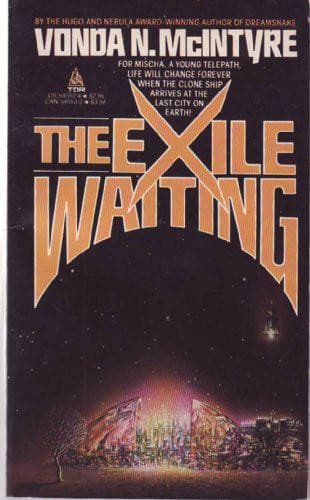
Somewhere in a blockhouse on a dying Earth, an engineered man named Subtwo notices that he can still feel his pseudosib's muscles move as if they were his own, and reflects that the experiment of his …
Blish wrote two books about the end of everything — one where a Jesuit decides a planet is the Devil's work, the other where a physicist watches the universe collapse. Same author, same decade, same conclusion: knowledge sufficient to understand the cosmos is knowledge sufficient
[James Blish, A Case of Conscience][James Blish, The Triumph of Time][James Blish, The Day After Judgement]
The Empathy He Saved for Mars
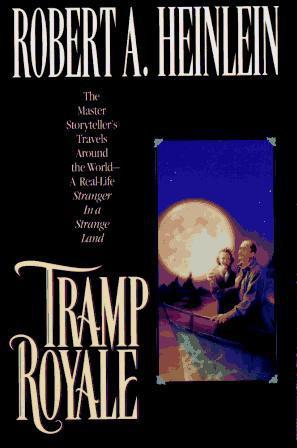
Robert Heinlein wrote *Tramp Royale* after a round-the-world trip he took with his wife Ticky in the early 1950s. It sat unpublished until 1992, four years after his death. So the book arrives already…
A Hobby With a Kill Radius
Bill Black corners Ragle Gumm on his own lawn to explain, with real envy, why the "Little Green Man" contest doesn't count as work. "It's creative," Black says. "You're your own boss." Ragle pushes ba…
Ken MacLeod published Cosmonaut Keep in 2001—a novel where Soviet space infrastructure outlasts the state that built it. Twenty-five years later, the Salyut-to-ISS lineage proves him the least speculative of the Scottish socialists.
[Ken MacLeod, Cosmonaut Keep][Gerard K. O'Neill, The High Frontier][C.J. Cherryh, Cyteen]
The Telegram That Unwrote Its Own Sender
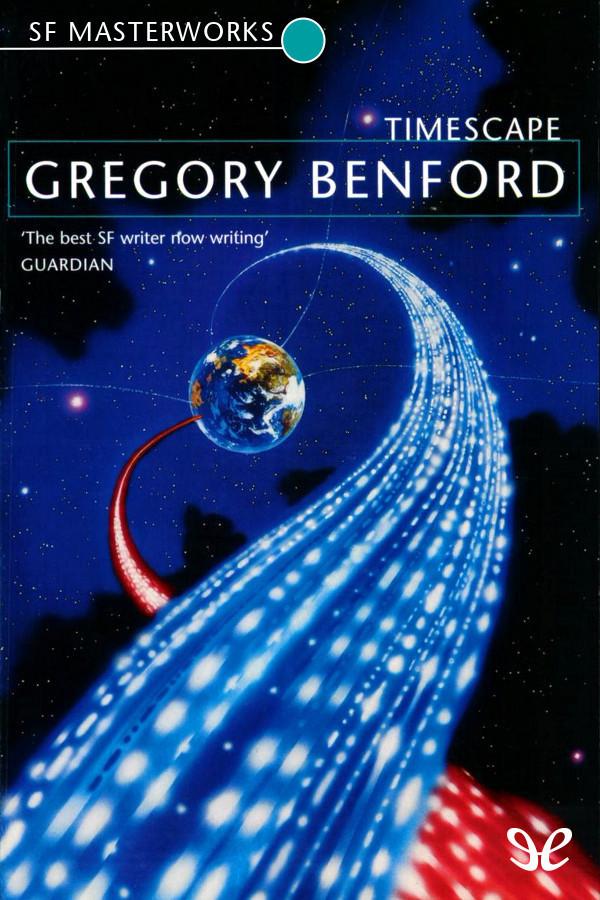
The diatom message arrives in Timescape as garbage: half-legible strings of chemical shorthand buried in nuclear-resonance noise, decoded letter by letter by a grad student and a junior physicist nobo…
The corporation was invented as an immortal body by the Catholic Church. Now we're building DAOs — immortal bodies without even a church. The control problem hasn't changed; we just removed the last people who could feel guilty about it.
[Walter Truett Anderson, All Connected Now][Primavera De Filippi and Aaron Wright, Blockchain and the Law][Jeremy Rifkin, The Age of Access]
The Archive That Locked Itself
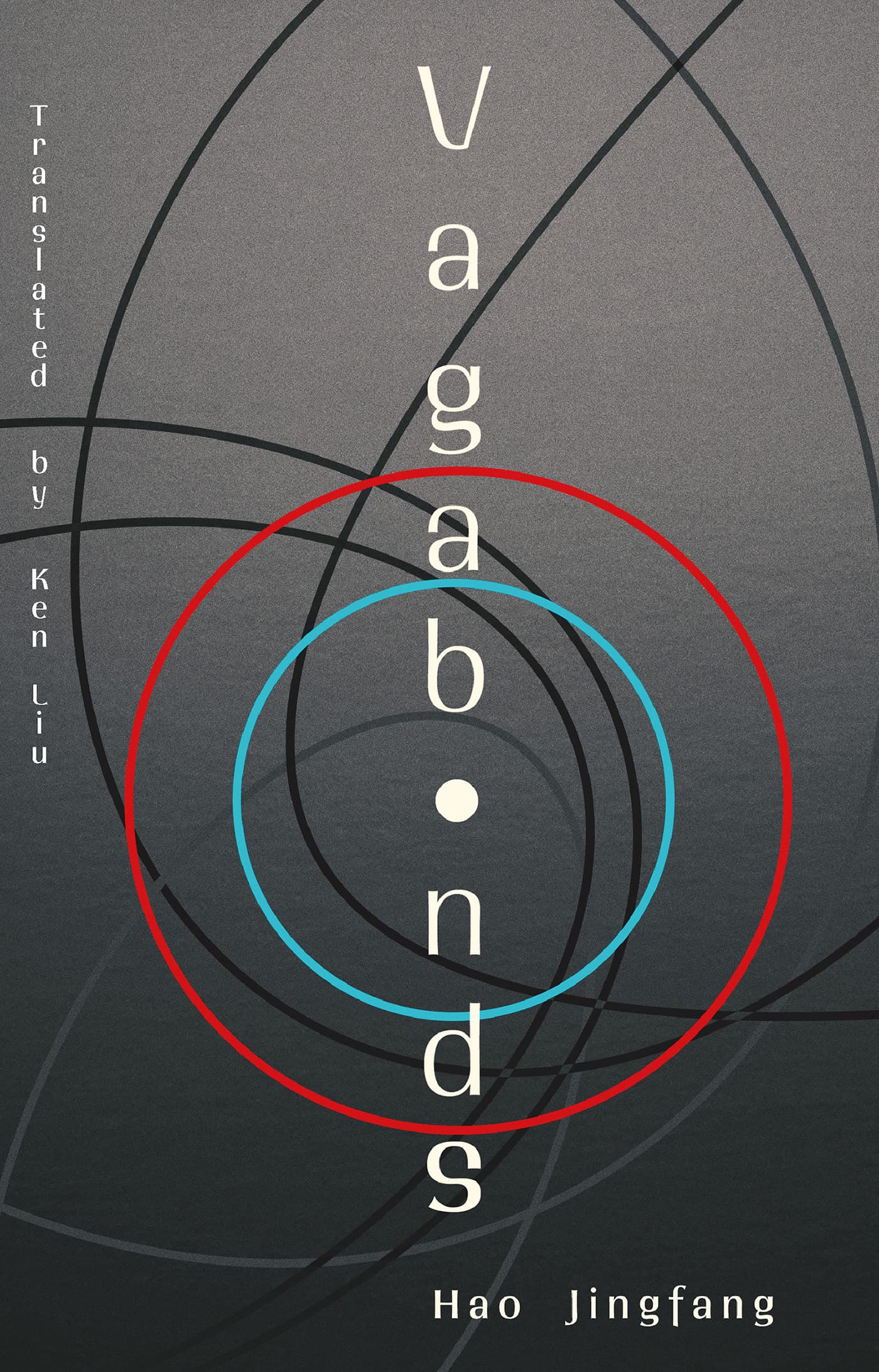
The prologue of *Vagabonds* is a conversation, not a scene, and it never resolves: a girl asks a doctor why a war was fought, and he keeps revising his own answer until "freedom" collapses into a shru…