The Brotherhood That Wasn't There
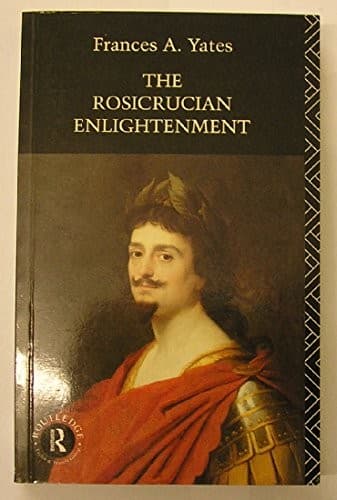
Frances Yates published this book in 1972, and it landed like a depth charge in a shallow pond. Academic historians were scandalized. Occultists were delighted, mostly for the wrong reasons. What Yates actually argued was more careful and more strange than either camp acknowledged: that the Rosicrucian manifestos of 1614–1616, those bizarre pamphlets announcing an invisible brotherhood of enlightened adepts, were not evidence of a secret society but of a political and intellectual movement centered on the Palatinate court of Frederick V and his English bride, Elizabeth Stuart. The brotherhood was a literary fiction with real consequences. The manifestos were propaganda dressed as prophecy. And the tradition they drew on — Hermetic, Cabalist, alchemical — was not the antithesis of early modern science but one of its root systems. Yates had been building toward this argument since *Giordano Bruno and the Hermetic Tradition* in 1964, and here she pushed it to its most provocative conclusion: that the "Rosicrucian Enlightenment" was a necessary precursor to the Enlightenment proper, a bridge between Renaissance magic and the Royal Society. Fifty-four years later, the bridge holds more weight than she probably expected.
What Yates got right, with an almost uncomfortable prescience, is the mechanism by which fictional or semi-fictional narratives generate real political and cultural movements. The Rosicrucian manifestos described an organization that did not exist, and yet people responded to them as though it did — writing letters, seeking membership, forming actual groups in imitation of the imaginary one. The fiction became a template for reality. In 2026, this is not an obscure historical curiosity. It is the operating logic of online movements, decentralized ideologies, and conspiracy communities that coalesce around texts, memes, and manifestos authored by no one in particular and believed by thousands. QAnon's anonymous drops function almost identically to the Fama Fraternitatis: an invisible brotherhood, a hidden reformation, a promise that the initiated will recognize the signs. Yates could not have anticipated the internet, but she identified the pattern with surgical precision. She understood that the power of a secret society lies not in its secrecy but in its *publicness* — the manifesto, not the lodge.
Her blind spots are characteristic of her era and her training. Yates was a Warburg Institute scholar, steeped in iconography and textual analysis, and she treated the Rosicrucian phenomenon almost entirely as an affair of elite intellectual culture. The popular reception of the manifestos — the pamphlet wars, the satirical responses, the panic — gets mentioned but never deeply examined. She had no framework for thinking about information cascades, viral transmission, or the sociology of belief. The book also assumes a fundamentally European theater of ideas; the Hermetic and Cabalist traditions she traces are presented as self-contained Western developments, with no attention to the Islamic transmission of Hermetic texts or the broader context of early modern global knowledge exchange. This is not a moral failing. It is a limitation of the field as it existed in 1972. But it means the book, for all its brilliance, reads the Rosicrucian moment as smaller than it was.