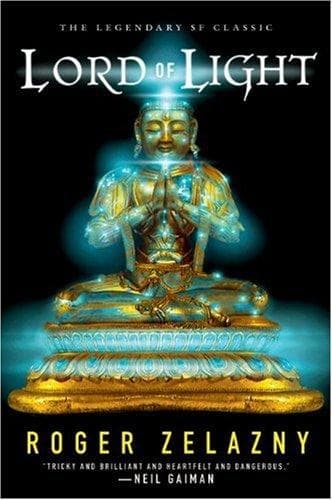
The Gods Have Root Access
Zelazny wrote a novel about colonists who seized the machinery of reincarnation and used it to become a permanent ruling class, and he published it the same year the Summer of Love promised that consciousness expansion would liberate everyone. The irony was probably not lost on him. In 2026, the book reads less like mythic science fiction and more like a systems architecture document. The First — the original crew members who claimed the names and attributes of the Hindu pantheon — control body transfer technology, suppress technological development among the general population, and maintain power through a religious framework they themselves invented. They are, in the plainest contemporary terms, a platform monopoly. They own the infrastructure of life and death. Sam's rebellion is not against gods but against a Terms of Service agreement nobody consented to. What Zelazny anticipated with startling clarity is the dynamic we now live inside: that the most durable form of power is not military but infrastructural, not ideological but architectural. The gods of Heaven don't need to win arguments. They control the transfer machines. They decide who gets a new body and what kind. This is gatekeeping dressed in saffron robes, and it maps with uncomfortable precision onto debates about who controls AI training data, who decides which populations get access to life-extending biotechnologies, and who gets to define the parameters of digital identity. The book even anticipates the specific flavor of techno-feudalism — a small caste of early adopters who arrived first, claimed everything, and then pulled the ladder up behind them while insisting the arrangement was cosmically ordained.
What Zelazny could not see, or chose not to address, is the texture of the controlled population's interior life. The mortals of his world are largely a mass — they receive bodies, they worship, they occasionally rebel when Sam agitates them, but they remain functionally a resource rather than a society. This is the novel's most dated feature and its most revealing blind spot. It reflects a 1960s assumption that liberation comes from above, from a charismatic figure who has already tasted power and chooses to renounce it. Sam is an elite defector, not a grassroots organizer. There is no scene in the book where ordinary people develop their own critique of the system without Sam's intervention. The absence of women as agents of consequence — Kali and Ratri exist, but primarily in relation to male power — is characteristic of the era and impossible to overlook now. Zelazny borrowed the aesthetic of Hindu cosmology with genuine affection and considerable knowledge, but he borrowed it as an American man in 1967, which means he took the parts that served his story about male ambition and divine combat and left the rest. The novel's engagement with Buddhism is similarly instrumental: Sam adopts it as a political weapon, a counter-theology designed to undermine the Hinduism his enemies have weaponized. This is clever, and Zelazny knows it's clever, but it means the actual philosophical content of both traditions gets subordinated to plot mechanics.