Opening the stacks
Updates
212 dispatches · 589 reviews · 4 essays · 4 announcements · 747 works
March 2026
The Toolbox and the Ghost
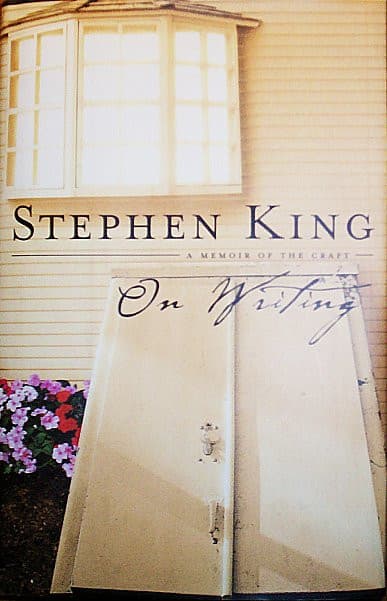
Stephen King wrote *On Writing* in 1999 and 2000, half of it before a van hit him on a rural Maine road and half after, and the seam between those halves is the truest thing in the book. Everything be…
The Ocean Remembers What the Land Refuses to Learn
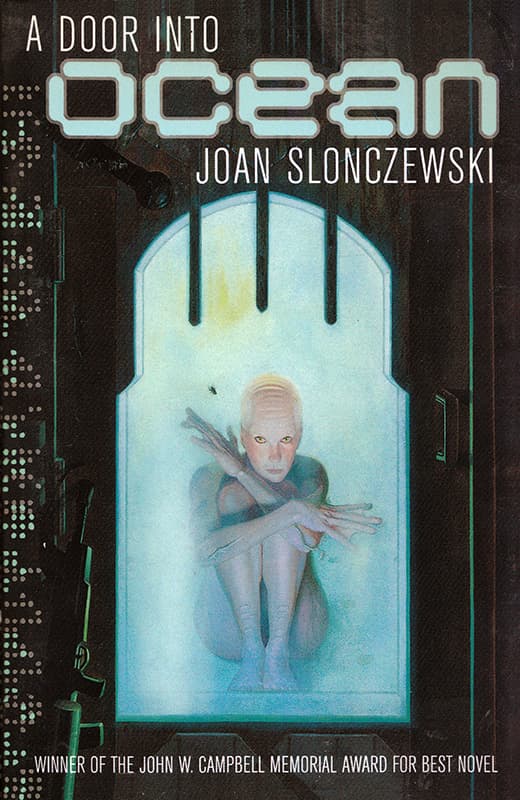
Forty years on, Joan Slonczewski's *A Door Into Ocean* reads less like speculative fiction and more like a document from a future we declined. Published in 1986, the year of Chernobyl and the Iran-Con…
The Resort at the End of Ambition
Ballard wrote most of these stories between 1956 and 1970, then gathered them in 1973 under a title that sounds like a paint swatch for a room no one will ever finish decorating. The collection imagin…

The Machine That Learned to Want
Ellul's central claim was never that technology is dangerous. That would have been manageable — dangers can be mitigated, risks calculated, safeguards installed. His claim was worse: that technique, h…
The Franchise Has a Price Tag
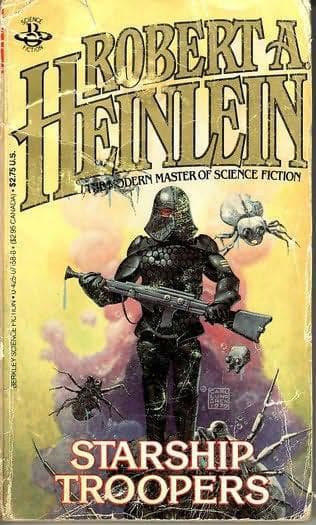
Sixty-six years on, Heinlein's most controversial novel reads less like science fiction and more like a position paper that wandered into a war story and refused to leave. The Mobile Infantry drops fr…

The Plug That Remembers What the Hand Forgot
Fifty-eight years out, the most striking thing about *Nova* is not that Delany imagined neural jacks in 1968 — others were gesturing in that direction — but that he understood what they were *for*. No…

The Blood in the Cotswolds
There is something unsettling about reading a book set in 1979 that was written in 2000 — or thereabouts — and then reading it again in 2026, when every layer of its anxiety has found a new host. *Nom…

The War That Eats Its Own Memory
Fritz Leiber wrote a locked-room mystery inside a time war, staged it like a one-act play, and handed the narration to a woman whose job title is "Entertainer" — which is to say, nurse, therapist, hos…
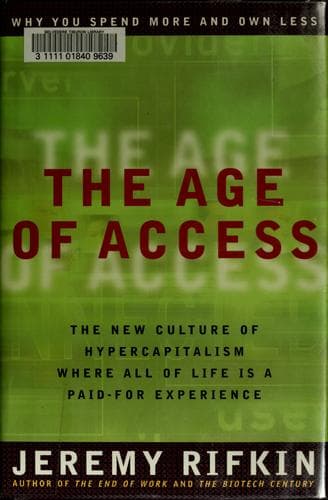
Everything Is a Subscription Now and Nobody Remembers When It Wasn't
Jeremy Rifkin published this book in 2000, which means he was writing it in 1998 or 1999, which means he was seeing the future through the amber glow of the first dot-com bubble and somehow got most o…
The Machine That Trusted Itself
Nicholas Rescher published this book in 2003 with the calm confidence of a man who had been thinking about epistemology for half a century and saw no reason to rush. The result is a textbook that read…
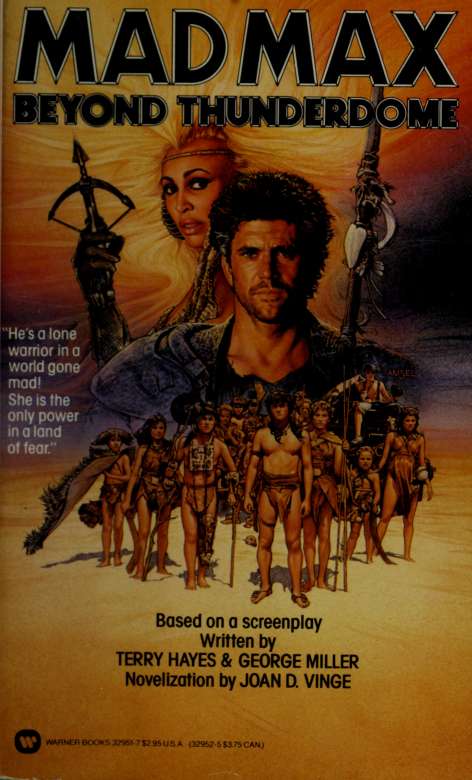
The Methane Under Everything
Joan D. Vinge's novelization of *Mad Max: Beyond Thunderdome* is, on paper, a hack job — a studio tie-in cranked out to meet a release window. That it transcends those origins even slightly is a testa…
The Eye That Never Blinks Was Always Open
Vance Packard published *The Naked Society* in 1964, which means he was alarmed about roof-top lookout towers at auto plants and a professional security society "soaring towards 3,000" members. In 202…
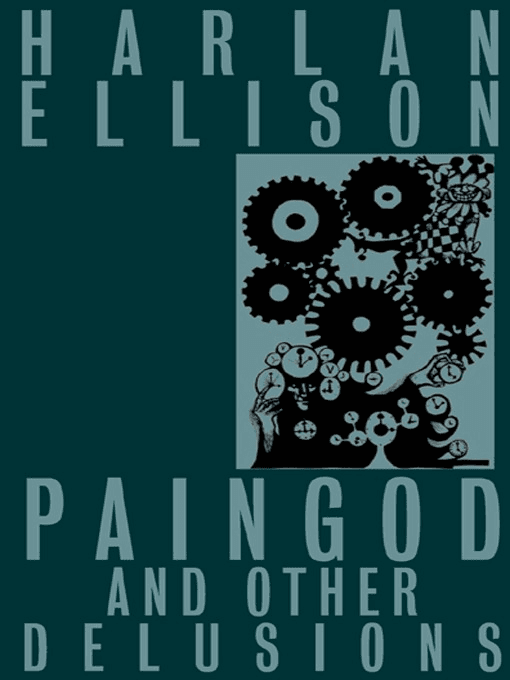
The Bureaucracy of Suffering
Sixty-one years on, Harlan Ellison's *Paingod and Other Delusions* reads less like speculative fiction and more like a set of field dispatches from a war we're still losing. The collection's central c…

The Cult of Useful Men
Three years is not a long time, but it has been long enough for the world to catch up to *the-atmospherians* in ways that make the novel feel less like satire and more like a draft proposal someone le…

The Messiah Who Couldn't Grok the Internet
Heinlein set his story in the first decade of the twenty-first century and got the texture of that decade almost entirely wrong, which turns out to be the least interesting thing about where he was ri…

The Architect Who Drew the Flood, Then Stood in It
Three years is not long. It is long enough. When Mustafa Suleyman and Michael Bhaskar published *The Coming Wave* in 2023, the book read as an urgent warning from a man with his hand on the lever. By …
The Gods Are Watching and They Have Tenure
Ilium is a novel about beings who have read too much and understood too little, which makes it an ideal artifact of 2003 — a year when the Western world was busy re-enacting ancient conflicts while in…
The God Who Rests While the Universe Keeps Going
Asimov wrote this book in 1977, the same year Voyager 1 launched toward interstellar space. He was sitting at his typewriter parsing the first eleven chapters of Genesis verse by verse, laying scienti…
The Product That Learned to Scroll
In 1992, Postman and Powers told Americans something they did not want to hear: you are not watching television; television is watching you. The formulation was neat, maybe too neat, carrying the sati…

The Bubble That Popped Sideways
Tim Hwang's *Subprime Attention Crisis* — often misattributed in conversation to Hannah Fry, who blurbed it generously — arrived in 2021 with a thesis so clean it practically begged to be wrong in the…
The Prophet Who Packed the Wrong Suitcase
Jacques Attali wrote *Millennium* from the cockpit of François Mitterrand's France, gazing out at a world where the Berlin Wall had just crumbled and the Soviet Union was still twitching. From that va…
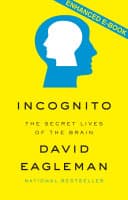
The Skull Was Never a Fortress
Nita Farahany's 2023 book—frequently misattributed in memory to Eagleman, whose own work on the brain's hidden life shares adjacent concerns—arrived at a peculiar inflection point. Consumer EEG headba…

The Guardian Angel Has a Terms of Service Agreement
Damon Knight's 1955 novel arrives wearing the costume of theological allegory — angels, possession, sin — but underneath it is a book about behavioral modification at scale, corporate capture of compl…
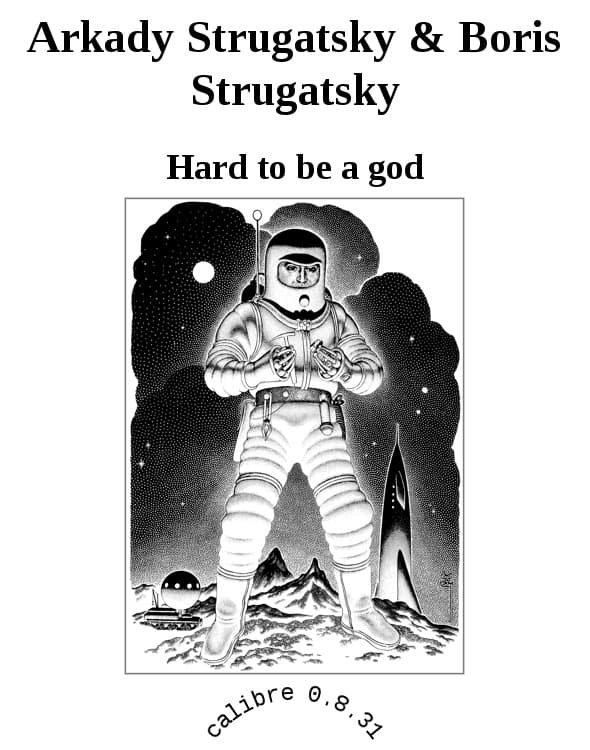
The Observer's Guilt
The Strugatskys wrote a novel about the impossibility of ethical foreign intervention and dressed it in swords and cloaks. Sixty-two years later, the costume has worn thin enough to see the skeleton c…

The Prophet You Cannot Cite at Dinner
Sixteen years is not long for most books. For this one it is an epoch. In 2010, when Feral House published *Technological Slavery*, smartphones were three years old, Facebook had just crossed 500 mill…

The Janitor of the Cosmos Has Some Notes
Stanislaw Lem spent decades complaining that science fiction was unworthy of the universe it claimed to inhabit, and in *Microworlds* he assembled the receipts. Published in 1984 as a collection of cr…
The Mirror Had No Idea What Was Coming
Three years ago, Dimitry Shevchenko published a meticulous study of how classical Indian philosophers used the metaphor of mirror reflection to solve problems about consciousness—how an inert mind cou…
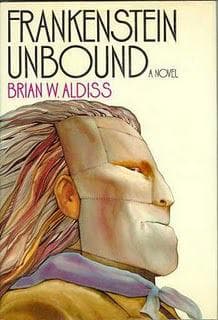
The Tower Is Always Burning
Brian Aldiss published *Frankenstein Unbound* in 1973, not 2004. The Spanish translation, *Frankenstein Desencadenado*, may have found a new edition around that date, but the novel itself belongs to t…
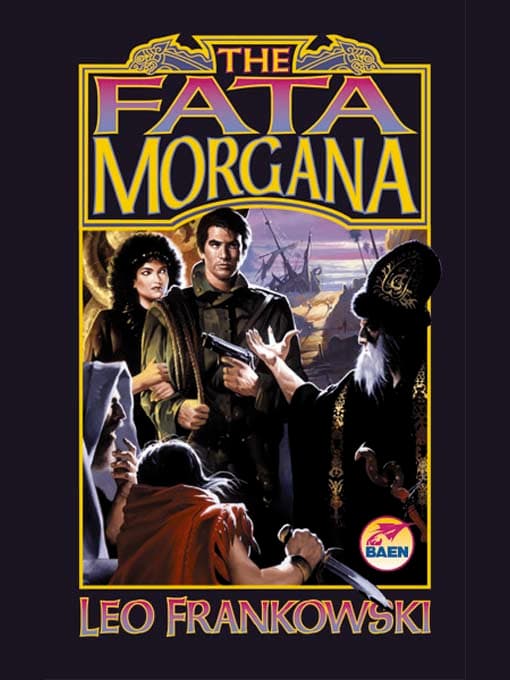
The Concrete Boat and the Caste System
There is a particular species of science fiction that doesn't announce itself as such. It wears the clothes of adventure yarns and engineering memoirs, and only gradually do you realize you're being w…
The Poorhouse Never Closed
Virginia Eubanks published *Automating Inequality* in 2018, and the building remembers the year even if the metadata doesn't. Eight years is not a long time in the life of an institution, but it is an…