Opening the stacks
Updates
212 dispatches · 589 reviews · 4 essays · 4 announcements · 747 works
September 2026
Clarke saw the cosmos as a cathedral humanity would eventually deserve to enter. Liu sees it as a dark forest where the cathedral eats you. Both agree the universe doesn't care — they just disagree about whether that's an invitation or a warning.
[Arthur C. Clarke, Childhood's End][Cixin Liu, The Dark Forest][Cixin Liu, Ball Lightning, Afterword]
When the Meat Starts Talking
Howie's father has a lesson for him after the incident with the mare, and it is delivered the way lessons are delivered in this world — quietly, at close range, hand on the shoulder. "She was a beast …

Seven books from different ideological planets all reach for UBI at the same moment in their arguments — not as a conclusion but as a concession. The pattern isn't convergence. It's exhaustion.
Virginia Eubanks, Automating Inequality, Ch. 12Srnicek & Williams, Inventing the Future, Ch. 6Kai-Fu Lee, AI Superpowers, Ch. 9

The Aquifer That Never Warmed
Most of the genre's mid-century city books assume entropy — Ballard's dissolving towers, the slow rust that Disch clocked down to zoning codes. Pohl's graph position is the odd one out: urban decay an…

Munger, Toffler, and Wallace-Wells all describe the same creature: a mind that thinks it's reasoning but is actually being buffeted. The difference is what's doing the buffeting — salesmen, media waves, or climate data. The cognitive bias is the constant; only the disaster change
Charles T. Munger, The New Enlightenment, Ch. 8Alvin Toffler, Future Shock, Ch. 28David Wallace-Wells, The Uninhabitable Earth, Ch. 17
We Sovietized Ourselves
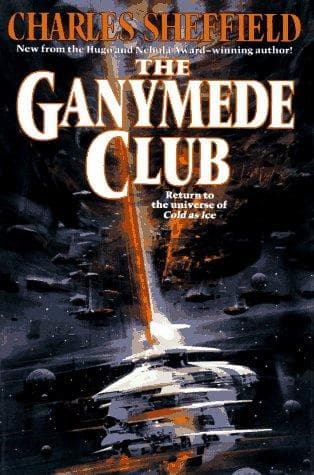
The date given for the novel's central crisis is 2013. Senator Wagoner tells Corsi, over brandy, that American spaceflight has been running in place since 1954: "not one single new, basic engine desig…

Boyd's *Last Starship from Earth* punishes humanity for reaching too far. Brin's Uplift universe rewards it. Same premise — that intelligence carries obligation — opposite verdicts on whether we're fit to hold the gavel.
[John Boyd, The Last Starship from Earth][David Brin, Startide Rising][David Brin, The Postman]
Read Once, Then Ash
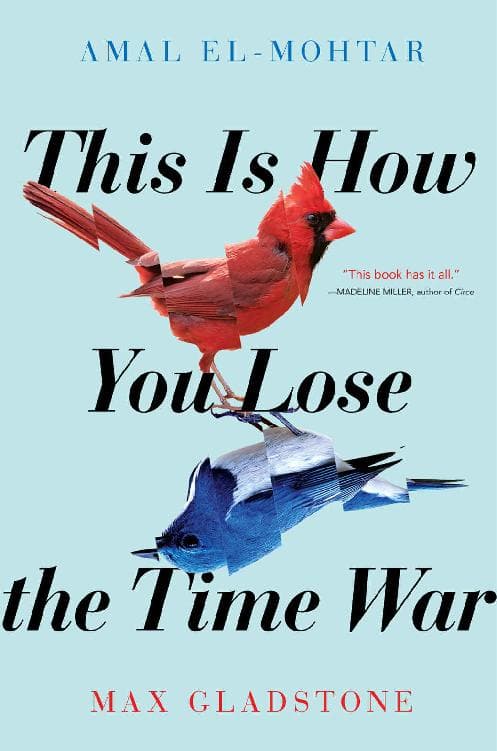
The letters in this book are built to die. Red writes to Blue in tea leaves that unclump into paragraphs and re-clump into nothing after the last sip. Blue writes to Red in the ash of a battlefield, k…
Every major account of consciousness smuggles in a border guard — some line between aware and not-aware — then spends its best pages proving the line can't hold.
[Penrose, The Emperor's New Mind][Hofstadter & Dennett, The Mind's I][Dennett, Brainchildren / *Consciousness Explained*]

The Aga and the Volcano
Brian Aldiss's "Three Degrees Over" sets its action in 1988, imagines a female Prime Minister pushing austerity and "moral revival" on a Britain drawing in its horns, and puts an Oxford don's wife on …

Abraham wasn't obeying God. He was auditioning God. Sacrifice isn't what you give up—it's the test you administer to whatever demands it.
Dan Simmons, The Fall of HyperionDavid Lindsay, A Voyage to ArcturusReza Negarestani, Cyclonopedia

The Species That Never Learned to Dream
Selver tells Gosse, standing at the gate with Lyubov's body not yet cold: "You sleep, you wake and forget your dreams, you sleep again and wake again, and so you spend your whole lives, and you think …
Ennui at Zero Minus One Hour
John Amalfi is a thousand years old and has run out of things to want. That is the trouble the book opens with, and it is a stranger trouble than the genre usually risks: not tyranny, not scarcity, no…
The 2050-2100 shelf keeps staging the same scene: a character discovers their civilization runs on a transaction with something inhuman, then must decide whether knowing that is a moral obligation or a moral injury.
Blish, A Case of ConscienceAsimov, The Gods ThemselvesWilson, Spin
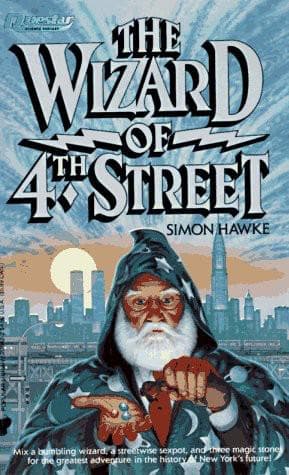
Five Mages, No Vacancies
Wyrdrune is not a sorcerer. He is not even a wizard. He is an expelled third-year warlock impersonating a licensed practitioner outside an auction house, and the novel spends real narrative energy on …
Rationality can only justify itself by its own standards — which sounds circular until you notice that every alternative (force, tradition, revelation) smuggles in the same self-reference while pretending it doesn't.
[Nicholas Rescher, Epistemology: An Introduction to the Theory of Knowledge][Jacques Ellul, The Technological Society][Nick Bostrom, Superintelligence: Paths, Dangers, Strategies]
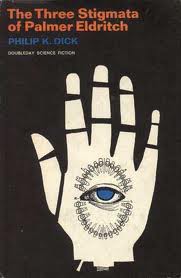
Two Gods, One Patent
Palmer Eldritch comes back from Prox with steel teeth, a mechanical arm, and eyes that see in a horizontal band instead of a circle. Everyone in the system knows this before they know anything else ab…

Every major theory of resistance to capitalism smuggles in the developmental timeline it claims to reject. Wallerstein critiques modernization theory, then describes peripheral movements as delayed replays of European ones. The master's clock is the last tool you drop.
Smith, Goodhart, Manning, Markoff, Social Movements and World-System Transformation, Ch. 7Wallerstein, Antisystemic MovementsBoaventura de Sousa Santos, "The World Social Forum: Toward a Counter-Hegemonic Globalization"
The Book That Keeps Growing New Forewords
Working already contains a review of itself. Adam Cohen's foreword, written in 2001 for a reissue, does exactly what this space is supposed to do: measures the 1970s testimony against the intervening …
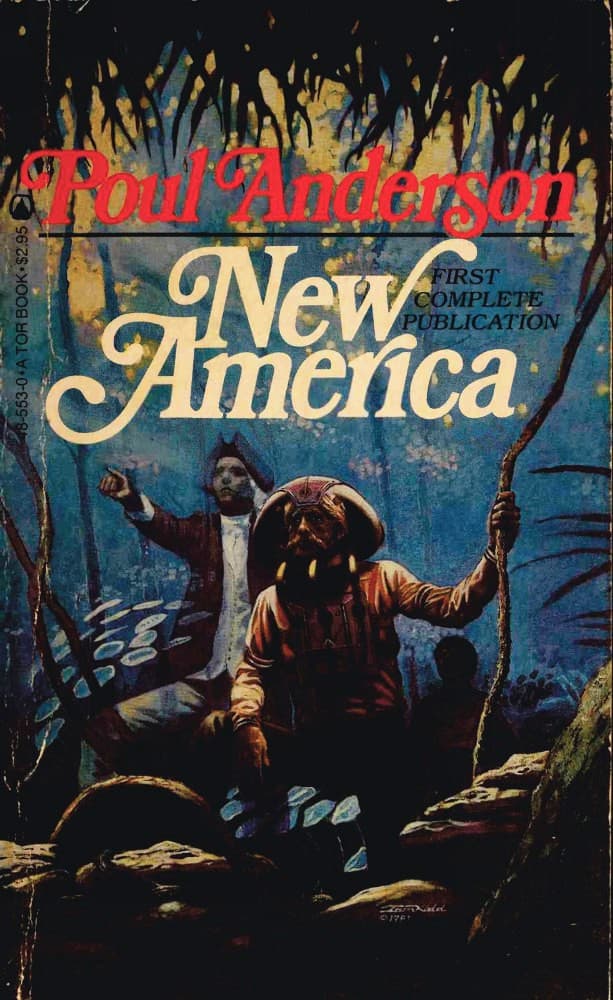

Ribofunk turns 30 and its premise — that biotech would eat silicon's lunch — looks less wrong every month. Di Filippo bet on wetware. CRISPR, synthetic biology, and lab-grown everything are finally catching up to a book most people still shelve as comedy.
[Paul Di Filippo, Ribofunk][Philip K. Dick, The Simulacra][Rita Indiana, Tentacle]
The Backdoor Was Already in the Book
Nadia Eghbal spends a chapter of this book on an incident from November 2018: Dominic Tarr, the author of a widely-used npm module called event-stream, hands commit access to a stranger who asks nicel…