The Drought Was Always a Weapon
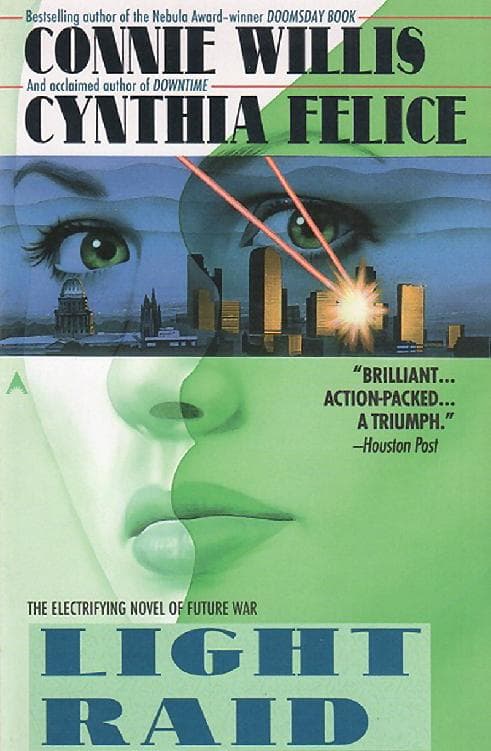
Twenty-six years on, *Light Raid* reads less like speculative fiction and more like a declassified briefing someone filed under the wrong genre. The novel's central conceit — that engineered biological agents could be deployed to manipulate weather patterns and water scarcity, turning drought into a strategic weapon — was, at the time of publication, a thriller premise. In 2026, it is a policy debate. The weaponization of environmental systems, the deliberate targeting of agricultural infrastructure, the quiet understanding among nation-states that water is leverage: these are not extrapolations anymore. They are Tuesday. The book's "GEM biots," self-replicating organisms designed to destabilize hydrology, sit uncomfortably close to contemporary fears about dual-use synthetic biology, where the line between agricultural innovation and ecological sabotage is drawn by whoever holds the patent. What the novel gets right is the fundamental insight that the next wars would not be fought over territory but over the systems that make territory habitable. What it gets wrong — or rather, what it couldn't yet see — is the role of private capital. Hydra Corp functions as a quasi-governmental entity, a family business entangled with state power, but the book still imagines corporations as extensions of national interest. It has no vocabulary for the post-national tech conglomerate, the entity that owes allegiance to no flag and answers to no prince.
The political architecture is telling. A fragmented North America, a war between Western States and Quebec, a British Commonwealth still exerting imperial influence through figures like Prince Miles Essex — this is a very specific late-twentieth-century anxiety about Balkanization dressed up in laser fire. The "light raids," orbital satellite weapons raining destruction on cities, anticipate the current militarization of low-earth orbit with eerie accuracy, though the novel imagines them as blunt instruments of terror rather than the precision-strike platforms and surveillance constellations we actually got. The marriage of Ariadne to Essex, a political union masked as romance, is the oldest trick in the dynastic playbook, and the book knows it. What reads differently now is the surveillance layer. Joss Liddell, the Scotland Yard agent embedded in Ariadne's life, operates in a world of physical tailing, intercepted thermoses, and overheard conversations. The novel understands that the state watches, but it imagines watching as labor-intensive, requiring human bodies in proximity. It has no conception of ambient data collection, of the phone in your pocket doing Joss's job for free. The espionage feels almost artisanal.