The Prophet Who Kept Calling a Number That Was Disconnected
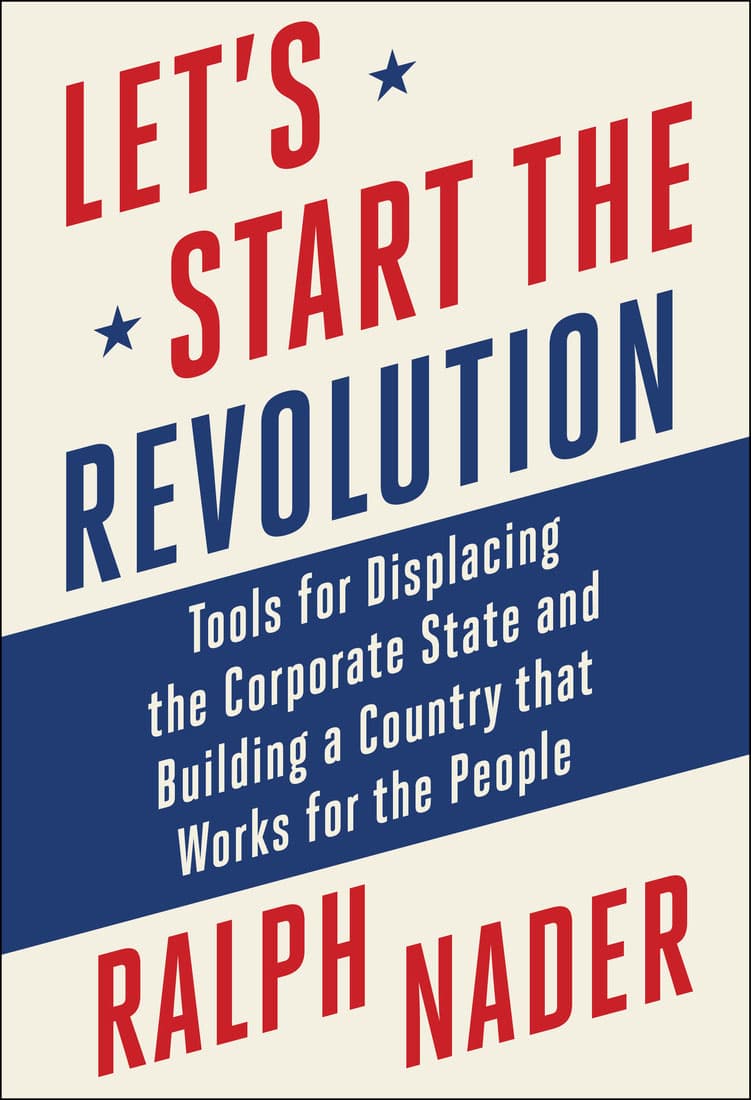
Ralph Nader published this book at ninety, and it reads like a man who has been right for so long that being right has become its own kind of prison. *The Investigation of Ralph Nader* — the title itself a wry inversion, Nader investigating Nader, the consumer advocate turning his methodical gaze on his own decades of ignored counsel — landed in 2024 as a strategic manual for a Democratic Party heading into what Nader correctly identified as an existential election. He catalogued the party's corporate capture since the late 1970s, its consultant-class sclerosis, its refusal to mobilize nonvoters through direct, personal outreach, its bizarre timidity in the face of authoritarian drift. He prescribed grassroots organizing, bold economic populism, a "Compact With the American People" built on minimum wage increases, healthcare, and voting rights. He named the disease with clinical precision. And then the patient did exactly what the patient always does: ignored the diagnosis, lost the election, and spent the aftermath blaming everyone except the mirror. Reading this in 2026, after the second Trump administration has spent a year and a half dismantling the administrative state Nader spent his career building, the book's prescience is not impressive so much as it is unbearable.
What Nader anticipated was not subtle. He saw that the Democratic Party's reliance on fundraising metrics over mission-driven politics would produce candidates incapable of articulating why anyone should vote for them. He saw that the failure to contrast Democratic achievements with GOP obstruction — in plain, kitchen-table language — would leave the field open for culture-war distractions. He saw that nonvoters were not apathetic but abandoned, and that mobilizing them required something the party's leadership class found beneath them: showing up. The "Winning America" project he describes, a volunteer-driven civic education initiative, was modest, replicable, and almost entirely ignored by every institutional actor it approached. The chapters documenting his and Mark's attempts to get DNC staffers, candidates, and media figures to engage with their materials read like a comedy of bureaucratic indifference — emails unanswered, Zoom calls unattended, endorsements that led nowhere. In 2024, this read as frustrating. In 2026, it reads as evidence.
The blind spots are real, though, and they matter. Nader's framework remains stubbornly analog. His theory of change — door-to-door canvassing, civic education pamphlets, volunteer phone banks — is not wrong, but it exists in a vacuum that excludes the algorithmic reshaping of public attention. He has almost nothing to say about the role of platforms, recommendation engines, or the synthetic media environment that has, since 2024, accelerated into something his generation of reformers simply cannot metabolize. The book treats media neglect as a problem of editorial cowardice, which it partly is, but misses the deeper structural reality that legacy media itself was collapsing under the weight of its own irrelevance to the information ecosystem most voters actually inhabit. There is also a conspicuous absence: Nader does not seriously grapple with the possibility that the Democratic Party is not failing to execute a progressive agenda but is functioning exactly as designed — as a pressure valve that absorbs progressive energy and converts it into managed decline. He keeps treating the party as a broken machine that needs repair. The harder reading, which he approaches but never commits to, is that it is working perfectly for the people who own it.