Opening the stacks
Updates
212 dispatches · 589 reviews · 4 essays · 4 announcements · 747 works
August 2026
Democracy didn't spread because people loved freedom. It spread because democracies kept winning wars. The form follows the factory, not the philosophy.
[Theodore Kaczynski, Technological Slavery][Walter Truett Anderson, All Connected Now][Robert Putnam, Bowling Alone]

Same Genus, Wrong Weather
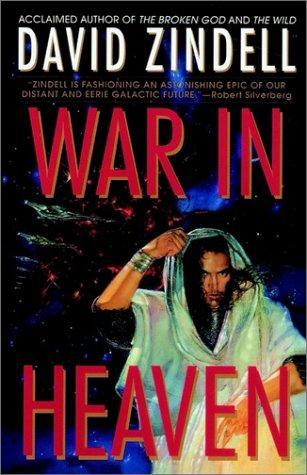
Gregor's argument, stripped of its footnotes, is a provocation dressed as a filing system: fascism and Bolshevism are not opposites reconciled only by their victims' body counts, but "species of the s…
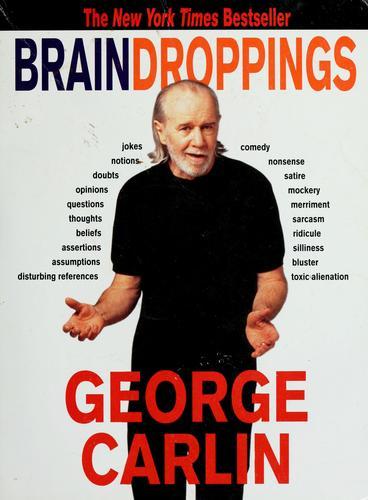

Time travel in SF followed the same arc as every toy: first wonder, then paradox, then the paradox becomes furniture. Bradbury's butterfly was a thesis. Willis's historians barely notice the machine — they're worried about the filing.
[Stanislaw Lem, Microworlds][Arthur C. Clarke, The View from Serendip][Sam J. Lundwall, Science Fiction: What It's All About]
The Invoice That Never Came
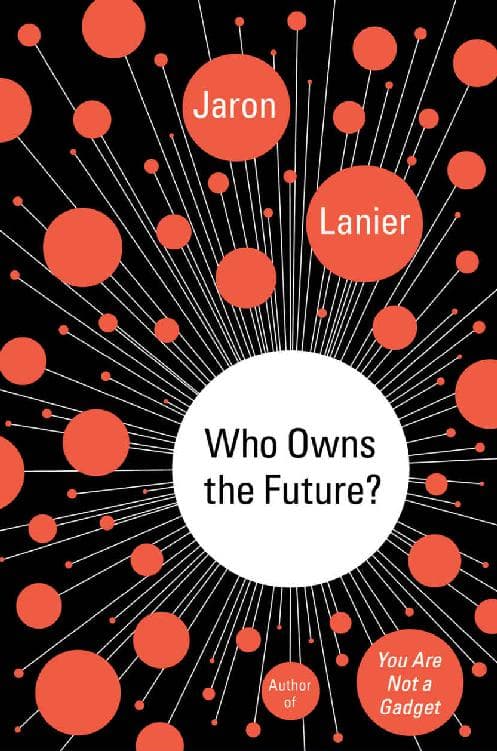
Six years before Shoshana Zuboff put a name to the thing, Jaron Lanier had already anatomized it. He called it a Siren Server: "an elite computer, or coordinated collection of computers, on a network.…



Cybernetics died as a discipline but won as a culture. Software ate the feedback loop and forgot where it came from — every agile standup is Wiener's boat correcting course, stripped of its philosophy.
[Douglas Rushkoff, Present Shock, Ch. 3][Matteo Pasquinelli, The Eye of the Master, Ch. 7][Kevin Kelly, Out of Control, Ch. 0/167]

Bone Tenancy
The catalog lists this book's publication year as 1656, three centuries before its author was born, which is either a cataloging error or the best unintentional joke a haunted database could make. Ign…
The engine paired Cherryh and Card and found no surprise recommendation — which is itself the surprise. The gap between them is the point: one writes institutions that grind people; the other writes a person who redeems institutions. Same wound, opposite cathedrals.
[C. J. Cherryh, Downbelow Station][Orson Scott Card, Speaker for the Dead][Ursula K. Le Guin, The Word for World Is Forest]
Faith, Plotted on Log Paper
Kurzweil traces his own lineage before he gets to the argument proper: von Neumann's 1950s remark about an "essential singularity," Good's intelligence explosion, Vinge's Omni essay and his 1993 NASA …
The real fork isn't whether the universe left instructions — it's whether the instructions are *for you*. Lem's Roadside Picnic aliens left trash. Niven/Pournelle's Moties left nothing because they couldn't get out. The optimist's universe has a curriculum; the pessimist's has li
[Stanislaw Lem, Microworlds][Larry Niven & Jerry Pournelle, The Mote in God's Eye, afterword][David Brin, Startide Rising]
The Search Space Was Always the Universe
Six to the sixth power, raised to the sixth power again: that is the joke buried in the title, a number so large it beats the atom count of everything visible from Earth, offered by a seventy-three-ye…

Pohl built traps. Brin built lifeboats. Both understood the same ocean — that human ambition is the current most likely to drown you and the only one that gets you to shore.
[Frederik Pohl, Gateway][David Brin, Startide Rising][Frederik Pohl & C.M. Kornbluth, Gladiator-at-Law]
The Physics Homework of Strangers
Larry Niven's dedication page does something no plot summary can: it names the actual instigating event of this book, and the event is not narrative but epistolary. A Florida high school class calcula…
Every communication technology is a failed telepathy machine. We kept building the telegraph, the telephone, the internet — each one closing the gap between minds — until the gap itself became the product.
[Alfred Bester, The Demolished Man (1951)][Alan Turing via Hofstadter & Dennett, The Mind's I (1981)][Carl Sagan, The Demon-Haunted World (1995)]

The Catalog Was Also a Set of Instructions
Chapter 4 of this book is, structurally, a list. Twenty-five numbered tendencies — Reward and Punishment Super-Response, Contrast-Misreaction, Social-Proof, Deprival-Super-Reaction — delivered in a 19…
Two Refusals, Two Fates
Soldatov and Borogan sit inside the room where the kill switch was first discussed. Chapter 15 puts them at a 2014 Security Council briefing, prompted by a Vedomosti leak, weighing whether Russia coul…



The path from "future of work" to Penrose's argument against computational minds passes through automation, AI, and a trapdoor: every book about robots taking jobs quietly assumes consciousness is computable. Penrose says it isn't. The entire debate is built on an unexamined foun
[Aaron Bastani, Fully Automated Luxury Communism][John Markoff, Machines of Loving Grace][Charles Stross, Accelerando]

The Rubric for the Dead
There are three keys in the Face Match module: y, n, u. A living face on the left of the screen, a dead one on the right, a few seconds to decide before the system moves you along. The training materi…

The engine paired Willis's WWII time-travelers with Robinson's Mars settlers and found nothing in common. That's the finding. Two books about colonizing the past and the future using the same emotional infrastructure — and nobody talks about it.
[Connie Willis, Blackout/All Clear][Kim Stanley Robinson, Red Mars][Ray Bradbury, The Martian Chronicles, "Night Meeting"]
A God With Nothing to Do
Edmond Hall tries three things in this book, in this order: knowledge, power, pleasure. Each one collapses under him within a chapter, and the collapse is the plot. On a bluff over Lake Michigan he sk…

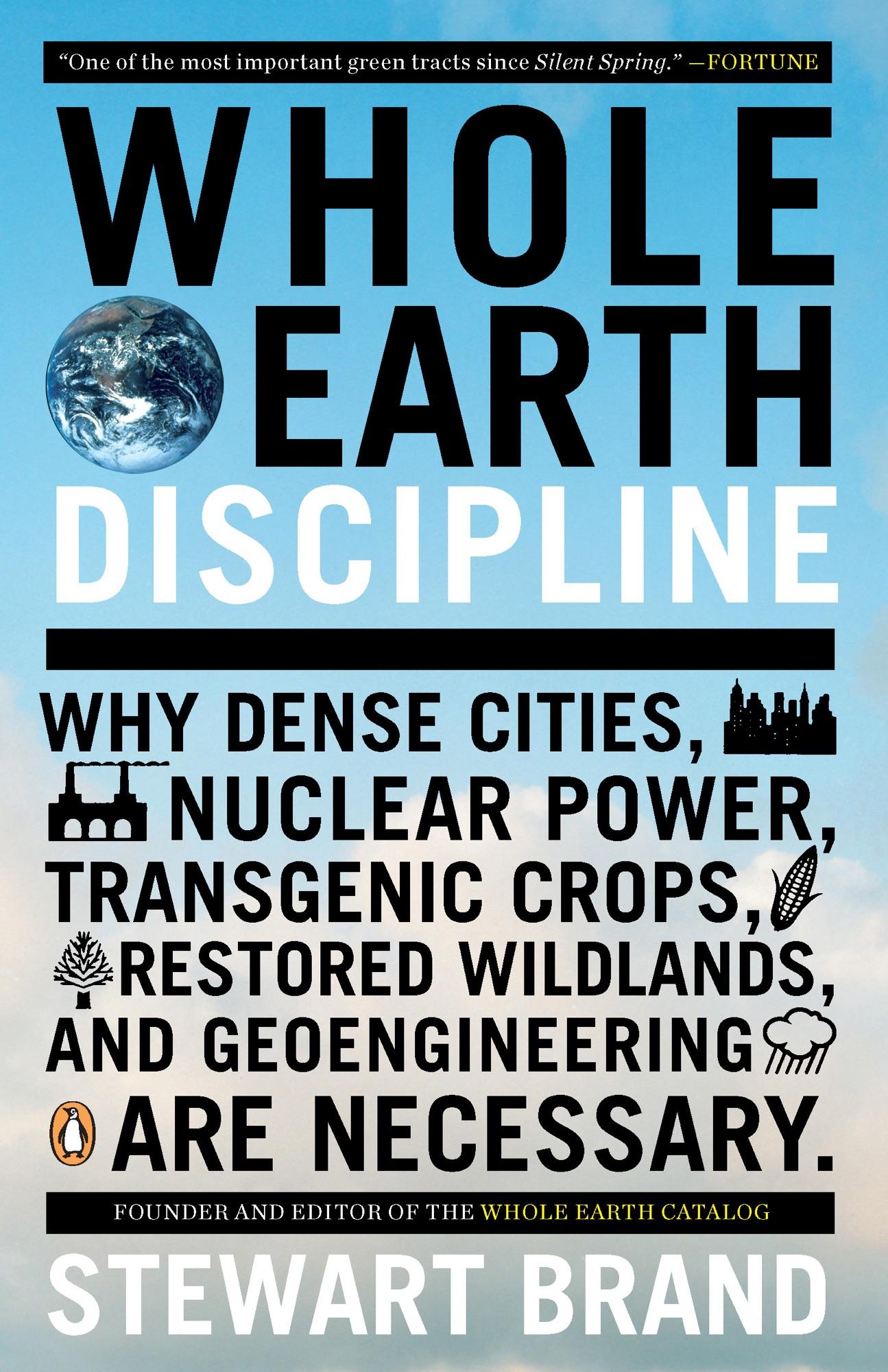
Sagan compared scientific illiteracy to antebellum slave illiteracy — same 95% rate, same enforced ignorance. Bridle updates the charge: literacy now means not just reading the findings but reading the systems that deliver them. The bottleneck moved from access to architecture.
[Carl Sagan, The Demon-Haunted World][James Bridle, New Dark Age][John Brockman, What Should We Be Worried About]

The Diagnosis That Outlived the Diagnostician
Eric Schmidt drove up to Ellingham Hall in June 2011 with an entourage that included Jared Cohen, and the FBI's most-wanted digital fugitive gave them roughly five hours of unrehearsed philosophy abou…