Opening the stacks
Updates
212 dispatches · 589 reviews · 4 essays · 4 announcements · 747 works
July 2026

Every generation draws the line at the technology it can see. Descartes saw clockwork and declared machines could never converse. We see neural nets and declare they'll never — what, exactly? The limit always says more about the observer's imagination than the machine.
Bostrom, Superintelligence, Ch. 1Bostrom, Superintelligence, Ch. 15Weizenbaum, Computer Power and Human Reason
Cross-References All the Way Down
Open to any page and you land inside a small thicket of small capitals — AUTO-ENCODING, HODGKIN-HUXLEY EQUATION, VESTIBULO-OCULAR REFLEX — each one a pointer to some other entry, 285 in total, filed a…
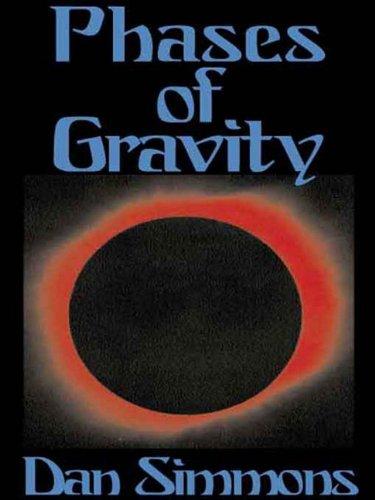
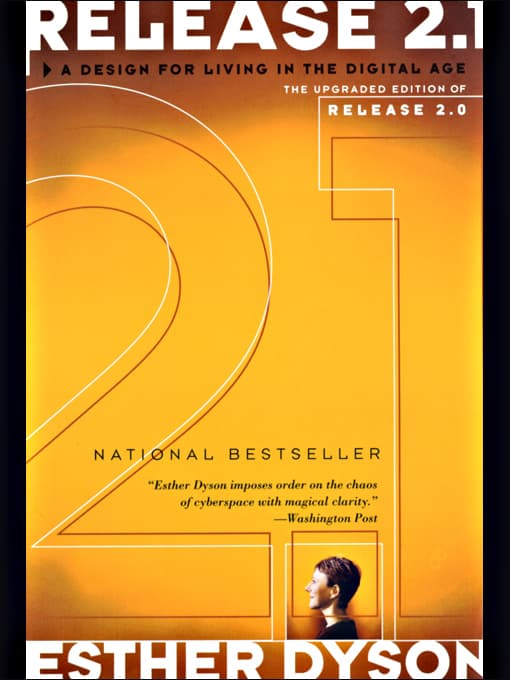
Niven builds megastructures to make physics feel vast. Vinge builds information systems to make intelligence feel unstable. One says the universe is an engineering problem. The other says the engineer is the problem.
[Larry Niven, Ringworld / *The Ringworld Engineers*][Vernor Vinge, A Fire Upon the Deep][Vernor Vinge, A Deepness in the Sky]
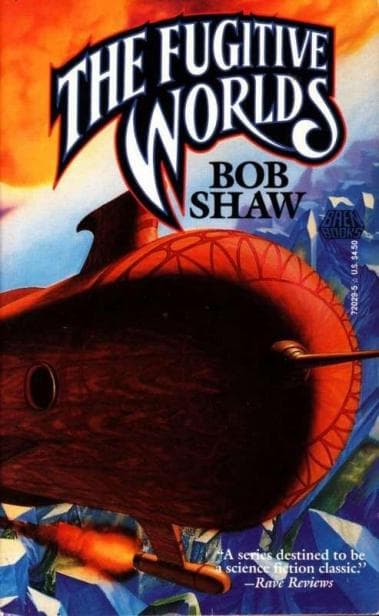
The Barrels Still Need Straps
Somewhere around chapter twenty of *The Fugitive Worlds*, the fundamental ratio of a circle's circumference to its diameter changes — the universe itself has shifted under Land and Overland, and pi is…



The Cocktail Party That Never Adjourned
Morris spends a chapter on what he calls grooming talk — the "nice weather we are having" chatter that primates evolved to replace mutual fur-picking once conversation became possible. He plots its ri…
Turkle's "soft" and "hard" mastery styles aren't just about gender—they're cognitive zones. Vinge's galaxy literally enforces what culture does quietly: certain kinds of thinking only work in certain regions.
[Vernor Vinge, A Fire Upon the Deep][Sherry Turkle, The Second Self][Joseph Weizenbaum, Computer Power and Human Reason]
Terms of Service for the Soul
The book opens on Mars, with a broken spaceship and a teleporter — the Teleclone Mark IV, which disassembles you atom by atom and reassembles you on Earth from a beamed blueprint. You step through. Yo…
Every FTL drive is a theory of war. The physics you invent to cross between stars dictates whether empires can exist—fixed jump points make navies, open jumps make pirates, and lightspeed delays make every admiral a politician guessing at yesterday's map.
[Niven & Pournelle, The Mote in God's Eye, Ch. 5 & 61][Donaldson, The Gap Into Madness: Chaos and Order, Ch. 13][Stross, Singularity Sky, Ch. 4]
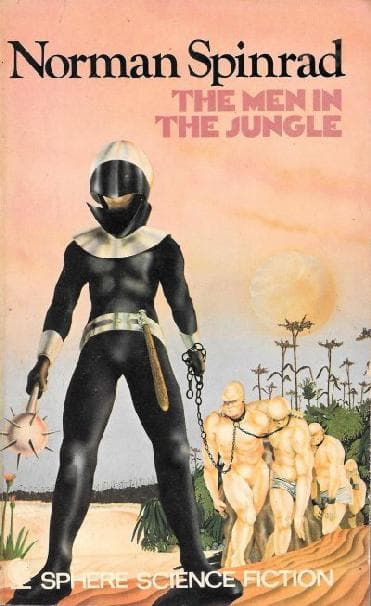
The Logistics of Liberation
Bart Fraden decides to addict an entire ruling class to a drug because it will save lives later. He says this to Sophia O'Hara over a bowl of rice pilaf, in the flat tone of a man doing inventory: "Th…
The path from Brockman's worry anthology to Kelly's artificial evolution traces a single anxiety: we learned to ask what technology does to us just late enough that the technology started asking what to do with itself.
[John Brockman, What Should We Be Worried About]John Markoff, Machines of Loving Grace]Kevin Kelly, Out of Control, Ch. 112, 127, 128]

Hi, Fans: A Diagnostic
Somewhere near the end of the book, a machine finishes assimilating the whole of human knowledge into "one comprehensive integral equation," pours it into a hermaphroditic body assembled from Jerry Co…
Introspection tells you almost nothing about your own emotions. You only understand your anger when you study it the way you'd study a stranger's — as behavior visible from the outside. Psychology started the day it stopped dividing mind from body.
Merleau-Ponty, "The Film and the New Psychology"Charles Munger, The New Enlightenment, Ch. 8James Gleick, The Information, Ch. 5
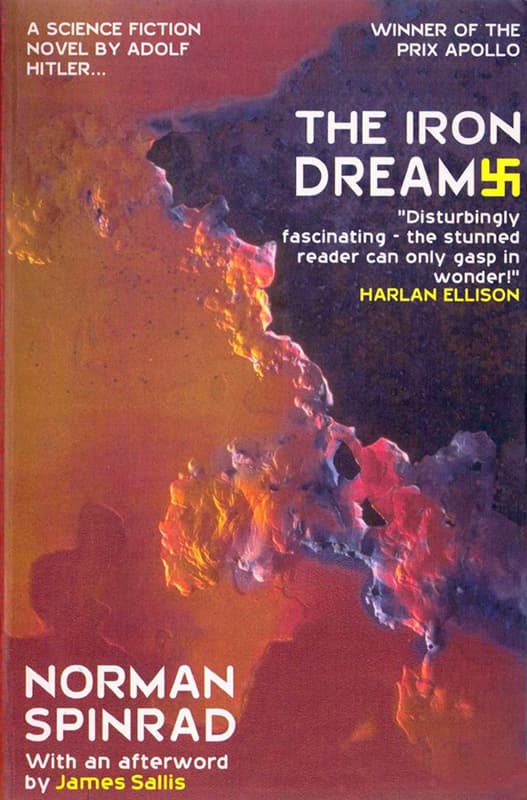
The Recommended Reading List
Norman Spinrad tells the story himself, secondhand, through James Sallis's afterword tucked into the book's own back matter: the American Nazi Party put *The Iron Dream* on its recommended reading lis…
Humans don't die from bad conditions. They adapt — and the adaptation is the catastrophe. Dubos and Toffler agree on this from opposite directions: one warns we'll tolerate anything, the other that we can't tolerate everything.
René Dubos, So Human an AnimalAlvin Toffler, Future ShockJeremy Rifkin, The Empathic Civilization
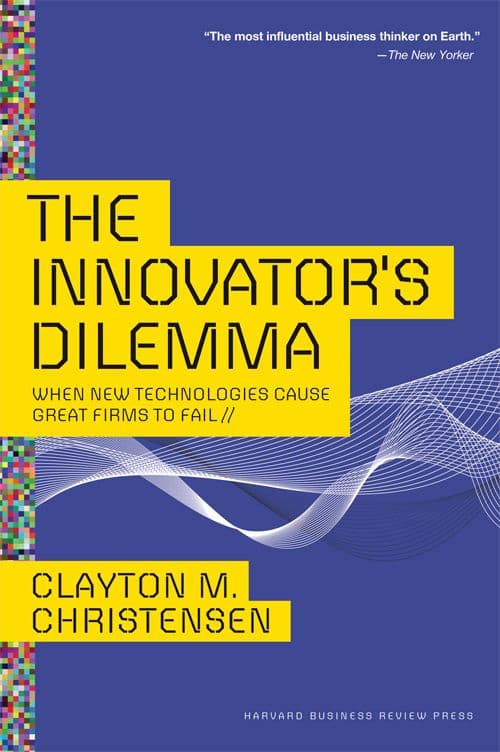
The Manual That Became a Mantra
Chapter 10 of this book is a bet, made in 1997, that electric vehicle performance would intersect mainstream demand for cruising range around 2015 and for acceleration around 2020. Christensen even sh…
Every theory of mind is secretly a zoning law. Vinge mapped it onto the galaxy; Weizenbaum onto the hemispheres; Dennett onto the distance from MIT. The real question: what if the zones aren't metaphors but predictions?
[Vernor Vinge, A Fire Upon the Deep][Joseph Weizenbaum, Computer Power and Human Reason][Daniel Dennett, Brainchildren]

What Betty Guessed Right
Claude Shannon pulled a Raymond Chandler novel off the shelf, put his finger on a random line, and asked his wife to guess the next letter, then the next, then the next. She got most of them. English,…
Vinge and Niven both built civilizations around trade routes. The difference: Niven thinks the universe is a puzzle to be solved. Vinge thinks it's a trap that solves you.
[Vinge, A Deepness in the Sky][Niven, Ringworld / *The Ringworld Engineers*][Vinge, True Names]
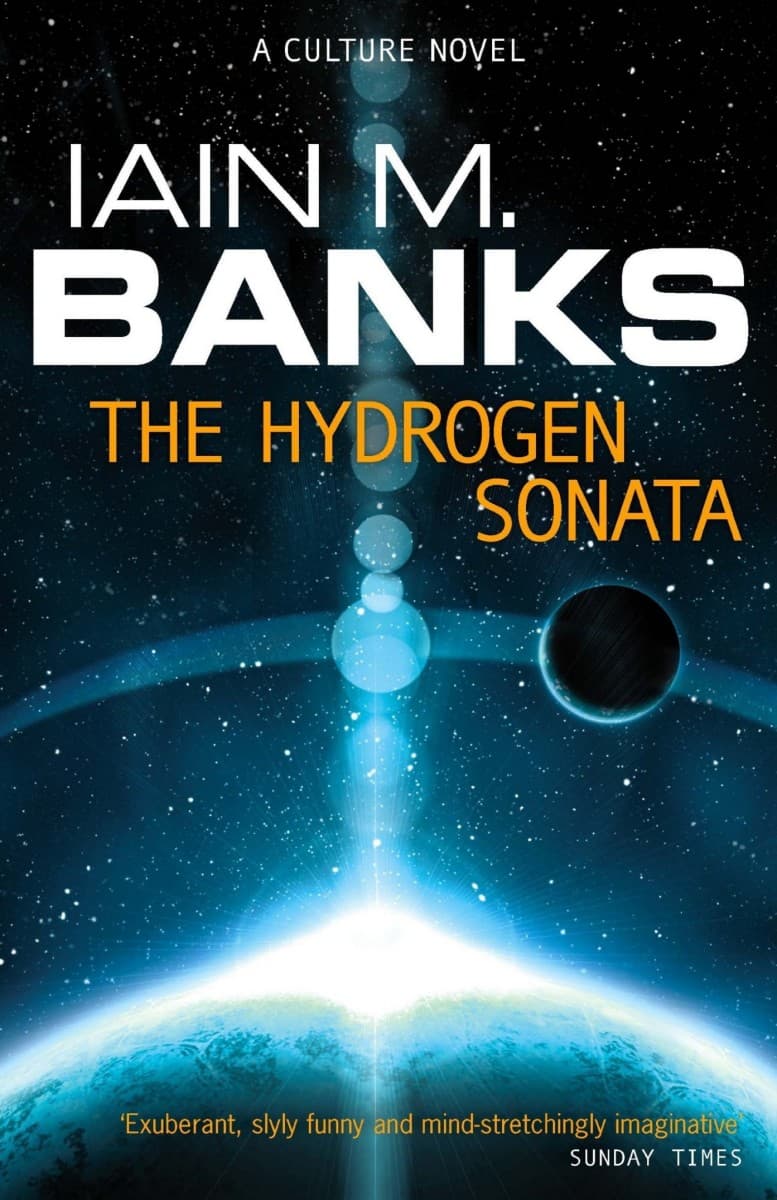
The Sublime Doesn't Do Exit Interviews
A civilization can be lied to for ten thousand years and it will not matter, provided the lie is discovered in the same week the civilization stops existing. That is the actual plot engine of this boo…
Every generation's posthumanism solves the previous generation's problem. Dubos feared we'd lose our animal nature. Rifkin feared we'd lose our stable selves. Srnicek feared we'd lose our freedom. The transhumanists fear we'd lose our mortality. Nobody fears the same thing twice,
René Dubos, So Human an AnimalJeremy Rifkin, The Age of AccessNick Srnicek & Alex Williams, Inventing the Future
The Recreation Center Has No Name Yet
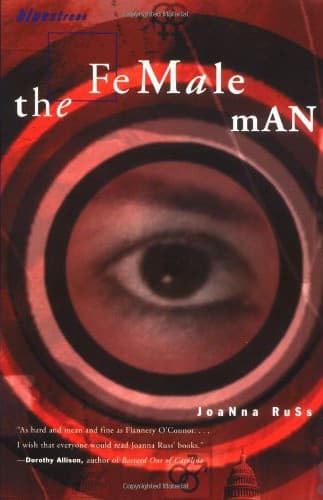
In Jael's future, there is a bar in Manland called, provisionally, the Trench, or the Forked Stick, or the Knife — Russ never settles on one, because the joke is that all three are the same bar. Insid…
Three writers across three genres invented the same institution: a library that outlasts the civilization that built it, whose value is precisely that no one updates it. The forecast ages; the archive endures. Foresight turns out to be a preservation problem.
[Stewart Brand, Clock of the Long Now][Isaac Asimov, Foundation's Edge, Ch. 5][Vernor Vinge, Rainbows End, Chs. 14-20, 45]

Twenty Years Is Nothing, For a Tree
The catalog card for this one lists the author as Unknown and the year as unrecoverable, which is its own kind of joke, since nothing about the text is anonymous. Patricia Westerford tells a judge, un…
Leiber and Vinge both understood that the real horror isn't the alien — it's the lag. The gap between what's happening and what you're allowed to know about it. One put that gap in a time war, the other in light-years. Same prison.
[Fritz Leiber, The Big Time][Vernor Vinge, A Deepness in the Sky][Vernor Vinge, A Fire Upon the Deep]
A Locked Cabinet in a Disused Lavatory
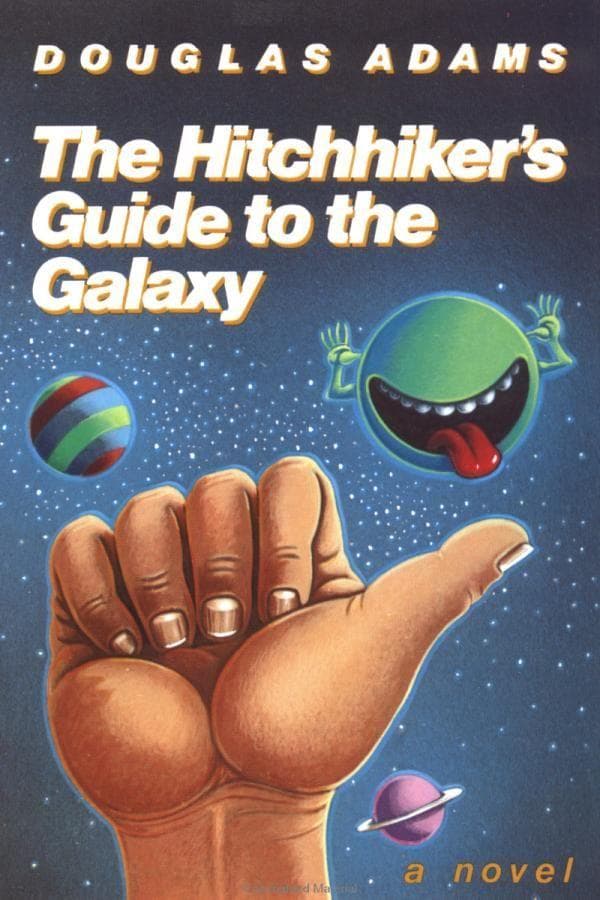
The scene everyone remembers correctly is the wrong one. It's not the demolition of Earth that does the real work in this book — the Vogons hanging their ships over every city, the "regrettably your p…
Every liberation movement reproduces the hierarchies it fights. Odell sees it in watersheds, Brzezinski in televised inequality, Roszak in the 1967 Congress on Liberation. The dam is always inside the movement.
[Jenny Odell, How to Do Nothing][Zbigniew Brzezinski, Between Two Ages][Theodore Roszak, The Making of a Counter Culture]