The Screen That Learned to Swallow
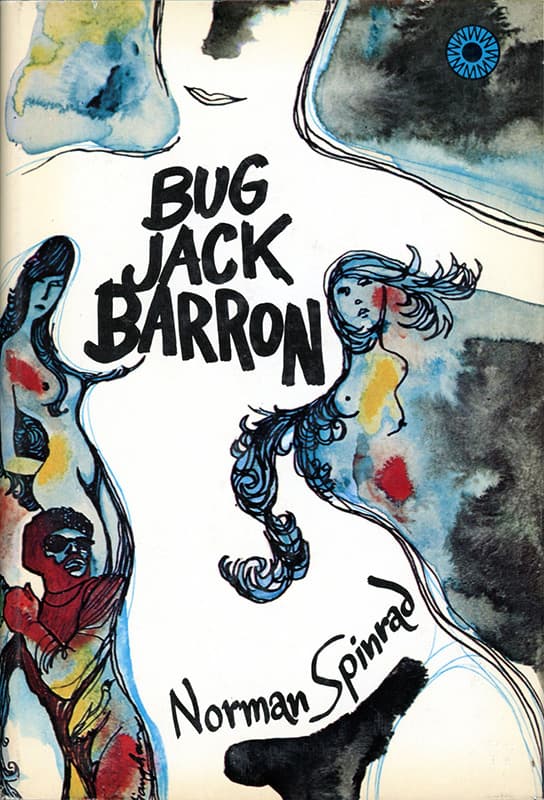
Norman Spinrad wrote *Bug Jack Barron* in 1967, published it in 1969, and managed to get *New Worlds* nearly killed for serializing it. The British censors weren't wrong to be alarmed, though their reasons were wrong — it wasn't the sex or the profanity that should have worried them, it was the thesis. Spinrad proposed a future in which a talk show host becomes the most powerful political actor in America, not by holding office but by commanding attention. The host, Jack Barron, runs a show called "Bug Jack Barron" where ordinary people call in with grievances and Barron confronts the powerful on live television, performing populist outrage while navigating backroom deals with a cryonics billionaire named Benedict Howards. In 1969 this was satire. By 2016 it was a campaign strategy. By 2026 it is simply the weather. Spinrad saw that the medium would not remain the message — it would become the candidate, the platform, the party. He understood that the man who controls the emotional rhythm of a broadcast controls the political reality downstream of it. What he got right is staggering in its specificity: the conflation of entertainment and governance, the way a media figure's "authenticity" becomes a currency more valuable than policy, the transformation of public discourse into a call-in spectacle where grievance is the only genre that rates. What he couldn't see — and this is forgivable, writing before ARPANET — is that the call-in show would decentralize into a million simultaneous streams, that Jack Barron would be replaced not by one demagogue but by an ecosystem of them, each feeding a niche audience its preferred flavor of outrage.
The novel's treatment of race is ambitious and clumsy in roughly equal measure, which is to say it is a product of 1969. Spinrad puts racial politics at the center of his plot — the cryonics immortality technology is being denied to Black Americans, a Black nationalist leader named Malcolm Shabazz is a key political player, and Governor Lukas Greene is a Black man wrestling with internalized racism and the impossible mathematics of coalition politics. Spinrad deserves credit for insisting that any serious American political fiction must be about race. But the execution carries the fingerprints of a white author writing Black interiority with more confidence than warrant, and the novel's racial dynamics sometimes feel like they exist to complicate Jack Barron's moral journey rather than to stand on their own. Greene's internal monologue about his conflicted feelings toward Shabazz reads, in 2026, like a document of how white liberals in the late sixties imagined Black political consciousness — not inaccurate in every particular, but framed by an outsider's sense of what the interesting tensions are. The absence that echoes loudest now is any sustained Black female perspective. Sara Westerfeld exists, and she has depth, but her function is largely relational. The women in this novel orbit the men who hold power, which Spinrad might argue is the point — that this is a satire of how power works — but the satire never quite turns its eye on that particular arrangement.