The Frequency No One Tuned Out
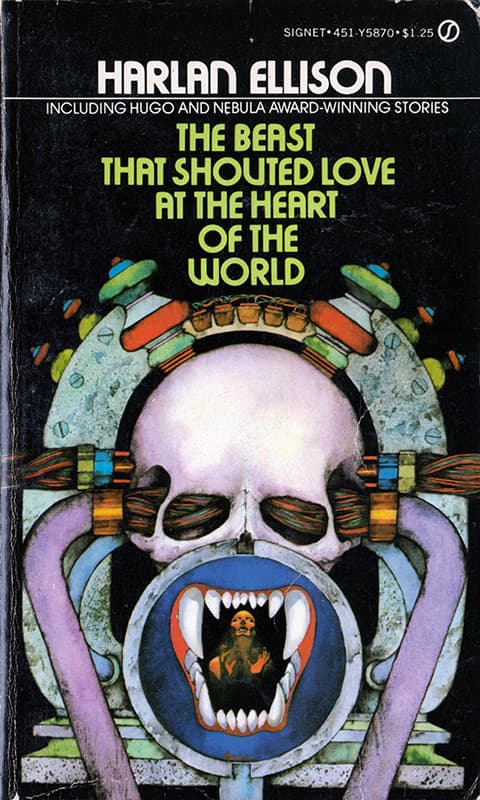
Harlan Ellison didn't write science fiction so much as he wrote nerve damage and filed it under the genre. This 1969 collection, arriving at the tail end of a decade that had already exhausted most available forms of cultural shock, reads in 2026 less like prophecy and more like a seismograph that happened to be bolted to the right fault line. The freeway duel story — George in his armed vehicle, road rage escalated to military engagement — is no longer speculative. It is Tuesday in certain American states. Ellison imagined the car as weapon-platform and ego-prosthesis decades before road rage entered the DSM-adjacent lexicon, before dashcam footage became its own genre of horror, before the normalization of vehicular aggression became a public health crisis no one can figure out how to fund. He got the emotional physics exactly right: the way technology doesn't create male violence but gives it a longer lever arm. What he didn't anticipate — couldn't, in 1969 — was that the surveillance apparatus would come not from a sleeping god under the Sargasso Sea but from the drivers themselves, voluntarily filming their own escalations for an audience of millions.
The Sleeper story is the one that aged into something genuinely uncomfortable. A peacekeeping entity that monitors thoughts, maintains six centuries of enforced stability, and is ultimately undermined by leaders who learn to make their intentions opaque — this is not a parable about the Cold War anymore. It is a parable about encryption, about end-to-end messaging, about the post-Snowden compact where we simultaneously demand surveillance for safety and opacity for freedom, and get neither cleanly. Ellison's rebels argue that war is necessary for human progress, a position the text treats with ambivalence rather than endorsement. In 2026, after watching the return of large-scale conventional warfare to Europe, after watching the word "necessary" do grotesque work in opinion columns, that ambivalence feels less like literary sophistication and more like an open wound. The Sleeper's failure mode — not technological breakdown but ideological rejection — maps with eerie precision onto the way democratic institutions have been dismantled not by external force but by internal contempt.
The blind spots are where you'd expect them. Women in these stories are prostitutes, countesses, objects of rescue, or absent. Kris on The Hill is a woman defined entirely by a man's need to save her. The yeti encounter reads as a man projecting "the constant woman" onto a literal inhuman creature, which is either a savage piece of self-aware satire or exactly the unconscious confession it appears to be. Ellison's introduction, with its defense of experimental fiction against the "New Wave" label, now reads as a man fighting a taxonomic war that history resolved by ignoring both sides. The stories themselves hold up better than the polemics. What's conspicuously absent is any sustained interiority for anyone who isn't a white American man in crisis. The empathy Ellison claims as his central subject — Eddie Burma the empath bleeding out in a nightclub — is always routed through a particular kind of masculine suffering, performed loudly, witnessed by no one. It is empathy as solo performance.