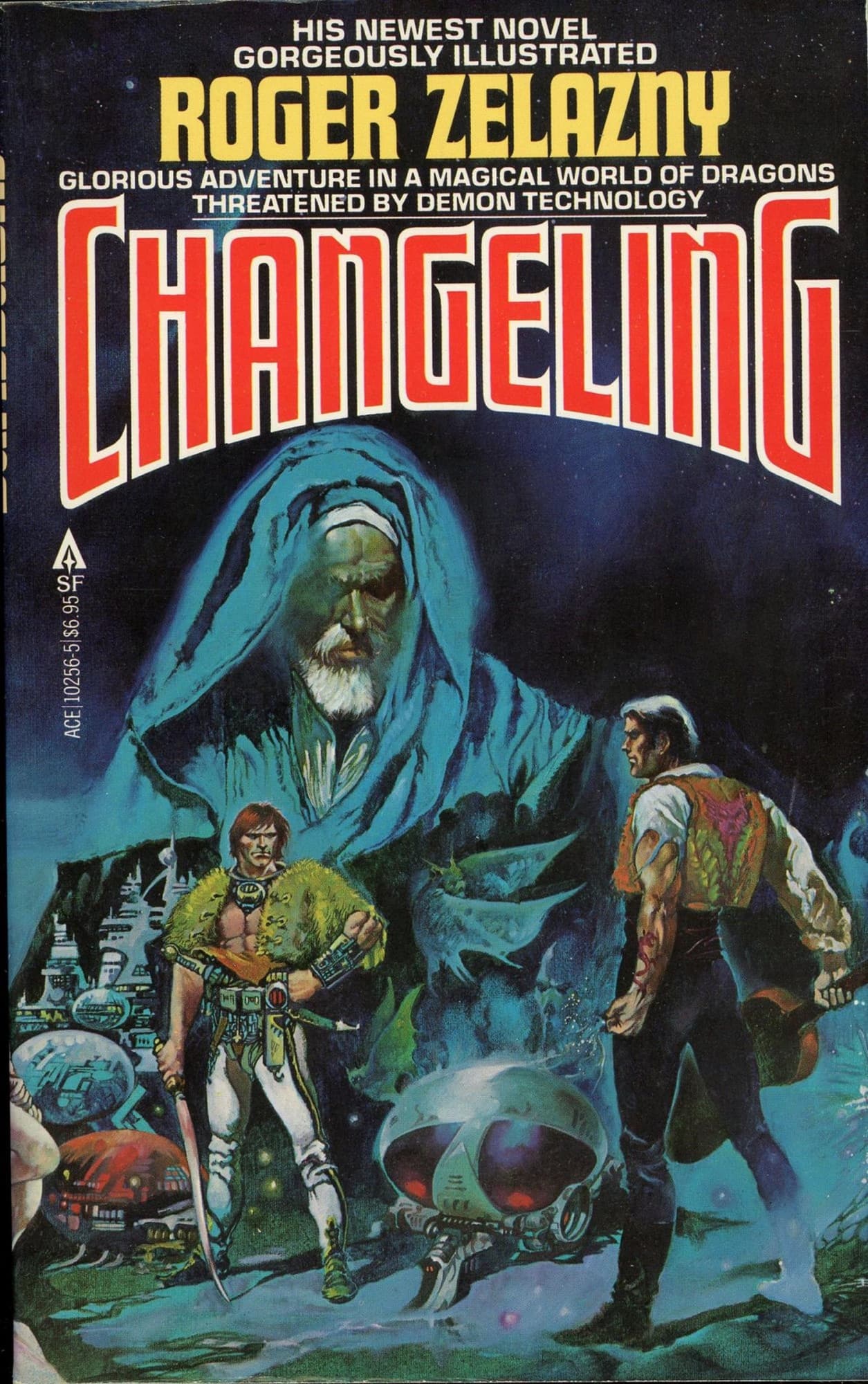
Command and Control, By Other Means
Pol Detson spends the climax of this book on a rooftop, scepter raised, directing troops he cannot see with a vocabulary that would not embarrass a situation room: strike forces, nerve centers, emplacements, artillery repositioned to bring him down. "Moving each time artillery pieces were repositioned... directing strike forces toward the most troublesome emplacements, he hurled other assaults against what appeared to be nerve centers, breaking down walls and spreading fires." He is a sorcerer. He is also, functionally, an operator at a console, managing a battle he experiences mostly as data — dragons here, small folk there, casualties mounting on both sides while he grows "more and more dispassionate as the sun climbed." Zelazny's trick, and it's a good one, is to give magic and technology the same operational grammar. Across the story's two parallel worlds, one that kept its wizards and one that kept its engineers, the mirror-image protagonists — Mark with his steam wagon, Pol with his rod — are doing structurally the same job with different materials. Command is command.
The cosmology underneath this is stranger than the dragon-battle surface suggests. When Pol demands to know why the war keeps recurring, seven unsupported flames answer him: it is "a recurring thing," the world was split by it "ages ago," and he and Mark have been cast, without consent, as "the agent of preservation" and "the champion of the insurgency" in a conflict with an audience that needs it to keep happening. This is