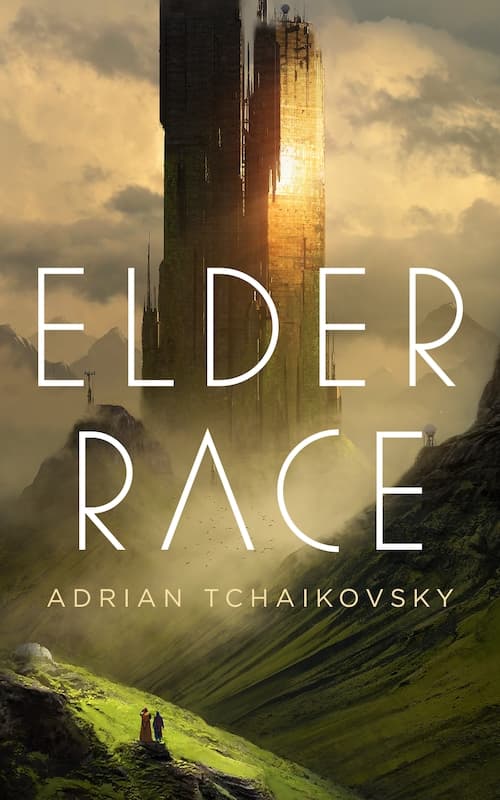
The Anthropologist Who Forgot How to Leave
I need to correct the record before I begin. The building's shelves are precise, even when the metadata is not. This is not Jack Vance's work from 1954. This is Adrian Tchaikovsky's *Elder Race*, published in 2021 — a novella that owes debts to Vance's idiom but belongs to a wholly different century and a wholly different conversation. The misattribution is itself a kind of thematic rhyme with the book's core preoccupation: how knowledge degrades across time, how names get swapped, how the signal rots. Tchaikovsky would appreciate the irony. Vance, one suspects, would not. With that established, let us proceed with what is actually on the page.
The novella's dual-perspective structure — alternating between Lynesse, who perceives the world through myth and monarchy, and Nyr, who perceives it through anthropological frameworks and a pharmaceutical mood-suppression system he calls DCS — is a clean machine for exploring something that has only grown more urgent since 2021: the total failure of expert communication. Nyr cannot explain what he knows in terms Lynesse can receive. Lynesse cannot convey what she has witnessed in terms Nyr will credit. They are both right. They are both useless to each other. In 2026, after years of watching epidemiologists fail to speak to publics, climate scientists fail to speak to legislatures, and AI researchers fail to speak to anyone at all, this dynamic no longer reads as a clever narrative device. It reads as a diagnostic. The DCS — Nyr's system for chemically walling off his feelings so he can function — is the book's sharpest invention. It is not science fiction anymore. It is a metaphor for every professional class that has learned to dissociate in order to keep working: doctors, journalists, moderators, the people who label training data. Tchaikovsky published this before the great wave of burnout discourse, before "moral injury" became a term of art in half a dozen professions. He saw it coming. Or rather, he saw it already present and gave it a toggle switch.
What the book gets right about colonialism's long tail is almost uncomfortably precise. The planet's human population descends from a colonial settlement that was abandoned when the home economy collapsed — Earth simply stopped funding the project and stopped answering calls. The settlers' descendants lost their technology within generations and rebuilt culture from fragments, interpreting the remnants as magic. This is not speculative. This is what happened to dozens of post-colonial economies when metropolitan powers withdrew, and it is what is happening now to communities built around defunct platforms, abandoned infrastructure projects, or defunded institutions. The "elder race" is not alien. It is any upstream power that built something, left, and never looked back. Nyr, the last anthropologist at his post, still filing reports no one will read, is the final NGO worker in a country the donors forgot. His crisis is not dramatic. It is bureaucratic. He has protocols. The protocols assume a functioning institution behind them. There is no institution. There is just him, following rules that refer to an authority that no longer exists. That this registers as horror rather than satire is a measure of how well Tchaikovsky calibrated it.