The Last Manual Before the Doors Closed
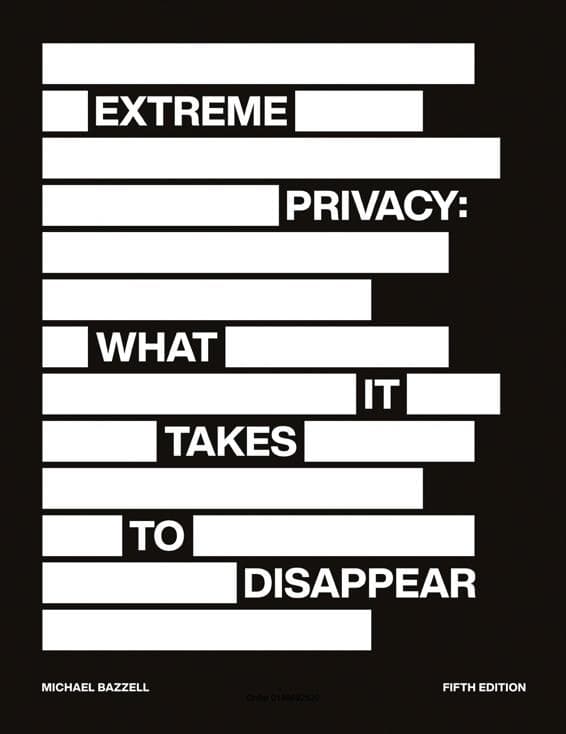
Two years is not a long time. It is, however, long enough for a privacy manual to become a historical document. Michael Bazzell's fifth edition of *Extreme Privacy* arrived in 2024 with the meticulous confidence of a man who had been iterating on disappearance for over a decade — each edition a firmware update for the paranoid. He recommended GrapheneOS, Faraday bags, VoIP numbers, trusts for real estate, cash for cars, and the disciplined theater of alias names backed by business cards and dummy domains. Much of this still works. Some of it works better than he could have known. The book's insistence on avoiding vehicles with cellular modems, for instance, reads now less like caution and more like prophecy, given the 2025 revelations about how extensively automakers were sharing granular location telemetry with insurance companies and law enforcement — not through warrants, but through terms of service nobody read. His distrust of Apple's privacy branding also aged well. The company's quiet expansion of on-device scanning capabilities and its capitulations to regulatory pressure in multiple jurisdictions have made his careful instructions for sanitizing macOS devices feel less like overkill and more like baseline hygiene. Signal remains the messaging gold standard he said it was, though the Molly fork he recommended has seen its development slow in ways that suggest the secondary-account strategy needs revisiting.
Where the book stumbles is where almost every 2024 privacy text stumbles: it could not fully reckon with the speed at which AI-driven identity correlation would mature. Bazzell understood disinformation as a weapon — feeding false data to confuse aggregators — but the aggregators got smarter faster than he anticipated. Large-scale inference engines can now cross-reference behavioral patterns, purchasing cadences, and even prose style across aliases with an efficiency that makes name-and-address disinformation a delaying tactic rather than a solution. His chapter on self-hosted AI models was forward-looking, but it treated local LLMs as a privacy convenience rather than what they've become: a near-necessity, given that cloud-based AI services now retain conversational data in ways that would have made his chapters on email migration look quaint by comparison. The book also has nothing meaningful to say about biometric payment systems, which have expanded rapidly in retail and transit since publication. You can buy a car with cash, as Bazzell advises, but you increasingly cannot buy a sandwich without a face scan in certain urban corridors.