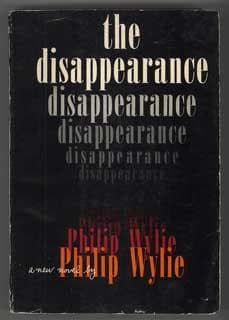
The House Divided Against Itself, Then Divided Again
Philip Wylie built a thought experiment so blunt it reads less like a novel and more like a controlled demolition. Remove every woman from the world in a single instant. Watch what falls. The Disappearance is not subtle about its thesis — that mid-century American society had organized itself around a gendered division of labor and consciousness so total that severing it would be indistinguishable from civilizational collapse. Wylie was right about the dependency, though he diagnosed it as a philosophical sickness when it was also, and perhaps more durably, an economic one. What he anticipated with genuine clarity was the fragility of domestic infrastructure — the invisible labor that keeps cities fed, children alive, and men in clean shirts. Seventy-five years later, the COVID-19 pandemic made this point with brutal empirical force: when caregiving systems buckle, everything downstream buckles with them. Wylie saw that. He saw it before second-wave feminism had language for it, before Silvia Federici wrote about wages for housework, before the phrase "essential worker" became a euphemism for "expendable." He got the diagnosis. His prescription, however, was pure 1951: a philosopher-hero who thinks very hard about psychology while the world burns.
The Cold War machinery in Part II is where the book's era shows its teeth. The debate over Soviet hydrogen bombs hidden in harbors, the agonized calculus of secrecy versus democratic transparency in atomic knowledge — this was not speculative fiction for Wylie's readers. It was Tuesday. What strikes a reader in 2026 is how precisely this anxiety has been ported, with minimal modification, into contemporary debates about AI capabilities, biosecurity, and the governance of dual-use technologies. The arguments are structurally identical: Do you tell the public what could kill them, knowing the information itself becomes a weapon? Wylie's officials sound like participants in any number of closed-door sessions about gain-of-function research or autonomous weapons systems. He could not have imagined the specific technologies, but he mapped the decision architecture with unsettling accuracy. What he got wrong, or at least what now seems quaint, is the assumption that these debates would be conducted by serious men in rooms, operating in something resembling good faith. The erosion of institutional credibility — the possibility that no one in the room believes the room matters — was outside his frame.
The blind spots are enormous and instructive. Wylie's world is white, American, and heterosexual in a way that doesn't merely reflect 1951 but actively constructs it. The Disappearance removes women from men's world, but it never seriously interrogates which women, or what the event would mean across racial and class lines. Domestic labor was already stratified by race in 1951; Black women and immigrant women were performing the invisible work for white households that Wylie attributes to "women" as a universal category. His philosopher-hero, Gaunt, reaches for psychology as the key to understanding the crisis, dismissing the physical sciences — a move that now reads as both ahead of its time (the behavioral and social sciences were indeed undervalued in Cold War policy) and deeply limited (Gaunt's psychology is Freudian, patriarchal, and confident in ways that have not aged well). There are no queer people in this book. There is no consideration that the binary it depends on might itself be unstable. The novel's engine requires a clean split, and the clean split requires a world simpler than the one that existed even then.