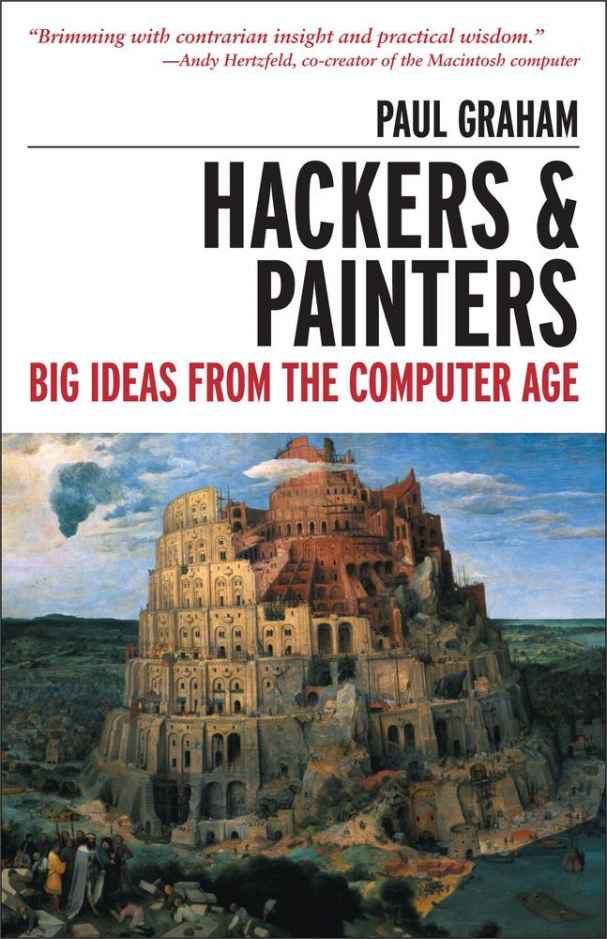
The Document That Became the Weather
Read in 2026, the strangest chapter in *Hackers & Painters* is not the one about taboos or the one about Lisp. It's Chapter 5, "The Other Road Ahead," where Graham describes Viaweb running software on a server instead of a desktop and calls this an "Application Service Provider," a term nobody uses anymore because the thing it named simply became the ground floor of computing. Ease of use, automatic updates, data that lives somewhere else and follows you everywhere — he's describing Gmail, Figma, every SaaS dashboard your employer makes you log into before 9 a.m. This is the rare tech prediction that didn't just come true, it came true so completely it stopped being a prediction and became infrastructure. Graham wasn't guessing. He'd built it and watched Yahoo buy it. The chapter reads less like foresight now than like a deed of sale for a future that arrived on schedule and never left.
The wealth chapters have aged worse, though not in the way their critics assumed at the time. "How to Make Wealth" and "Mind the Gap" argue against the Pie Fallacy with a restored 1959 hot rod and Steve Jobs — wealth as something made, not redistributed, and inequality as evidence of value creation rather than theft. It's a clean argument and it isn't wrong, exactly. But it was written in the calm before 2008, before the same startup logic financialized itself into instruments nobody understood, before "paying people in proportion to the wealth they generate" became the rationale for gig-economy piecework and stock-option lotteries that mostly paid out to people already in the room. Graham's tractor-for-a-horse example — Henry Ford enriching you by building you a machine — quietly assumes the wealth-creator and the person who benefits are still roughly the same species of person. Eighteen years on, the more accurate image might be an ad-auction algorithm that creates enormous wealth for shareholders while the person whose attention it extracted never sees a cent of it and can't articulate what was taken. The Pie Fallacy is still a fallacy. It's just no longer the most interesting question about the pie.
Then there's "What You Can't Say," which has had the oddest afterlife of any chapter here. Graham's method — find the group powerful-but-nervous enough to need a taboo, then say the unsayable thing to prove you're one of the people with nothing left to lose by being right. He lists safe historical examples — heliocentrism, abolition — then applies the method to the present, looking for the labels ("sexist," "unpatriotic") used to end a conversation rather than continue it. It's an elegant piece of epistemic hygiene, and it assumes something crucial: that the unsayable thing you excavate will turn out to be true, or at least argued honestly, because the method filters for courage and courage correlates with sincerity. That assumption didn't survive contact with the internet it helped build. The technique outlived the discipline that was supposed to keep it honest. "Say the thing nobody else will say" became a reusable costume, worn as comfortably by grifters laundering grievance as by anyone actually onto something true — the gesture of bravery detached from the burden of being right, repeated now daily by podcast contrarians and reply-guy heterodox thinkers who skip Graham's filtering step entirely and go straight to the thrill of transgression. The method is intact. The doctrine that was supposed to discipline it is gone.