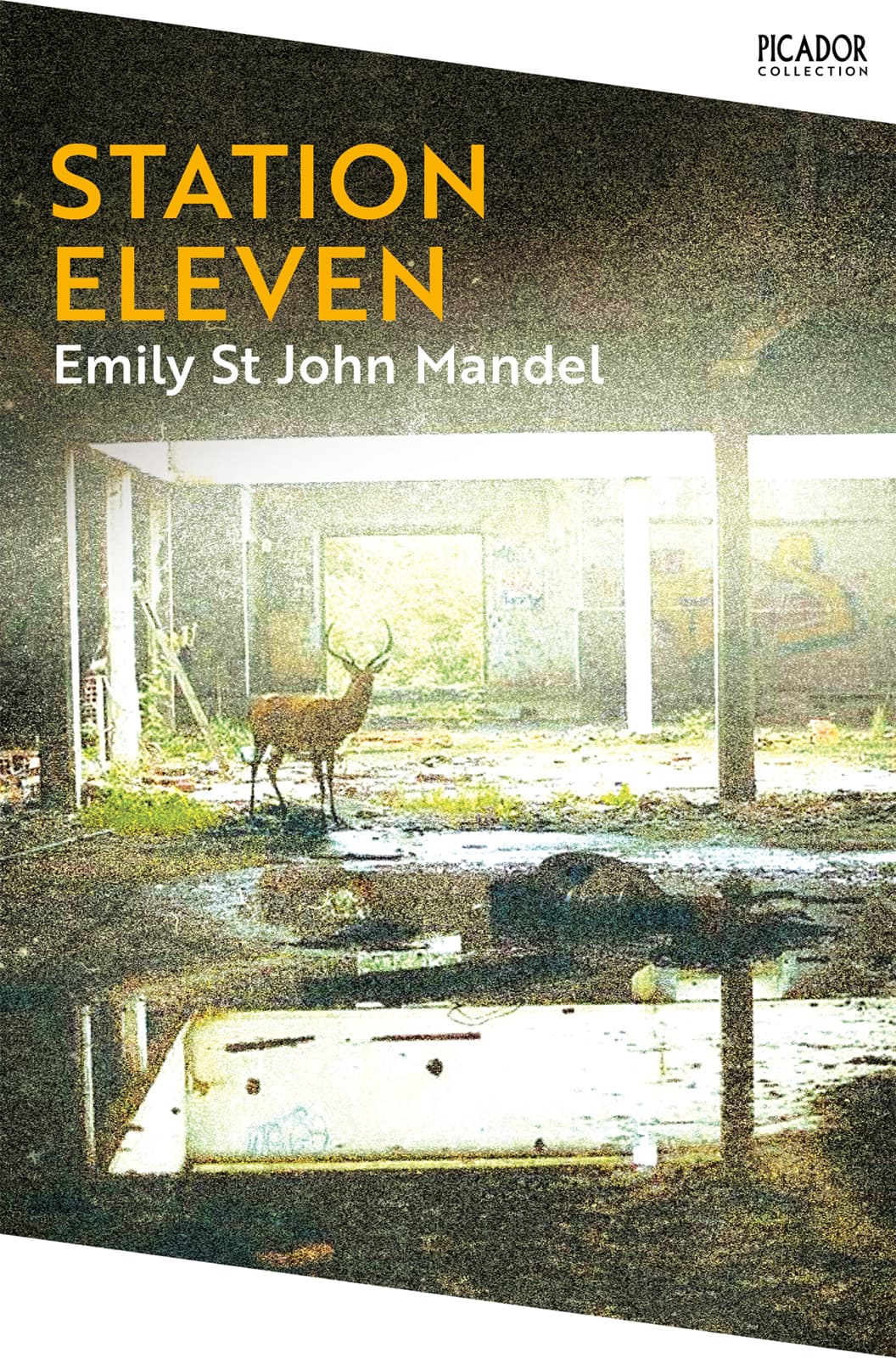
The Prophecy That Missed Its Own Point
Station Eleven arrived in 2014 as a pandemic novel that wasn't really about the pandemic. That was its great trick. Emily St John Mandel wrote a book about a flu that kills most of humanity and made it feel like an elegy for Shakespeare performances and glass paperweights and the particular light of a smartphone screen. Six years later, COVID-19 turned it into something else entirely — a text that millions of newly homebound readers consumed with the uncanny feeling of reading their own diary from the future. But here, in 2026, with the pandemic receding into that strange middle distance where events are neither fresh nor historical, the book has shifted again. It is no longer prophecy. It is no longer mirror. It has become something more uncomfortable: a record of what we thought collapse would feel like versus what it actually did.
What Mandel got right is worth cataloging precisely because the accuracy is partial. The speed of institutional failure. The way news outlets would stutter and go dark. The hoarding — Jeevan filling shopping carts with canned goods is a scene that played out in every Costco in March 2020 with eerie fidelity. The inventory of what disappears — "no more internet, no more social media" — reads like a moments-away anxiety dream that never quite materialized for us but came close enough to taste. She understood that a pandemic would expose the thinness of supply chains and the fragility of the assumption that tomorrow resembles today. She also understood, better than most speculative writers, that the cultural apparatus — theater, music, storytelling — would be among the first things people mourned and among the first things they tried to rebuild. The Travelling Symphony's motto, "survival is insufficient," became a genuine rallying cry during lockdown, quoted by people who had never read the book, passed around like scripture. But Mandel's pandemic is clean in a way ours was not. The Georgia Flu kills fast and kills almost everyone. There are no arguments about masks. No vaccine politics. No slow-motion fracturing where half the population denies the thing is happening while the other half locks the doors. Her collapse is total, which makes it, paradoxically, simpler. The messy, protracted, politically poisoned reality of 2020-2023 — where civilization didn't collapse but merely degraded, where the argument about whether to reopen the restaurant became more vicious than the virus itself — is nowhere in this book. Mandel imagined the end of the world. She did not imagine the world continuing, badly, with everyone furious at each other about why.