The Garden After the Flood
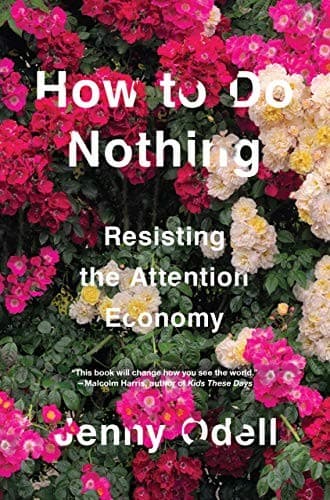
Seven years is not a long time in the life of a book about attention, but it is an eternity in the life of the technologies that book was written against. Jenny Odell published *How to Do Nothing* in 2019, when the attention economy still had a recognizable shape: Twitter was Twitter, Facebook was the panopticon everyone loved to hate, and the phrase "doomscrolling" had not yet entered common usage because the doom had not yet fully arrived. The pandemic was months away. Generative AI was a research curiosity. TikTok was an app your younger cousin used. Odell's central argument — that the most radical thing you can do is redirect your attention toward the local, the embodied, the bioregional — landed at a moment when it felt like a gentle corrective, a hand on the shoulder. What nobody anticipated, including Odell, was that the attention economy would soon undergo not just intensification but a kind of phase change, one that would make her prescriptions simultaneously more urgent and more difficult to follow.
What the book got right is almost uncomfortably precise. Odell's analysis of context collapse — drawn from danah boyd and Joshua Meyrowitz — now reads less like cultural criticism and more like a forensic report filed before the crime. The mechanisms she described, in which platforms strip context from speech and flatten discourse into engagement metrics, became the operating logic of an entire era of political destabilization. Her warnings about far-right propagandists exploiting collapsed contexts anticipated not just the events of January 2021 but the broader normalization of coordinated disinformation as a permanent feature of digital life. Her insistence that attention is not merely a personal resource but a political one — that who and what you attend to is an ethical act — has only sharpened as algorithmic recommendation systems have grown more sophisticated. The arrival of large language models and generative AI, however, represents a blind spot so large it almost doesn't count as one; nobody in 2019 was writing about the prospect that the attention economy would evolve from competing for your attention to *generating the content that competes for it*, at scale, at near-zero cost. Odell was worried about the firehose. She could not have imagined the firehose learning to aim.
The book's more persistent blind spot is class, and the particular texture of its Bay Area context. Odell's prescription — birdwatch, visit the Rose Garden, learn your watershed, practice deep listening — assumes a subject with leisure, safety, and proximity to green space. She is aware of this, gestures toward it, but never fully reckons with it. In 2026, with housing instability accelerating in the very Oakland neighborhoods she writes about so lovingly, and with the gig economy having absorbed another generation of workers whose attention is not theirs to redirect, the book's framework feels most available to those who least need it. The chapter on encountering strangers in urban space reads differently after years of pandemic-era social withdrawal, after the hollowing out of public transit ridership, after cities across the country moved to criminalize the unhoused. Odell wrote about the ethical imperative of perceiving others. The world responded by making others harder to perceive, or by removing them from view entirely.