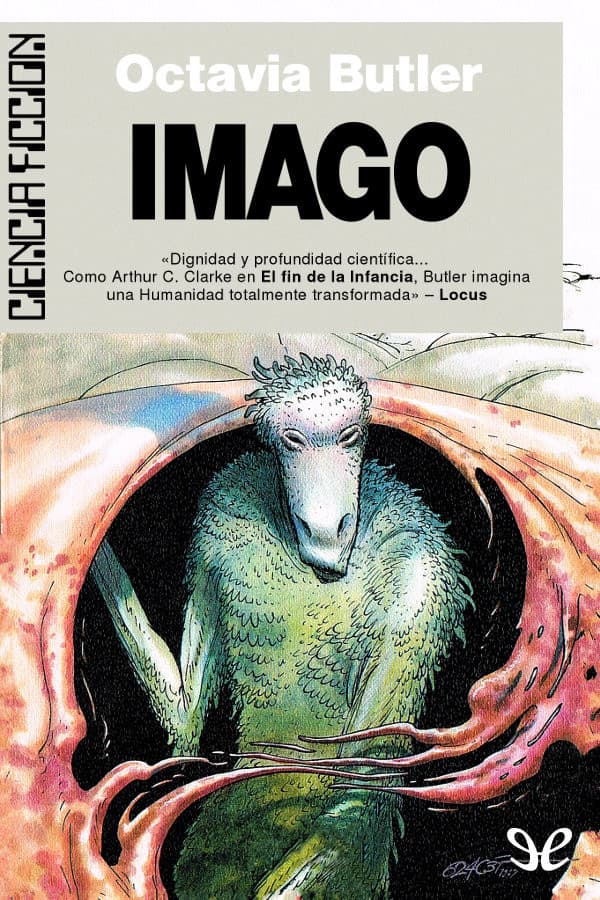
The Third Sex Was Always the Point
Butler wrote *Imago* in 1989, the year the Berlin Wall fell, and she was not interested in walls coming down. She was interested in what grows in the breach. The final volume of the Xenogenesis trilogy completes a thought experiment so uncomfortable that even now, thirty-seven years on, most readers flinch before they finish processing it: What if the price of survival is the end of the self as you understand it? Khodahs, the first construct ooloi—neither human nor Oankali, neither male nor female, a third thing with the capacity to reshape flesh at the molecular level—is Butler's answer to a question nobody was asking in 1989. They were asking it by 2020. The explosion of language around nonbinary identity, gender fluidity, and biological self-determination has made Khodahs less alien than Butler probably intended. The ooloi's ability to perceive and restructure genetic material, to heal through intimate neurochemical contact, to exist as a mediating body between two sexes who cannot safely touch without it—this reads now less like speculative biology and more like a metaphor that arrived decades early for its referent. Butler didn't predict the specific cultural vocabulary. She predicted the need for it.
What she anticipated with surgical precision is the politics of gene editing. CRISPR-Cas9 was identified in 2012; by 2025, germline editing debates have become a permanent fixture of bioethics conferences and defense policy briefings alike. Khodahs doesn't use a lab. Khodahs *is* the lab—an organism capable of reading, correcting, and recombining genetic code through physical contact. The Oankali's entire colonial project is framed as a gift: we will fix your cancer, your genetic diseases, your cellular chaos. The cost is that your children will not be yours. Butler understood, long before anyone was editing embryos in Shenzhen, that healing and control are the same gesture performed with different hands. The novel's resisters—humans who refuse the trade, who choose infertility and slow decline over genetic absorption—map with eerie fidelity onto contemporary anti-modification movements, vaccine refusal, and the broader politics of bodily sovereignty. Butler does not make them wrong. She does not make them right. She makes them human, which in her framework is both diagnosis and epitaph.
The blind spots are real but instructive. Butler's post-nuclear landscape is a product of late Cold War anxiety; she could not have foreseen that the more probable extinction vector would be climate collapse, algorithmic destabilization, or engineered pathogens rather than warheads. The resisters live in scattered villages with machetes and old rifles. There is no internet, no surveillance infrastructure, no information warfare. The Oankali control through biology, not data—a limitation that reveals how thoroughly 1989 still imagined power as embodied rather than networked. The novel also assumes that human tribalism is essentially genetic, a "contradiction" hardwired into the species: intelligence paired with hierarchical behavior, a combination the Oankali diagnose as fatal. This is Butler's most provocative claim and also her most debatable. It has the flavor of sociobiology, a field that was ascendant in the 1980s and has since been substantially complicated by epigenetics and cultural evolution research. Whether she believed it literally or deployed it as a narrative engine is an open question. The Oankali believe it. Butler lets them be wrong about other things.