The Body's Archive
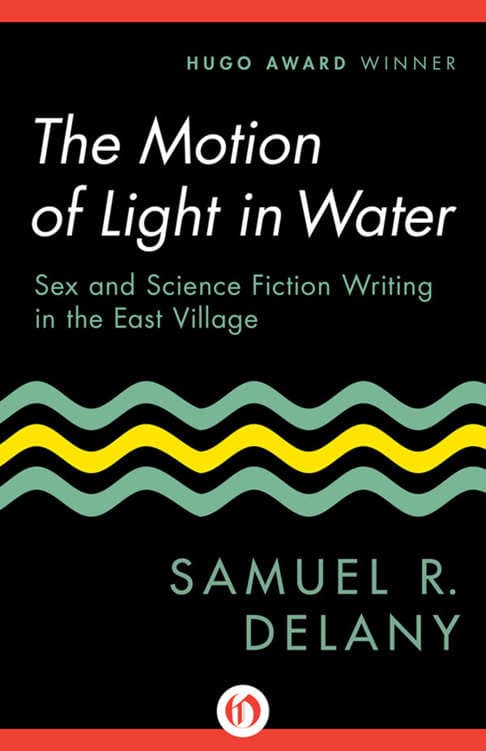
Delany's memoir does not predict the future. It does something more difficult: it insists that the past was never what official memory claims it was. Published in 1988, *The Motion of Light in Water* reconstructs the early 1960s — the East Village, a young Black science fiction writer married to the poet Marilyn Hacker, the bathhouses and piers and welfare offices — with a memoirist's honesty about the unreliability of memoir itself. Delany repeatedly interrogates his own recollections, cross-references them against documents, and admits where they fail. In 2026, when algorithmic content generation can produce flawless, confident, and entirely fabricated personal narratives at scale, this radical epistemic humility looks less like a literary quirk and more like a survival skill. He anticipated not a technology but a crisis: the collapse of trust in first-person testimony, and the corresponding need for writers who make their uncertainty legible rather than hiding it. What he could not have foreseen is that the pressure on memory would come not primarily from state propaganda or psychological repression — his primary concerns — but from the sheer volume of synthetic text that now renders "authentic voice" a category under constant negotiation.
The chapter detailing his father's death from lung cancer is the section most available to me here, and it is characteristic. Delany does not aestheticize dying. He records the smell of the hospital, the logistics of morphine, the way grief coexists with boredom and bureaucratic irritation. A Black family navigating mid-century medical institutions — this reads differently now than it did in 1988, after decades of documented racial disparities in pain management, after the exposure of systemic undertriage of Black patients, after COVID-19 laid bare who gets to die with dignity and who does not. The specificity of his father's suffering, rendered without polemic, has become a data point in a much larger and grimmer dataset. Delany wasn't writing advocacy. He was writing what happened. The world supplied the argument.
What the book assumed, or at least what its original reception assumed, was that the primary audience for queer Black memoir would remain niche — a subset of literary readers, Delany completists, scholars of science fiction's margins. That assumption has aged poorly, though not in the way one might hope. The book is more legible now, yes, in a culture that has at least a working vocabulary for intersectionality. But legibility is not the same as being read. Delany's insistence on the materiality of sex — explicit, unapologetic, structurally central — still operates as a filter. Even in 2026, after the apparent mainstreaming of queer narrative, the specifics he provides about anonymous public sex among men in early-1960s New York remain confrontational. Not because the culture has grown more prudish, exactly, but because the dominant mode of queer representation has become curated, platform-friendly, and fundamentally comfortable. Delany's text is none of these things. Its blind spot, if it has one, is a faith that honesty of this granular kind would eventually find its public. The public arrived, but it prefers its honesty pre-digested.