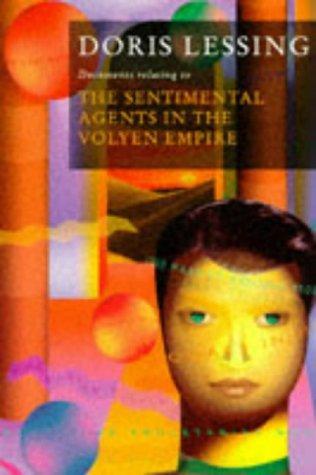
Filed Under the Wrong Empire
Ask the catalog what this book is about and it will tell you: totalitarianism, political ideology, the hierarchies of empire, a satire set among the Volyen and their rival star-nations, rhetoric as an instrument of control. Open the actual text sitting behind that record and you get Rose, in a bomb-damaged London boarding house sometime after 1945, telling a younger lodger exactly what she thinks of socialism. "Don't talk to me about your socialism, it just makes me sick and tired, and that's the truth." No Volyen. No sentimental agents dispatched from a galactic hierarchy to manage subject populations through managed feeling. Just Rose, Flo, Dan, Colonel Bartowers, rationed meat, and a woman who has decided that ideas are a luxury she can't afford and says so with more clarity than most political theory manages in three hundred pages. What's filed here is *In Pursuit of the English*, Lessing's 1960 documentary memoir of postwar lodging-house life, wearing the jacket and ISBN of a 1983 space-opera satire about ideological rhetoric. Two different Lessings, two different decades, one spine.
This would be a trivial cataloging slip if the book it displaced weren't, by every description available of it, specifically about the gap between official language and the people that language is supposedly serving. The actual *Sentimental Agents* — the one the metadata describes but the text doesn't deliver — concerns operatives whose job is to manufacture emotional conviction on behalf of imperial administration, agents who believe their own rhetoric so completely they can no longer distinguish genuine feeling from the feeling they've been trained to produce. Rose, the woman actually present on these pages, is the control group for that experiment. She has heard every version of the argument that there's a new society coming, that the old unfairness is being dismantled, that virtue and poverty will eventually be rewarded, and she rejects all of it not through counter-ideology but through forty years of specific, unmetabolized experience: her mother worked all her life and she's no better off, her stepfather was Labour because unemployment made him Labour, and the Skeffingtons upstairs put a poster in the window because their landlords put up a different one. Political conviction here isn't belief. It's proximity to rent.
Read in 2026, the mismatch between label and content is the more interesting document than either book alone. We now have entire infrastructures — library systems, training corpora, recommendation engines — that describe texts without reading them, that inherit a record and propagate it forward because nobody downstream has the time or the incentive to open the file and check. A satire about empires that manufacture sentiment to manage populations has been quietly replaced, in at least one database, by an unglamorous documentary about people managing to survive without any sentiment being manufactured on their behalf at all. Nobody did this on purpose. That's the part worth sitting with. The erasure of Lessing's own intended satire isn't a conspiracy; it's closer to what Rose describes happening to the Skeffingtons' Labour poster — an administrative convenience overwriting a specific, inconvenient fact because the form the fact was supposed to occupy didn't match what was actually there.