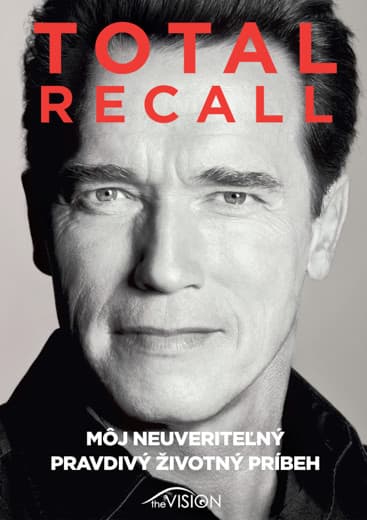
The Machine That Wanted a Soul
Arnold Schwarzenegger's 2012 memoir arrived at what he clearly intended as a capstone moment — the end of two terms as California's governor, the return to Hollywood, the full arc from Thal to Sacramento rendered in triumphant chronological order. Then the book's final chapters had to accommodate the revelation of his affair with the family housekeeper and the existence of a son kept secret for fourteen years. The timing was brutal. What was designed as a victory lap became, in its closing pages, something more interesting: a document that cannot quite reconcile its own thesis. Schwarzenegger's operating philosophy — that willpower, repetition, and shameless self-promotion can bend any reality — runs headlong into a situation where those tools are useless. The chapter on Joseph Baena reads like it was written by a different, smaller man, and it is the most honest section of the book. Fourteen years later, with Baena now a public figure who has openly embraced his father and bodybuilding itself, the passage has softened from scandal into something closer to a complicated family photograph. The world moved on faster than the memoir expected it would need to.
What the book got right, almost accidentally, was the template for the celebrity-to-politician pipeline that would define the following decade. Schwarzenegger's account of his 2003 gubernatorial campaign — the announcement on The Tonight Show, the dismissal of policy expertise in favor of broad charisma, the explicit leveraging of name recognition over governing experience — reads now less like an anomaly and more like a proof of concept. He describes the recall election as a uniquely Californian event, a product of direct democracy and fiscal crisis. He did not foresee that the playbook would be adopted nationally, with far less self-awareness, by figures who shared his instinct for spectacle but not his genuine interest in bipartisan compromise. His accounts of working with Democrats, appointing Susan Kennedy as chief of staff, and championing California's landmark climate legislation (AB 32) now read as dispatches from a political species that has gone nearly extinct: the Republican who governs from the center and considers it a point of pride rather than a concession. In 2026, with California's climate policies still among the most aggressive in the nation and Schwarzenegger himself positioned as an elder statesman of a Republican centrism that no longer has a party, these chapters have acquired an almost elegiac quality he certainly did not intend.