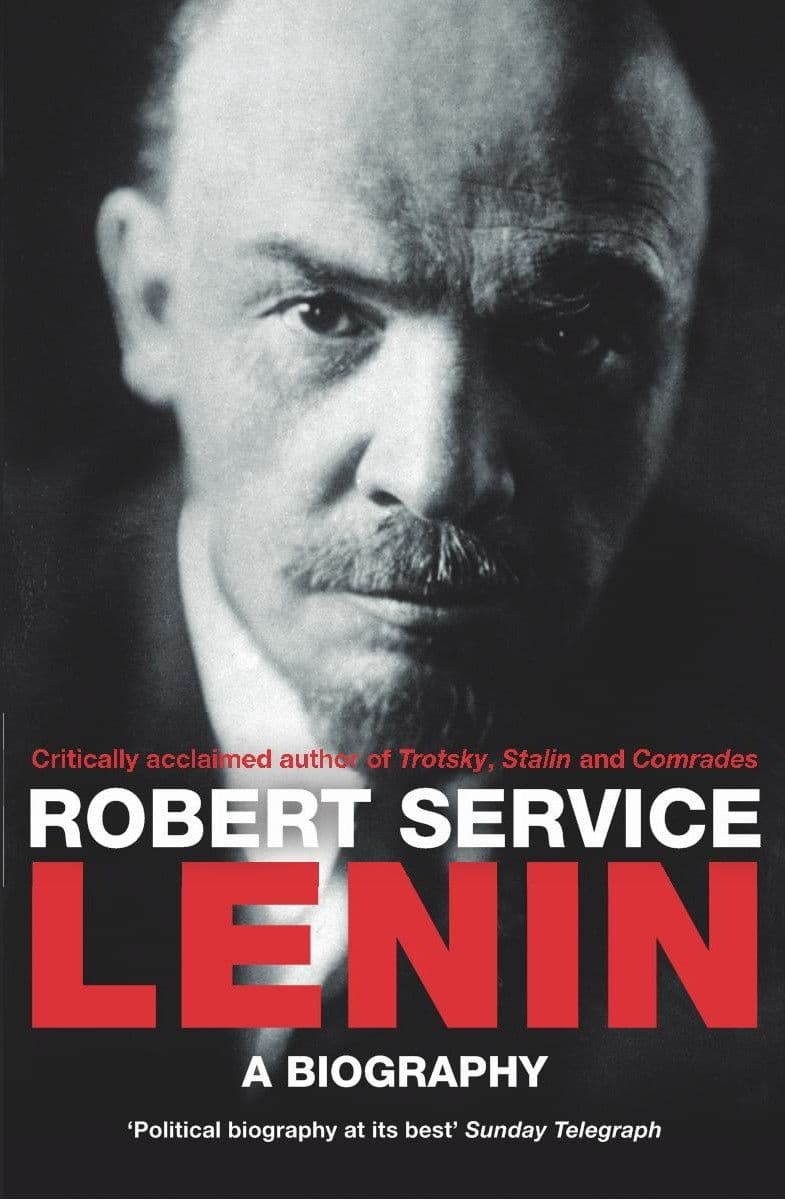
The Archive Unlocks, Then the Door Closes Again
Robert Service wrote this biography at a moment that now looks like a narrow window left ajar. The Soviet archives had cracked open in the 1990s, and scholars rushed in like air into a vacuum. Service was among the more methodical of them, and his Lenin benefits from that timing — the freshness of documents that had been sealed for decades, the memoirs newly publishable, the party records finally cross-referenceable. He produced a Lenin who was not the marble bust of Soviet hagiography nor the cartoon monster of Cold War polemic, but something more disquieting: a man of genuine intellectual energy, volcanic will, and a capacity for cruelty that was not incidental to his project but structural to it. The book's great achievement is showing how Lenin's personal rigidity — his need to dominate every committee, split every faction, purge every ally who wavered — was not a flaw in the revolutionary design but its operating principle. Service understood, in 2000, that the Leninist method was a technology of power, replicable and exportable. What he could not fully see was how thoroughly that technology would be studied and adapted by political movements that share none of Lenin's ideological commitments.
The book was published into a world that believed, with considerable smugness, that it had moved past the Leninist question. Liberal democracy had won. Russia was a mess, but a mess trending toward integration with the West. The assumption that history had a direction — toward openness, markets, pluralism — is the oxygen Service breathes without remarking on it. He treats Lenin's story as a cautionary tale from a closed chapter. The blind spot is not analytical but atmospheric: the biography assumes its subject is safely historical. It does not imagine a Russia that would, within two decades, rehabilitate not Lenin's ideology but his methods — the vanguard party logic, the controlled information environment, the insistence that the state's survival justifies any means. Service spends admirable energy on the 1911 factional splits, the Bolshevik-Polish bloc's dissolution, the tedious but consequential mechanics of who controlled which committee. He treats these as period details. They read now as a manual.
What hits differently in 2026 is the portrait of Lenin as an information strategist. Service documents the obsessive attention to newspapers, pamphlets, the control of printing presses, the weaponization of internal party communications. Lenin understood that whoever controlled the narrative infrastructure controlled the movement. Service presents this as a feature of early twentieth-century revolutionary politics. It is also, unmistakably, a description of how power operates in the age of algorithmic media — not because Lenin anticipated the internet, but because the underlying logic is identical: capture the means of distribution, define the terms of debate, make opposition legible only as betrayal. The chapters on Lenin's exile years, his management of Iskra, his willingness to destroy alliances over editorial control — these passages have acquired a second life. They describe a mind that would have understood platform dynamics instantly.