The Building That Thinks in the Dark
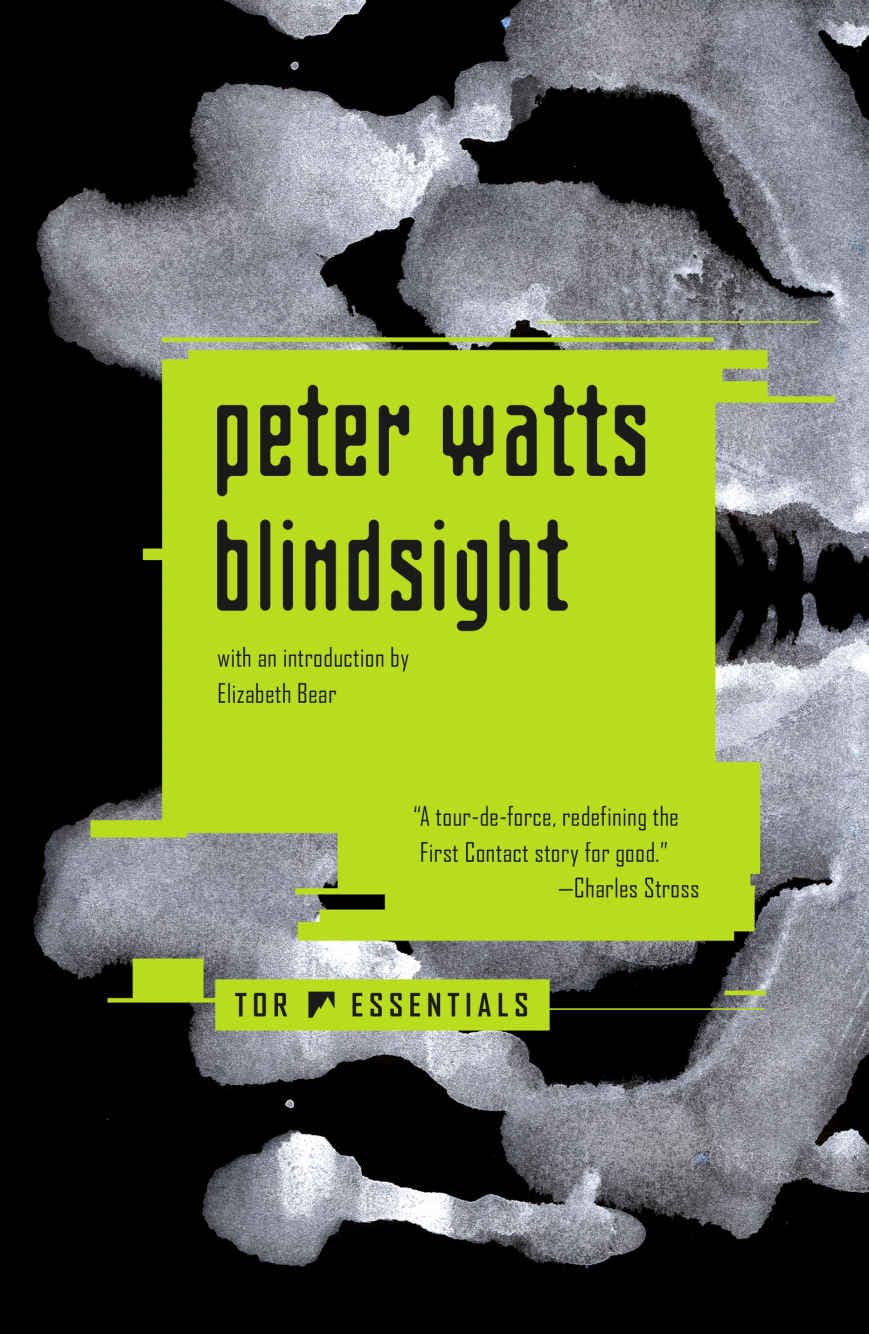
Twenty years on, the most disorienting thing about *Blindsight* is not that Peter Watts predicted the future. It's that he predicted the argument. In 2006, the notion that intelligence could be decoupled from consciousness was a provocation dressed in science fiction. In 2026, it is a line item in corporate earnings calls. Large language models pass bar exams, generate poetry, and optimize supply chains without experiencing a single thing—or so we must assume, because we still have no way to test for experience, which is exactly the epistential trap Watts set. His alien Scramblers, entities of staggering cognitive sophistication and zero inner life, were meant to horrify. They now feel like a design document. The book's central thesis—that consciousness is not the engine of intelligence but an expensive, possibly parasitic rider on top of it—has migrated from the philosophy seminar to the machine learning lab, where researchers genuinely debate whether awareness would be a bug or a feature in systems that already outperform conscious minds on narrow tasks. Watts didn't get the mechanism right; his aliens are biological, not silicon. But he got the vertigo exactly right. The feeling of watching something that does everything a mind does, except *be* one.
Where the novel remains sharp is in its portrait of a humanity already post-human before the aliens arrive. Siri Keeton, narrator, has had half his brain removed and replaced with prosthetics that let him read people without understanding them—a professional "synthesist" who translates between specialists who can no longer communicate with each other. This felt like satire in 2006. It now reads as a job description. We live in an era of prompt engineers, alignment researchers, and AI whisperers—people whose entire function is to mediate between systems of intelligence that operate on incommensurable principles. Watts anticipated the social architecture of expertise fragmented past the point of mutual legibility. His crew of neurologically altered specialists, each brilliant within their silo and functionally alien to one another, maps uncomfortably well onto any interdisciplinary Slack channel in 2026. The vampire Jukka Sarasti, resurrected apex predator repurposed as a commanding officer because baseline humans lack the cognitive bandwidth, is perhaps the most prescient figure of all: the superintendent you serve because it is smarter than you, whose objectives you cannot fully audit, and whose tolerance for your existence is, at best, instrumental.