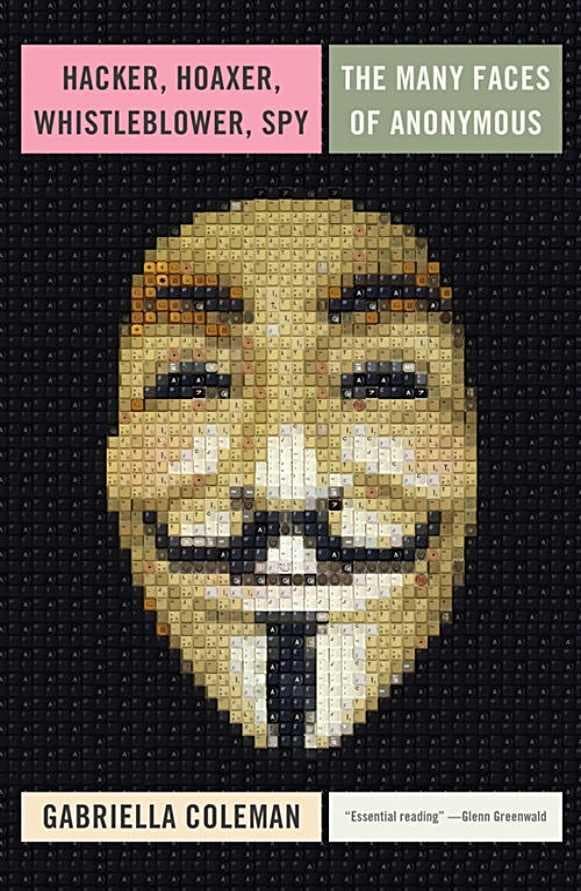
The Informant Was Already Inside the House
Twenty-six years on, Gabriella Coleman's ethnography of Anonymous reads less like a chronicle of digital rebellion and more like an autopsy report filed before the patient fully understood what was killing it. The book maps, with painstaking anthropological care, the mutation of trolling culture into political action — from the nihilistic lulz of 4chan to the earnest solidarity of Operation Tunisia, from pranking Scientology to backing WikiLeaks and Occupy Wall Street. What Coleman captured in real time was a hinge moment: the brief window when decentralized, anonymous collective action online seemed to represent a genuinely new form of power. She was right that it was new. She could not yet see how thoroughly it would be metabolized — by states, by platforms, by the very dynamics of attention she documented so carefully. The book's greatest achievement is also its deepest irony: it is the definitive account of a movement whose defining feature was its resistance to definitive accounts.
Coleman's prescience is sharpest in the chapters on surveillance and informants. The Sabu arc — the charismatic hacker turned FBI asset, steering operations from inside while his comrades trusted him — is not just a story about Anonymous. It is the template for every subsequent infiltration of decentralized movements, from encrypted chat compromises to the unmasking of pseudonymous activists in authoritarian states. The COINTELPRO parallels she draws in Chapter 7 were not decorative; they were structural predictions. The HBGary Federal hack, which exposed corporate plans to use disinformation campaigns against WikiLeaks supporters, now reads as a rough draft for the industrialized influence operations that would define the next two decades of online life. She saw the convergence of corporate intelligence, state power, and digital manipulation before most people had a vocabulary for it. What she could not anticipate was the degree to which the tools Anonymous pioneered — coordinated online action, meme warfare, doxxing, DDoS as protest — would be adopted far more effectively by the authoritarian right than by any liberatory movement. The Guy Fawkes mask ended up on a lot of faces she would not have recognized.
The book's blind spots are the blind spots of its era. Coleman treats the open internet as a durable commons, a space where anonymity and decentralization naturally favor dissent. That assumption has aged poorly. The platformization of the internet, the consolidation of infrastructure under a handful of corporations, and the rise of AI-driven content moderation have made the kind of ad hoc, IRC-based organizing she describes nearly impossible to replicate at scale. Her careful distinction between trolling-as-play and trolling-as-politics collapses in hindsight; the culture she documented on 4chan did not simply produce Anonymous — it also incubated the online far right, a lineage the book acknowledges only glancingly through figures like weev, whose later embrace of white nationalism was already legible in the text if you knew where to look. Coleman was generous with her subjects, as good ethnographers tend to be. That generosity now reads as a kind of period innocence. She believed, or wanted to believe, that the lulz and the liberation were separable. They were not.