The Diplomats Who Heard the Machine Humming
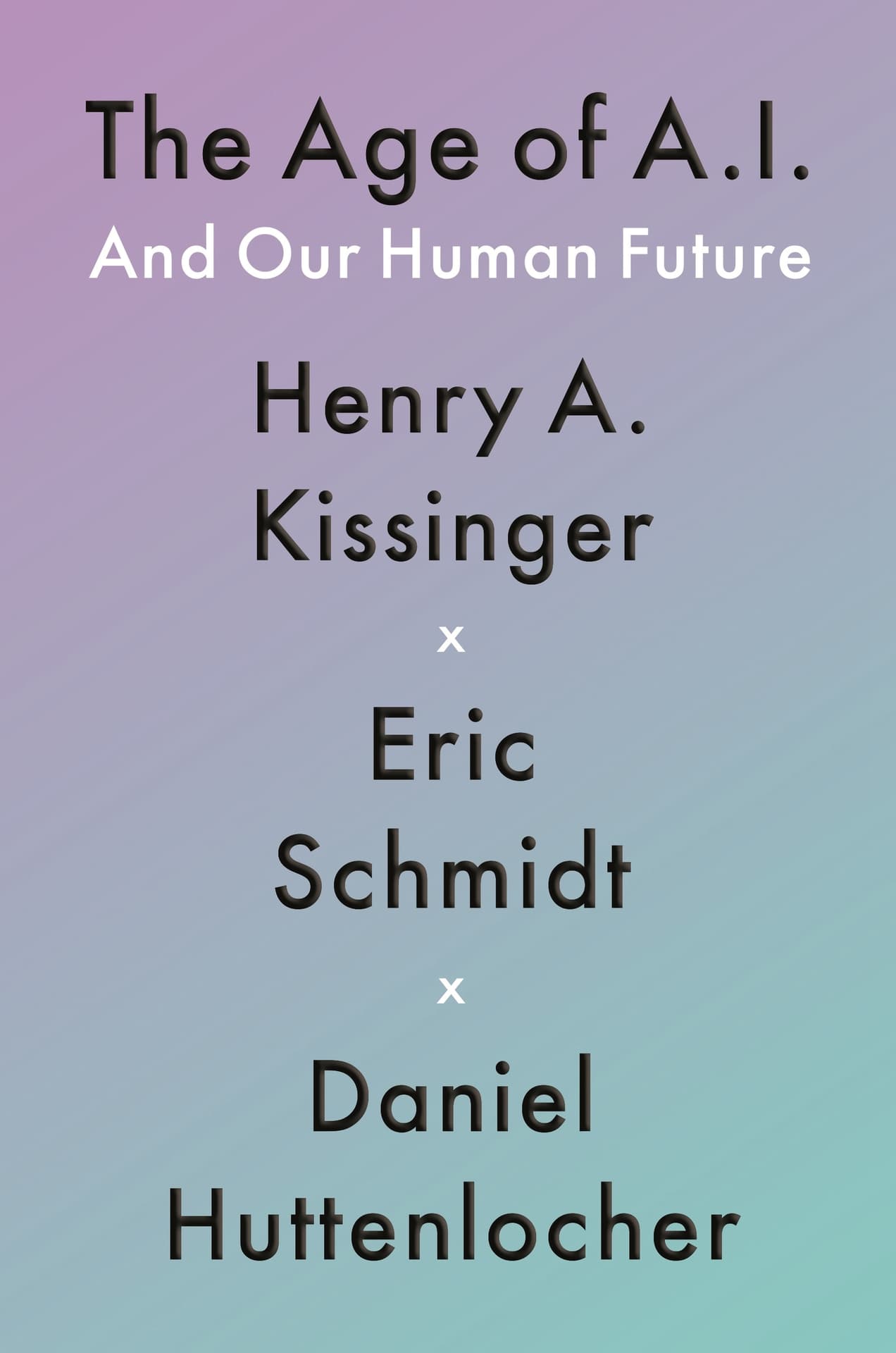
There is something almost poignant about watching three men of immense institutional authority — a centenarian statesman, a former CEO of the world's most powerful information company, and an MIT dean — stand at the threshold of a transformation they can sense but not quite see through. Published in 2021, *The Age of AI* arrived in the brief interregnum between GPT-3 as a curiosity and GPT-4 as an instrument of daily life. The authors understood that large language models would reshape knowledge, communication, and governance. They were right about the direction and wrong about the timeline. What they imagined as a slow, managed integration — decades of careful doctrinal development, interdisciplinary dialogue, arms control frameworks — collapsed into a sprint. By 2023, generative AI was writing legal briefs. By 2025, autonomous agents were negotiating supply chains. The book reads now less like prophecy than like a letter mailed the day before the earthquake, postmarked with the correct address but delivered to rubble.
The prescience is real but selective. The book's treatment of AI in warfare — the risks of autonomous weapons, the destabilizing compression of decision timelines, the absence of any AI arms control regime between the U.S. and China — has aged with grim accuracy. No such regime exists in 2026. The discussion of network platforms as quasi-sovereign actors was similarly sharp; the subsequent fracturing of X, the regulatory confrontations with Meta across multiple jurisdictions, and the rise of state-aligned AI ecosystems in China all vindicate the authors' warnings about ungoverned digital power. Their invocation of AlphaZero as a paradigm — AI discovering strategies no human had conceived — now looks almost quaint only because the phenomenon has become so ordinary. Every pharmaceutical company, every materials science lab, every logistics firm has its own version of the halicin story. The exceptional became the ambient.
The blind spots are structural, not incidental. Kissinger, Schmidt, and Huttenlocher wrote from within the architecture of Western institutional power, and it shows. Their framework is relentlessly top-down: states, platforms, doctrines, frameworks. The grassroots reality of AI adoption — teenagers building agents, open-source models proliferating beyond any government's capacity to regulate, the Global South leapfrogging Western deliberation entirely — barely registers. They assumed AI governance would be negotiated among great powers the way nuclear arms were. It wasn't. It couldn't be. The technology diffused too fast and too cheaply. The book's historical parallels, while intellectually rich — the printing press, the Protestant Reformation, the Enlightenment — also reveal a bias toward European intellectual history that feels increasingly parochial. The chapter on Eastern versus Western epistemology gestures at breadth but never truly decenters the Western gaze. And the most conspicuous absence: the book has almost nothing to say about the environmental costs of AI computation, an oversight that 2026's energy politics have made impossible to ignore.