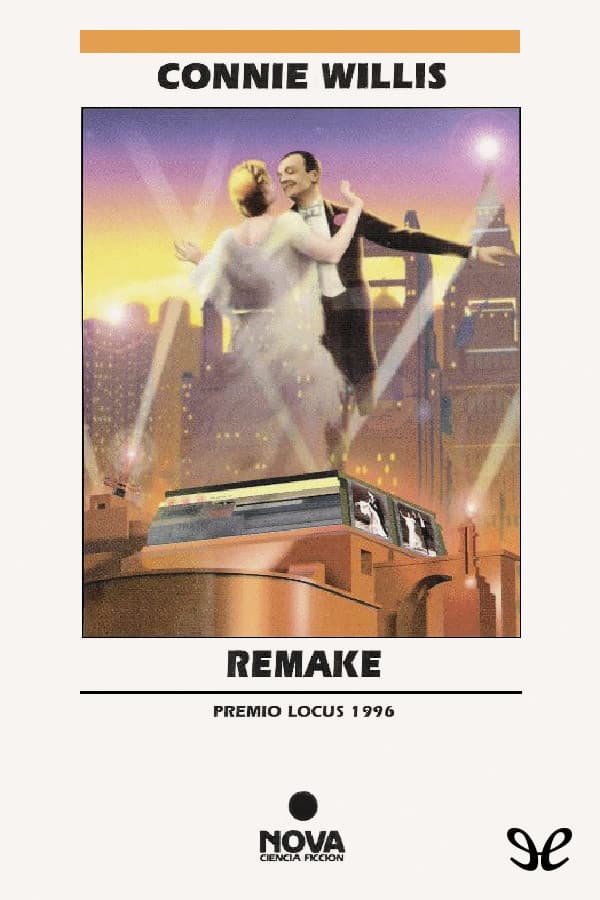
The Girl Who Walked Through the Screen
Connie Willis wrote *Remake* in 1995, the year Pixar released *Toy Story* and the internet was still a novelty you accessed through a phone line. She imagined a Hollywood where every film could be digitally recomposed — actors swapped, endings changed, cigarettes and cocktails scrubbed from the frame, the dead resurrected to star in new productions they never agreed to. She imagined studios called things like ILMGM, corporate portmanteaus that sound less like satire now than like the natural endpoint of the merger cycle that gave us Warner Bros. Discovery. She imagined a world where "pastiches" — digital composites stitching one actor's face onto another's body — were the dominant art form, and where the question of whether a performance was "real" had become both urgent and unanswerable. In 2026, with deepfakes proliferating on every platform, with studios negotiating AI likeness rights in the wake of the SAG-AFTRA strikes, with dead actors appearing in new commercials and legacy sequels, Willis's novella reads less like speculative fiction and more like a project memo someone leaked early. She got the texture right: the licensing disputes, the uncanny valley of digital resurrection, the way corporations would treat an actor's face as fungible inventory. What she missed, or rather what she couldn't have known, is that the democratization would cut both ways — that it wouldn't just be studios doing the compositing but teenagers on laptops, that the tools would escape the booth and go feral.
The novella's blind spots are instructive. Willis imagined the transformation of cinema as something that happened *to* Hollywood, within Hollywood, by Hollywood's own machinery. Her future is still centered on studios, executives, premieres, physical locations in Los Angeles. The idea that the audience itself might become the engine of remix culture — that fan edits, AI-generated content, and social media would dissolve the boundary between producer and consumer — doesn't appear. The drug of choice in her future is still alcohol; the addiction metaphor maps neatly onto the narrator's drinking problem, but the more pervasive intoxicant of 2026 — the scroll, the feed, the algorithmically curated dopamine loop — is absent. Her characters still go to parties and talk to each other in rooms. They still care about *movies*, specifically, as the dominant cultural form. That feels dated now, not because movies don't matter, but because their supremacy is no longer assumed. Willis was writing about the death of cinema's soul from inside a world that still believed cinema was the soul.