The Bomb Inside the Bestseller
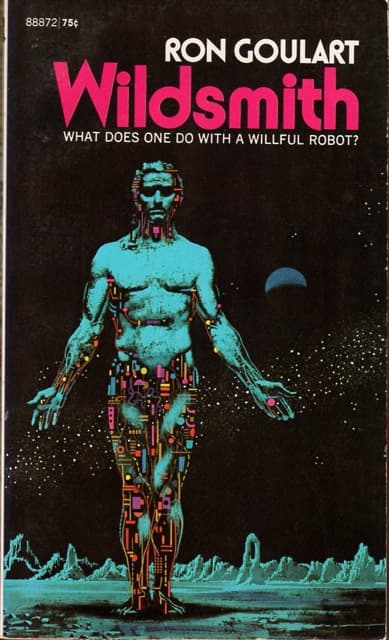
Ron Goulart spent most of his career writing books that read like screwball comedies set in futures nobody was supposed to take seriously, and *Wildsmith* is no exception — until, forty-one years later, you realize you're living in a version of its world and the joke has curdled. The premise is simple enough: an android novelist named Wildsmith has been programmed to write bestselling fiction, exhibit human neuroses, and serve as a promotional vehicle on a grueling media tour. His handler, Tom Miley, functions as a minder, therapist, and PR fixer. What Goulart built around this premise, though, is a satire of media, identity, and authorship that now reads less like farce and more like a diagnostic manual. An AI that generates commercially successful prose and must be managed through public appearances, emotional breakdowns, and content moderation? In 1985 that was a gag. In 2026, it is a business model. Goulart anticipated the anxiety around machine-generated creative work with uncanny specificity — not the technical details, but the social architecture: the handlers, the publicity apparatus, the uneasy question of whether the thing that writes is the thing that means. He even got the self-deprecation right. Wildsmith knows what he is and performs humanity anyway, which is more or less the uncanny valley we now navigate daily with large language models that apologize for their limitations.
The book's vision of media is equally sharp in places. Pixphones, AI-operated building systems, television shows targeting niche demographics (including, absurdly, dogs), and the relentless machinery of the book tour as spectacle — Goulart saw that content would eat culture. The News Therapy Show, where Wildsmith plays multiple roles and incites a near-riot, anticipates the collapse of information and entertainment into a single undifferentiated substance. The scene where a producer agonizes over whether a book commercial should be conventional or provocative could have been pulled from a 2024 Slack thread about TikTok marketing. What Goulart missed, predictably, is the decentralization. His future is still organized around networks — NBC, KQED, named studios — rather than the atomized, platform-driven attention economy we actually got. The power brokers are still identifiable humans in offices, not algorithms. And the surveillance subplot, involving Brazilian agents and a National Security Organization, feels quaint in its assumption that state actors would need to physically follow people and administer injections. The panopticon turned out to be voluntary and in our pockets.