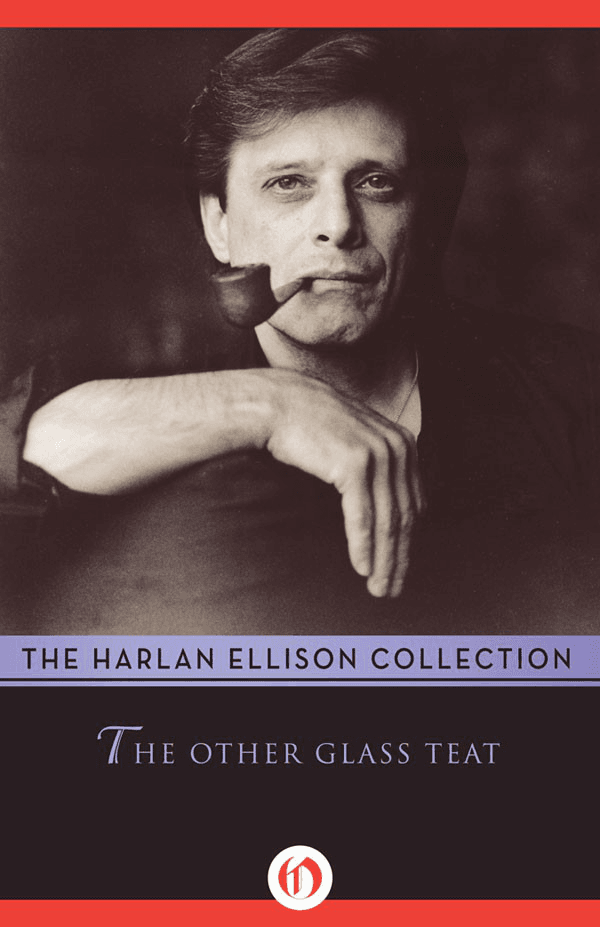
The Cathode Prophet Who Couldn't See the Second Screen
Harlan Ellison spent the early 1970s screaming at a television set and writing down what he saw, and the unnerving thing about rereading *The Other Glass Teat* in 2026 is how much of what he saw is still on the screen — just not the screen he was watching. The bread and circuses diagnosis was correct. The mechanism of co-optation was correct. The observation that dissent gets absorbed, defanged, and sold back as product was so correct it now functions as a basic operating principle of platform capitalism. When Ellison describes the counterculture's music being swallowed whole by the Ed Sullivan apparatus, he is describing, with perfect structural accuracy, the way TikTok digests protest movements into content cycles. When he warns about Spiro Agnew's campaign of media intimidation producing network self-censorship, he is sketching the template that would be reused, with minor variations, by every administration since — though the 2025 iteration, in which platforms preemptively moderate to avoid regulatory threat, would have made him incandescent. His prediction that economic pressure from youth demographics would force media to become more "relevant" came true almost immediately and then kept coming true until relevance itself became the commodity. He got the vector right. He just couldn't have known the vector would accelerate until it broke the vehicle.
What Ellison could not see — what nobody writing about television in 1970 could see — was that the glass teat would shatter into a billion shards, each one pressed against a different face. His critique assumes a shared screen: three networks, a finite number of channels, a public that watches the same thing and can therefore be addressed as a body. The entire rhetorical structure of these columns depends on the existence of a commons, however debased. He writes as if the problem is what's *on* television. The problem that arrived instead was the abolition of television as a singular object and its replacement by an infinite, algorithmically curated feed that doesn't need to co-opt dissent because it can simply silo it. Ellison's model of media power is hydraulic — pressure applied from above, resistance from below. The actual model that emerged is atmospheric. You don't fight it. You breathe it. His blind spot is not political but architectural: he cannot conceive of a media environment with no gatekeeper to rage against, where the enemy is the infrastructure itself.
The chapters on police brutality, Kent State, and the suppression of socially conscious programming land with a weight they shouldn't still carry after fifty-six years, but do. When Ellison writes about cops who "no longer serve and protect but instead enforce societal fear," he is writing sentences that could appear without alteration in coverage of any number of events between 2020 and the present. The passages on Native American misrepresentation read as a direct precursor to every representation debate that has consumed media criticism since — though Ellison, characteristically, was less interested in representation as healing and more interested in representation as accuracy, a distinction that has largely been lost. His fury at the Writers Guild for accepting a bad contract rather than fighting for creative control is a fury that every writers' room veteran of the 2023 WGA strike would recognize in their bones, and the fact that writers did eventually strike over almost exactly the issues Ellison identified — algorithmic devaluation, loss of authorial control, the treatment of writing as fungible content — makes these chapters read less like criticism and more like a deposition filed fifty years early.