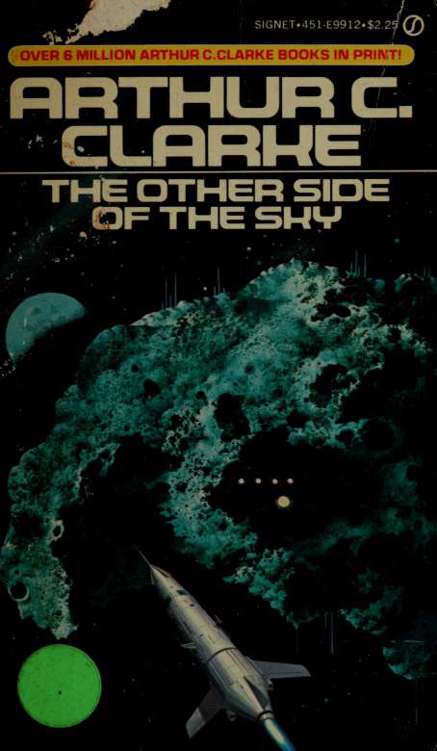
The Stars Went Out and the Machines Kept Counting
There is a particular kind of discomfort that comes from reading Clarke in 2026, and it has nothing to do with dated science. It is the discomfort of recognizing that a man writing decades before the millennium understood the spiritual implications of computation more clearly than most people building the actual systems today. "The Nine Billion Names of God" is the story everyone half-remembers — monks, a mainframe, the stars winking out — but rereading it now, in an era when large language models are trained to enumerate, classify, and exhaust the combinatorial space of human language, the story lands with a thud rather than a whisper. Clarke's monks use a machine to complete a divine project. We use machines to complete projects we then call divine. The direction of the metaphor has reversed, and the story, unaltered, accommodates both readings without strain. That is not prescience. That is something worse: it is a parable that keeps finding new congregations.
The lunar expedition story is, by contrast, almost quaint in its assumptions — and revealing in what it takes for granted. A cooperative mission between American, Russian, and British crews reads in 2026 less like prophecy and more like a diplomatic fantasy from the brief window when such cooperation seemed plausible. The Artemis program has stumbled. Sino-American competition has replaced Cold War triangulation as the dominant frame for space policy. Britain is not sending commanders to the Moon. What Clarke got right was subtler: the pettiness, the jockeying for priority, the way national pride smuggles itself into even the most cooperative frameworks. His British commander's decision to launch early, immediately matched by rivals, is a small, perfectly observed piece of game theory. It could describe any number of recent chip export controls, AI safety summits, or satellite mega-constellation filings. The setting is the Moon. The subject is the prisoner's dilemma.
What Clarke could not imagine — what almost no one in his cohort could — is the degree to which space would become boring before it became routine. The stories assume that going to the Moon is the hard part and that once there, humanity would be transformed. We have learned otherwise. The ISS orbits. Tourists visit suborbital space and post about it. The transformation did not come from leaving Earth but from the machines we built while we were still arguing about how to leave. Clarke's Automatic Sequence Computer, rented to monks for a modest fee, is the real protagonist of this collection. Not the rocket. Not the lunar habitat. The computer, sitting in a monastery, doing a job its operators do not fully understand, producing an output whose consequences no one can predict. That is 2026 in a sentence.