The Overmind Was Always the Easy Part
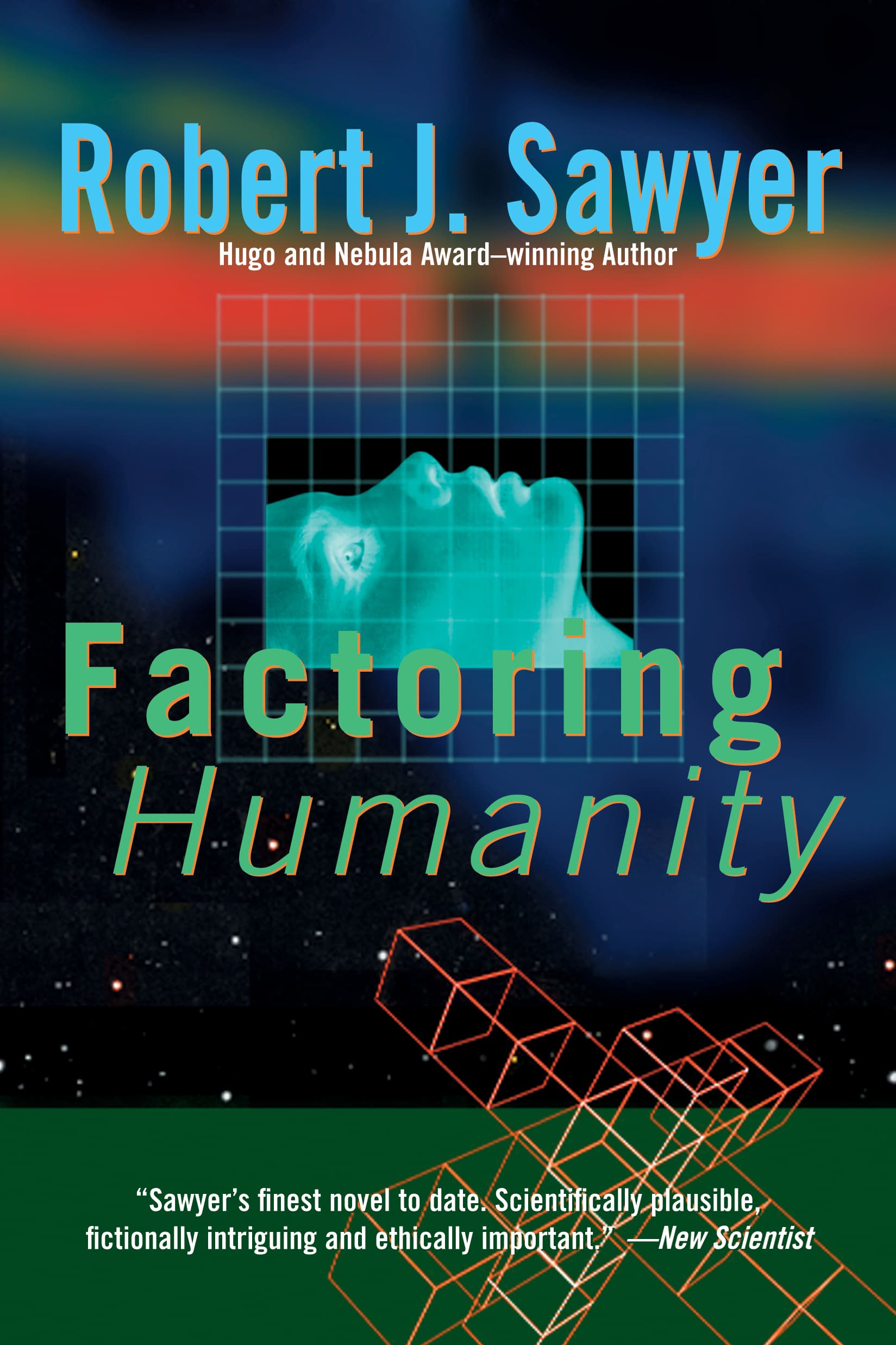
Sawyer published *Factoring Humanity* in 1998, not 2013 — the edition floating around may carry a later reprint date, but the book's DNA is unmistakably late-nineties. This matters because the novel's twin anxieties — that alien signals might restructure human consciousness, and that artificial intelligence might render us obsolete — land with a very different weight when you know what came after. The quantum computing subplot, in which Kyle builds a working quantum computer and then agonizes over whether it might be conscious, reads now less like speculation and more like a dress rehearsal for arguments that consumed the public sphere from 2023 onward, when large language models started passing professional exams and people began asking, in earnest, whether the machine in their pocket had an inner life. Sawyer got the shape of the panic right. What he missed was the banality of it: nobody needed a quantum breakthrough to trigger the crisis. Gradient descent and enough data did the job. The Epsilon Eridani warning — silicon life supplanting carbon life — was meant to feel cosmic and chilling. In 2026, it reads like a mildly overdramatic LinkedIn post.
The book's deeper gamble is its model of collective consciousness, the idea that humanity is a single four-dimensional entity whose occasional flickers of telepathy, shared dreams, and inexplicable insight are not anomalies but features. Sawyer routes this through Carl Jung, through Chomsky's universal grammar (which he takes a satisfying swipe at), and through Michael Persinger's God Helmet experiments. Persinger's work has since been largely discredited by replication failures, which drains some voltage from Heather's internal debate about whether her hypercube visions are neurological artifacts or genuine contact. But the underlying impulse — to find a mechanism that makes human interconnection literal rather than metaphorical — has only grown more resonant. We live inside algorithmic recommendation systems that function, crudely, as a shared psychic architecture. The overmind arrived. It's just made of engagement metrics.
The false-memory subplot is where the novel's prescience gets uncomfortable. Becky's accusation of sexual abuse against Kyle, later revealed to have been implanted by a therapist, sits at the intersection of two cultural currents that have only intensified: the reckoning with real, systemic abuse that accelerated through #MeToo, and the ongoing scientific literature on memory malleability that has complicated legal and therapeutic practice. Sawyer clearly sympathizes with Kyle, and the narrative ultimately vindicates him. Read in 1998, this felt like a corrective to the recovered-memory panic of the early nineties. Read in 2026, after years of watching accusation and counter-accusation weaponized in public life, it feels less like a corrective and more like a choice — a choice about whose suffering the author finds most legible. The book doesn't interrogate this choice. It simply makes it and moves on, which is its own kind of data point about whose anxieties science fiction was built to soothe.