The Sap Rises and We Do Not
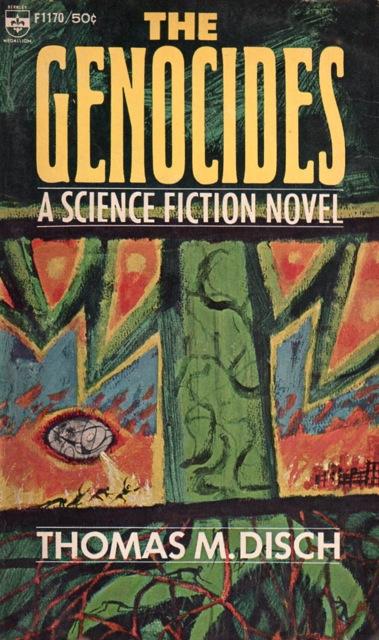
Thomas Disch published *The Genocides* — reissued here under its working title *One: The Prodigal* — at twenty-five, and it reads like the work of someone who already suspected that humanity's self-regard was its terminal condition. The premise is blunt: enormous alien Plants overrun the Earth, not as invaders with demands or ideology, but as agriculture. Humanity is the pest. There is no communication, no negotiation, no independence-day counterstrike. The Plants are tended by incendiary machines that burn cities the way a farmer burns brush. In 1965 this was a slap in the face to a genre that still mostly believed in human specialness, in the competent man who rigs a solution from duct tape and physics. Disch offered no solution. He offered the sap.
What the book anticipated is less a specific technology than a disposition — the dawning recognition that ecological systems do not care about us, and that our response to existential threat is likely to be petty, tribal, and self-defeating. Anderson's little community in Tassel does not unite nobly. It cannibalizes, hoards, enforces brutal patriarchal discipline, and murders its way through succession crises. Reading this in 2026, after years of pandemic-era supply-chain panic, climate-migration politics, and the reliable spectacle of communities turning inward and mean under pressure, the novel's anthropology feels less speculative than reportorial. The carbon-dioxide discussion in the winter commonroom chapter — Orville speculating about altered atmospheric composition from the Plants — lands with a different weight now. In 1965 it was a minor plot detail. Today it reads like a footnote from a world that noticed the mechanism but not the metaphor. Disch got the emotional architecture of ecological collapse right: the boredom, the grief that curdles into resentment, the way people cling to Thanksgiving rituals while eating things they'd rather not name.
The blind spots are period-typical. Maryann is selected as a wife because she is "meek and industrious," and the narrative does not flinch from this but neither does it fully interrogate it; the patriarchal order of Anderson's commune is presented as brutal but functionally necessary, a framing that betrays more about 1965's assumptions than about post-apocalyptic logic. Women weave baskets, bear children, and are fought over. Greta's final transformation into a "bloated, incapacitated figure" dependent on others is grotesque in ways Disch clearly intended, but the symbolic register — the sexually free woman rendered monstrous and helpless — carries freight he may not have fully inventoried. The novel also cannot imagine networked information, decentralized resistance, or any mode of survival that isn't agrarian and hierarchical. Its future is relentlessly analog, which is both a limitation and, in a strange way, a strength: it forces the story into the body, the stomach, the root system.