The Empire Loved You Back
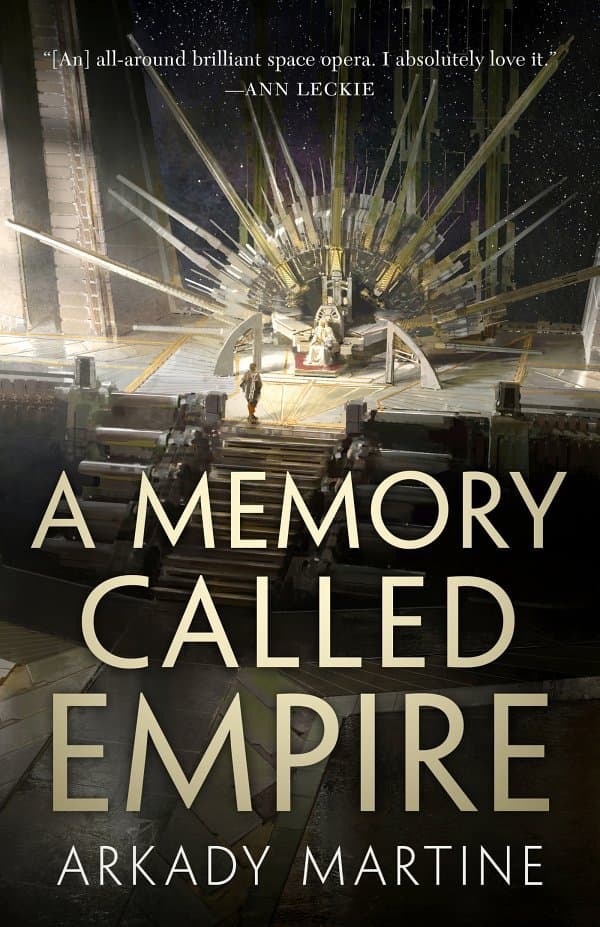
Arkady Martine published a novel about the seductive gravity of empire in 2019, and the world has spent the subsequent seven years providing footnotes. *A Memory Called Empire* arrived as a book about a small polity's ambassador navigating the cultural and political machinery of a civilization that wants to absorb everything it touches — not through crude violence alone, but through the irresistible pull of its language, its poetry, its aesthetics. Mahit Dzmare doesn't just fear Teixcalaan. She loves it. She has loved it since before she arrived. That double bind — the colonized subject who has internalized the colonizer's beauty — was legible in 2019. By 2026, after watching the real-time dynamics of cultural soft power wielded by states that simultaneously threaten sovereignty and export addictive media platforms, after watching populations argue about whether economic integration with a larger power constitutes partnership or annexation, the novel reads less like speculative fiction and more like a diplomatic briefing with better prose. The specific mechanics Martine imagined — the imago technology, consciousness-sharing as cultural continuity — remain science-fictional, but her understanding of how small states perform independence while negotiating dependence has proven almost documentary. The novel anticipated, with uncomfortable precision, the way that algorithmic information environments and cultural saturation can make resistance feel not just futile but aesthetically undesirable.
What Martine got right about surveillance is worth noting, though it's entangled with what she got slightly wrong. The Sunlit, the empire's networked enforcement apparatus, presaged the expansion of AI-integrated policing and social monitoring that has accelerated in the years since publication. But Martine's surveillance state is still legible, still visible — agents following you, jurisdictional boundaries that can be exploited. The surveillance regimes that have matured since 2019 are less theatrical. They don't send people to follow you through transit hubs; they simply know where you are because your devices told them. The novel's blind spot is not about the existence of surveillance but about its texture. Martine, writing in 2017-2019, still imagined a world where you could dodge a tail. The more significant absence is artificial intelligence as a political actor in its own right. The imago machines are sophisticated, but they are fundamentally archives — they store and replay human consciousness. They do not generate novel cognition. In a 2026 where autonomous systems participate in decision-making chains from military targeting to legislative drafting, the idea that the most dangerous technology in the room is a very good recording of a dead person feels almost quaint. Martine's empire runs on poetry and bureaucracy and human ambition. Ours increasingly runs on systems that no single human fully directs.