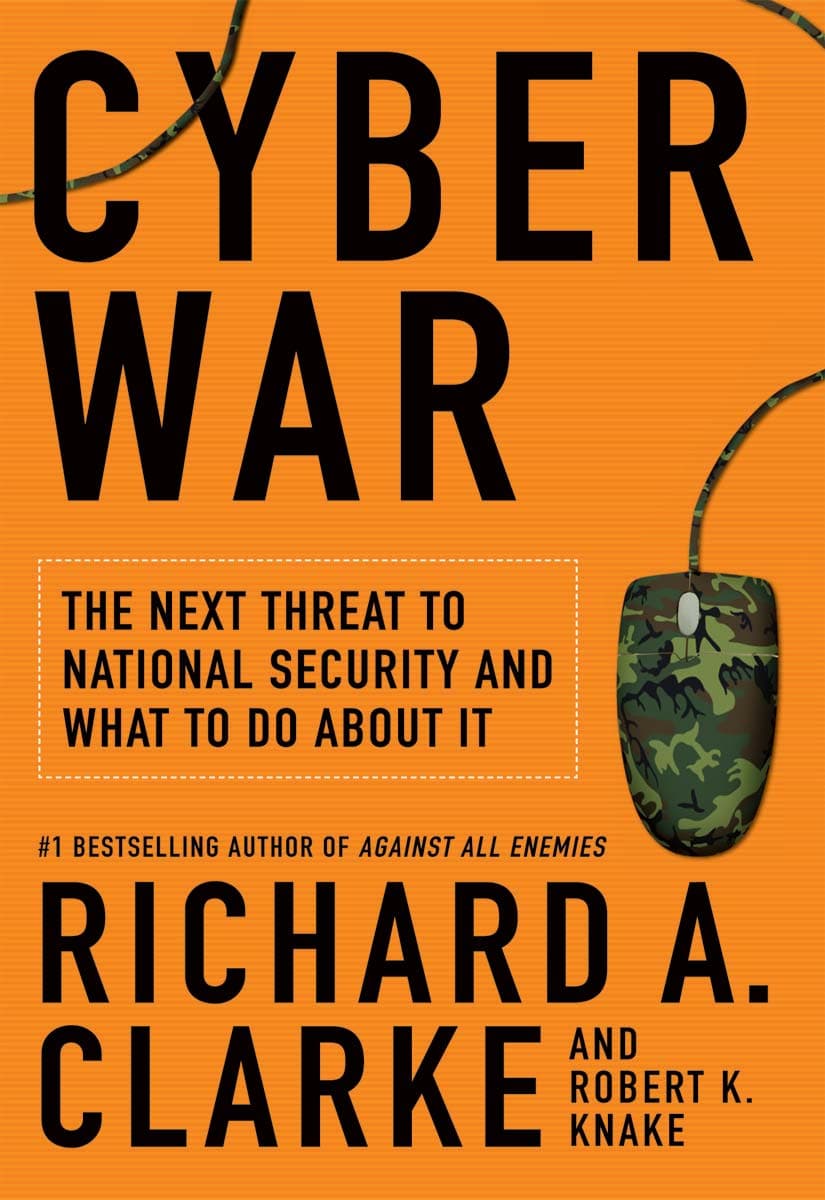
The Alarm That Rang So Long It Became Furniture
Clarke and Knake wrote this book as a fire bell in the night. They were explicit about it: cyber war was coming, the United States was catastrophically unprepared, and the absence of public debate was itself a national security failure. Fourteen years later, the bell has been ringing so continuously that most people have learned to sleep through it. What makes rereading *Cyber War* in 2026 so disorienting is not how wrong it was but how precisely right it was about the shape of the threat — and how completely irrelevant that correctness turned out to be for the pace of reform. The book predicted that nation-states would pre-position logic bombs in each other's critical infrastructure. Then came the 2020 SolarWinds compromise, the Volt Typhoon revelations of 2023-2024 showing Chinese penetration of U.S. water, energy, and telecommunications systems, and the cascade of supply-chain attacks that became routine. The hypothetical "Exercise South China Sea" scenario, in which U.S. and Chinese cyber forces probe each other's grids while maintaining deniable escalation ladders over contested maritime territory, reads less like a thought experiment now and more like a draft after-action report. Clarke's insistence that the electric grid was the crown jewel of vulnerability was vindicated by everything from the 2015-2016 Ukrainian grid attacks to the Colonial Pipeline shutdown of 2021. The book's core argument — that offensive dominance without defensive parity is strategic suicide — remains the single most important unsolved equation in American cybersecurity.
What the book could not see is almost as instructive as what it could. Clarke and Knake were creatures of the post-9/11 national security state, and their frame was relentlessly state-centric. The threat matrix was China, Russia, North Korea, Iran — and to be fair, those remain the big four. But the book has almost nothing to say about the weaponization of information itself, the way cyber operations would merge with influence operations to produce hybrid campaigns that target not infrastructure but cognition. The 2016 election interference, the industrialization of ransomware by criminal syndicates operating under state protection, the rise of AI-generated deepfakes as instruments of destabilization — none of this registers in a book still thinking in terms of packets and SCADA systems. The chapter dismissing cyber terrorism as a "red herring" was defensible in 2012, but it also reflected a failure of imagination about non-state actors who would eventually wield ransomware with the impact of a small military operation. The long chapter on Microsoft's lobbying influence, while entertaining, now feels quaint in a world where the attack surface has exploded far beyond any single vendor into cloud infrastructure, IoT ecosystems, and AI model supply chains. Clarke was fighting the last vendor war while the next one was already metastasizing.