The Grid Remembers What the Policy Forgot
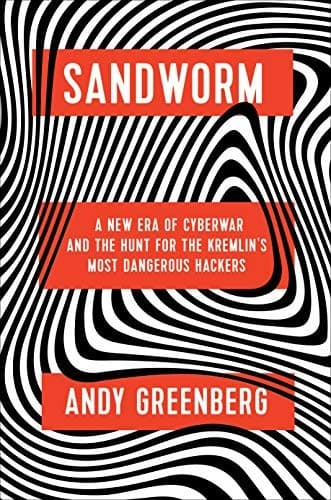
Greenberg's *Sandworm* arrived in 2019 as a warning. Seven years later it reads as a prologue. The book's central thesis — that Russia's GRU had developed and deployed cyberweapons capable of crossing the threshold from espionage to physical destruction, and that the world was not remotely prepared — has been validated so thoroughly that the book now suffers the peculiar fate of prophets: it seems obvious. The 2015 and 2016 Ukrainian grid attacks, the NotPetya worm's $10 billion rampage through global shipping and pharmaceuticals, the Olympic Destroyer false-flag operation — Greenberg assembled these into a narrative arc that pointed unmistakably toward escalation. He was right. When Russia's full-scale invasion of Ukraine began in February 2022, the opening hours included cyberattacks on Viasat's satellite network and renewed assaults on Ukrainian infrastructure, moves that fit so neatly into Greenberg's framework that his book became required reading in defense circles overnight. The specific pattern he identified — cyber operations as a rehearsal space for kinetic war, tested on Ukraine before being exported — played out almost exactly as described. What he could not have anticipated was how well Ukraine would absorb the blows. The resilience chapter at the book's end gestures toward this idea but cannot fill it in; by 2024, Ukrainian cyber defense, hardened by nearly a decade of being the world's most targeted nation and bolstered by Western tech partnerships, had become a case study in adaptive resistance that complicated Greenberg's darkest projections.
The book's blind spots are the blind spots of 2019. Greenberg frames cyberwarfare overwhelmingly through the lens of state-versus-state confrontation, with Russia as the primary antagonist and the United States as the sluggish but well-meaning defender struggling to formulate doctrine. The ransomware epidemic that would cripple Colonial Pipeline, JBS, and hundreds of hospitals in 2020-2021 — an ecosystem in which criminal actors and state actors became functionally indistinguishable — barely registers here. The role of China, which by 2025 had been identified as having pre-positioned access to American critical infrastructure through the Volt Typhoon campaign on a scale that dwarfs anything Sandworm achieved, receives almost no attention. Greenberg was writing about the most dangerous hackers he could see, and they were indeed dangerous, but the competitive landscape of state-sponsored cyber operations has shifted considerably. The GRU remains a menace, but the book's implicit hierarchy of threats now looks incomplete. There is also a curious absence around the private sector's role as both target and combatant: the rise of major cybersecurity firms as quasi-governmental actors, the deployment of Starlink as wartime infrastructure, the way Microsoft and Google would become active participants in Ukraine's defense — none of this was foreseeable in 2019, but its absence reveals how much the book is anchored in a world where governments were still assumed to be the primary agents of both attack and defense.