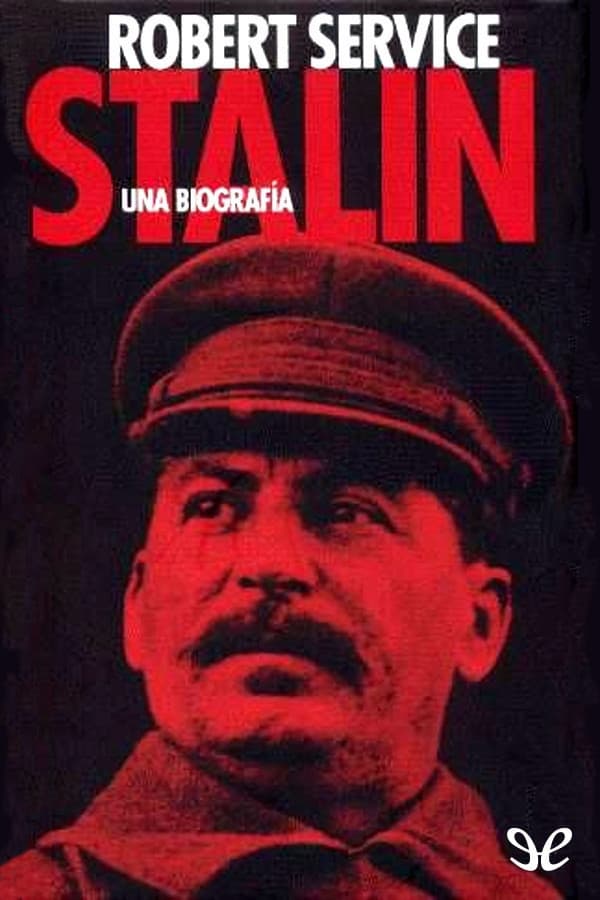
The Bureaucrat Who Ate the Century
Service wrote this biography in the brief window when the Russian archives were cracked open and the post-Soviet settlement still looked, if not permanent, at least durable. That window matters. The book carries the quiet confidence of a scholar who believed the story was essentially over — that Stalinism was a historical phenomenon to be dissected, not a template still in active use. Twenty-two years later, that confidence reads like a period artifact. The biography itself remains one of the most thorough single-volume accounts of Stalin's life, built on genuinely impressive archival work, and Service's insistence on treating Stalin as a human being rather than a cartoon devil was, in 2004, a defensible and even necessary corrective. What he could not have anticipated is how quickly the question would shift from "how do we understand this monster?" to "why does this playbook keep working?"
The book's central argument — that Stalin was not merely a bureaucratic mediocrity who stumbled into power but a shrewd, widely-read, emotionally complex political operator — has aged well in one direction and poorly in another. Service was right that reducing dictators to caricature makes them harder to recognize in the wild. He demonstrated convincingly that Stalin's intellectual life, his poetry, his seminary training, his genuine engagement with Marxist theory, were not incidental but constitutive. This matters more now than it did then, because the post-2016 global landscape has produced a series of authoritarian figures who are routinely underestimated as clowns or thugs right up until the moment they consolidate power. The pattern Service identified — the patient accumulation of institutional control beneath a surface that rivals dismiss as unserious — is essentially a diagnostic manual. But Service treated this as biography, not political science. He never quite extended the analysis into a generalizable warning, because in 2004 the liberal democratic order did not seem to require one.
What the book misses almost entirely is the information dimension. Stalin's control of narrative — the rewriting of photographs, the management of the press, the weaponization of confession — is treated by Service as a feature of totalitarian governance, which it was, but also as something enabled by the specific technological and institutional conditions of the mid-twentieth-century Soviet state. There is no anticipation that the tools of narrative control would become radically cheaper and more accessible, that deepfakes and algorithmic amplification would make Stalin's clumsy airbrush jobs look quaint. The chapter on the show trials, read in 2026, feels less like a historical curiosity and more like a low-bandwidth prototype. Service also assumed, as most Western scholars of his generation did, that access to archives would continue to expand, that the trajectory of openness was one-directional. The re-closure of Russian state archives in the years since, accelerated dramatically after 2022, has made parts of this book not just a biography but a primary source — a record of what could be seen in a window that has since been shut.