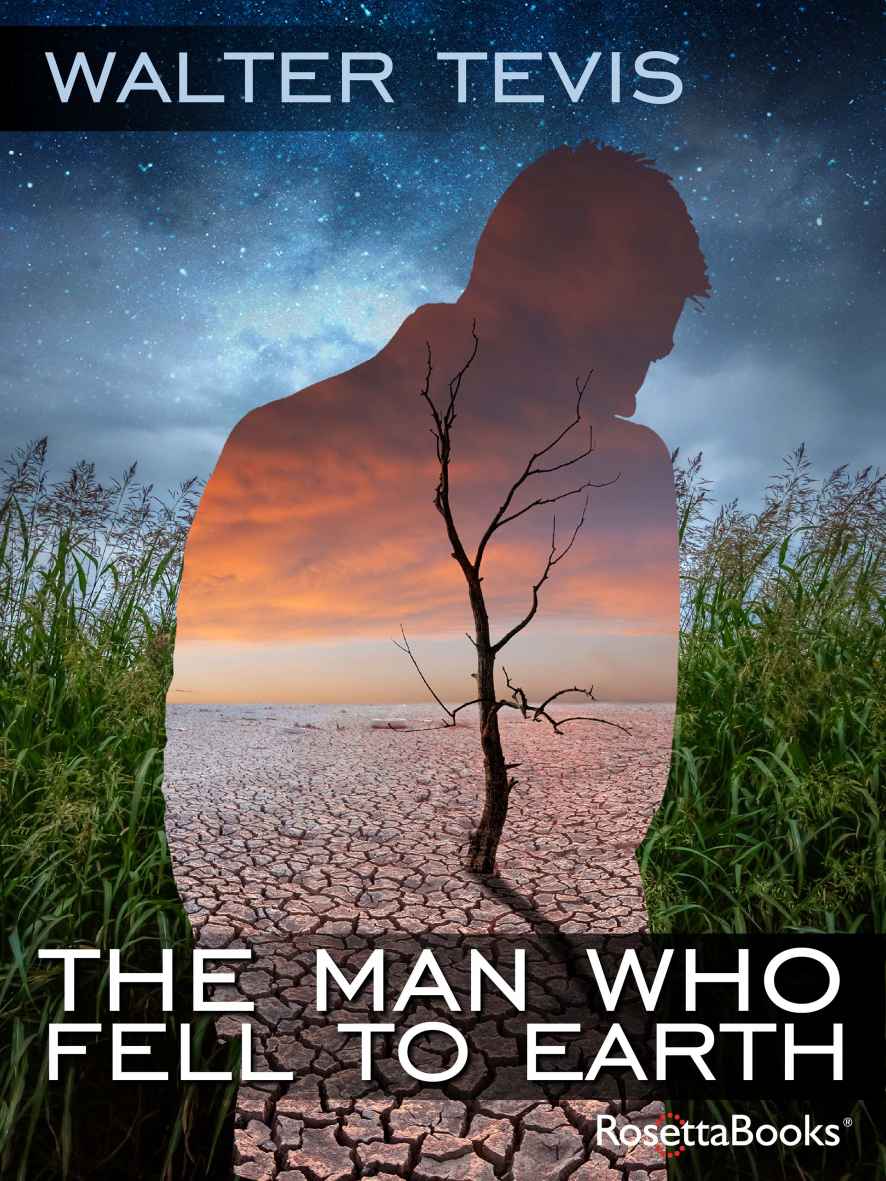
The Loneliest Monopolist
Thomas Jerome Newton arrives on Earth and immediately does the most alien thing imaginable: he sells a gold ring for cash, then starts a technology company. Walter Tevis published this in 1963, when the notion of a single outsider leveraging superior technical knowledge into world-reshaping corporate power was still science fiction. It is no longer science fiction. Newton's trajectory — the alien who patents his way to billions, who builds an empire not through force but through intellectual property, who is functionally the smartest person in every room and still loses — now reads less like allegory and more like a case study you'd find in a business school seminar on founder psychology. Tevis couldn't have known he was sketching the emotional architecture of the tech mogul: the isolation that comes not from being hated but from being incomprehensible, the way wealth becomes its own gravity well, the slow dissolution of purpose into consumption. Newton's gin is Elon's posting. The mechanism differs. The trajectory doesn't.
What Tevis got right about the texture of alienation is remarkable; what he got wrong about the texture of surveillance is revealing. Newton fears government agents, and government agents do come for him — this is a Cold War novel at its bones, and the threat is institutional, monolithic, slow-moving. The idea that Newton's undoing might come not from the FBI but from a teenager with a smartphone, or from the passive accumulation of metadata, or from his own digital exhaust, never enters the frame. It couldn't. Tevis imagined a world where you could still disappear into an Appalachian coalfield and be alone. That world was already dying when he wrote about it. It is now fully dead. The novel's vision of privacy is its most dated element, and also its most poignant, because Newton's need for solitude isn't a plot convenience — it's the core of his character. He is a creature who requires hiddenness to survive. We have built a civilization that makes hiddenness nearly impossible, which means Newton's story has become, without anyone intending it, a parable about the uninhabitability of the modern world for anyone who is genuinely different rather than performatively so.
The book's emotional engine — Newton's slow capitulation to alcohol, television, and the numbing comforts of a planet he was supposed to save — hits with a specificity now that it couldn't have had in 1963. Tevis was writing about his own alcoholism, barely disguised, and the critical establishment has long acknowledged this. But what's changed is the universality of the condition he described. The surrender to passive consumption, the replacement of mission with comfort, the way a screen becomes a substitute for connection — these were, in 1963, the struggles of a particular kind of mid-century American man. In 2026 they are the default mode of existence for billions of people. Newton watching television until his mind goes soft is no longer a metaphor for one man's addiction. It is a description of a species-level behavior pattern. Tevis wrote a book about an alien who becomes too human. The uncomfortable revelation, six decades later, is that "too human" now looks a lot like what Newton's home planet was trying to avoid becoming.