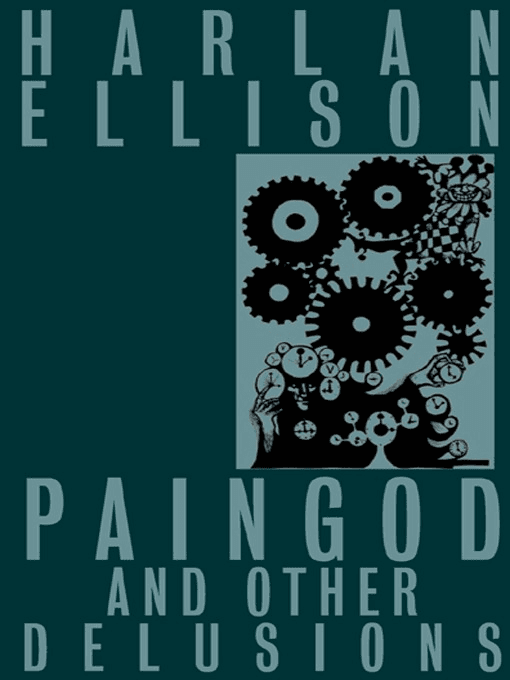
The Bureaucracy of Suffering
Sixty-one years on, Harlan Ellison's *Paingod and Other Delusions* reads less like speculative fiction and more like a set of field dispatches from a war we're still losing. The collection's central conceit — a cosmic functionary assigned to distribute suffering across the universe who begins, against his programming, to *feel* — is the kind of premise that could have calcified into allegory. Instead, Ellison let it bleed. What makes the book endure is not its futures but its present tense: the 1965 civil rights march, the hospital worker's letter about dehumanized psychiatric patients, the confessional introductions that refuse to let the fiction do the comfortable work of distancing. Ellison was not interested in prediction. He was interested in indictment. But he predicted things anyway. "Repent, Harlequin!" gives us a society so temporally regimented that deviation from schedule is a capital offense — and in 2026, when algorithmic workforce management tracks warehouse workers' bathroom breaks to the second and "time theft" is a terminable offense, the Ticktockman doesn't feel like satire. He feels like middle management. The physician mechanical story, in which robot doctors render human practitioners obsolete and a surgeon publicly breaks down, anticipated the current convulsion over AI diagnostics and the quiet grief of professionals watching their expertise become a legacy system. Ellison didn't foresee the specific shape of the technology — his robots are clunky mid-century chrome — but he understood the emotional architecture of displacement with surgical precision.
What Ellison could not see, or chose not to, is instructive. The collection's gender dynamics are of their era: the "female friend" in the introduction exists primarily to illuminate the narrator's sensitivity; women in these stories are catalysts for male anguish rather than agents of their own. The Discards aboard the prison ship, mutated outcasts rejected by a normative society, map uncomfortably well onto contemporary disability and refugee politics, yet Ellison frames their suffering almost entirely through a masculine lens of stoic endurance. There is no consideration of surveillance capitalism, no internet, no sense that the mechanisms of control might become consensual, even pleasurable. His dystopias are blunt instruments — state power, military hierarchy, enforced conformity. The possibility that people would voluntarily hand over their autonomy in exchange for convenience and dopamine would have baffled him. He imagined jackboots. He did not imagine terms of service.