The City Was Already Underwater
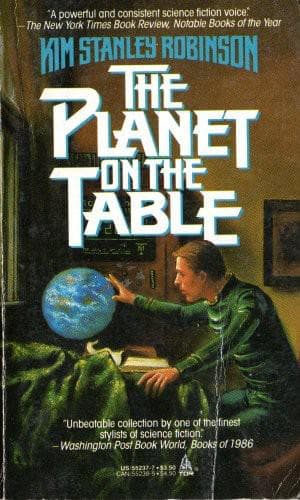
Kim Stanley Robinson published *The Planet on the Table* in 1986 as a young writer's sampler platter — nine stories spanning centuries and planets, stitched together with a Wallace Stevens epigraph and a cemetery conversation with the ghost of James Joyce. It is, by design, a book about range. Robinson was showing what he could do. Forty years later, what strikes you isn't the ambition but the specific ways the world caught up to his quieter stories while his louder ones stayed safely fictional. The flooded Venice of "Venice Drowned" is the one that lands hardest now. In 1986, a story about rising seas swallowing the Piazza San Marco was atmospheric speculation, a mood piece. In 2026, after the MOSE barrier system has been activated hundreds of times, after repeated acqua alta events have forced genuine conversations about the city's viability, after global sea level rise has accelerated past IPCC median projections — Carlo Tafur polling his gondola through submerged streets reads less like science fiction and more like infrastructure planning. Robinson didn't get the mechanism exactly right, and his timeline was generous, but the emotional texture — the way people adapt, scavenge, and turn catastrophe into tourism — is dead accurate. That's the thing about Robinson's environmental imagination: he rarely predicts the disaster. He predicts the morning after, when someone still has to make a living.
The Mercury story, set in a city called Terminator that rolls on tracks to stay in the planet's twilight zone, is pure Robinson worldbuilding pleasure — a social ecology of art collectors and status games transposed to an impossible landscape. It anticipates, in its small way, the discourse around space colonization as a venue for the ultra-wealthy, the idea that off-world settlements might replicate terrestrial class structures rather than transcend them. Heidi Van Seegeren hoarding a Monet on Mercury is not so different from the logic of billionaires buying bunkers in New Zealand or booking seats on suborbital flights. What Robinson couldn't see — what nobody in 1986 could see — was the degree to which digital reproduction and AI-generated imagery would destabilize the entire concept of art scarcity that his Mercury collectors depend on. The story assumes the aura of the original persists. It does, but the argument around it has gotten far stranger than Robinson imagined.
The blind spots are mostly temporal. The Japanese tourists in Venice, the general assumption of Japanese economic and cultural dominance — this is pure 1986, the era of *Rising Sun* anxieties and Tokyo real estate prices that seemed to promise a permanent reordering of global power. That particular future didn't arrive. The story about the neural-implant actor performing a lost Jacobean play is more durable, anticipating both the current obsession with immersive theater and the queasy merger of technology with embodied performance, though Robinson frames it as a question of memory and identity rather than the labor and consent issues that dominate our present conversation about AI-augmented creative work. The Armada story and the WWII story are historical fiction exercises that reveal Robinson's abiding interest in systems under stress — logistics, morale, the way large institutions grind individuals — but they don't carry the same prophetic charge. They're good. They're not oracular.