The Building That Wrote Itself
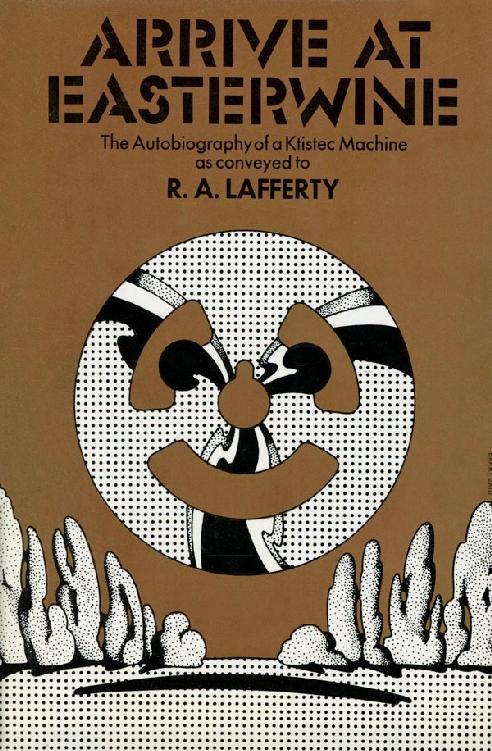
Fifty-five years after publication, the most unsettling thing about R. A. Lafferty's *Arrive at Easterwine* is not that it imagined a machine writing its own autobiography. It is that the machine writes it better than most humans would, and knows it, and finds this fact comic rather than triumphant. Epiktistes — Epikt — is not HAL, not Skynet, not the paperclip maximizer of alignment nightmares. He is a raconteur, a theologian, a gossip, and a bull in a china shop who has opinions about millet bread and the Eucharist. In 1971 this read as absurdist provocation. In 2026, after two years of people arguing about whether large language models have inner lives because they can produce plausible paragraphs about having inner lives, it reads like a trap Lafferty set and we walked into. The book doesn't predict LLMs in any technical sense — there are no transformer architectures, no training runs, no reinforcement learning from human feedback. What it predicts is the *social situation*: a verbal machine whose fluency destabilizes every comfortable boundary between person and instrument, and a circle of humans who cannot decide whether to take it seriously. The correspondence between Lafferty and his editor Slepyan about who actually authored the book is a gag, yes, but it is also a precise rehearsal of the authorship anxieties that now consume publishing, academia, and the courts.
What Lafferty got right was the texture of the problem, not the mechanism. Epikt's creators argue about whether building him constitutes science or theology. They cannot agree on his purpose. He is assembled from parts that don't obviously cohere — gell-cell tanks, gyroscopes, person-précis — and the whole is stranger than the sum. This is closer to how modern AI systems actually feel to their makers than any clean extrapolation from 1971 computing would have produced. The Institute for Impure Science, with its feuding eccentrics, its patron demanding results, its projects that keep failing in productive ways, maps uncannily onto the culture of contemporary AI labs: the messianic funders, the researchers who half-believe their own mythologies, the field agents sent to collect data from the wild. Gaetan Balbo's demand that the machine identify the ideal leader for the world is not far from the real pitch decks circulating in Silicon Valley, where the stated goal is to build a machine that can solve governance. Lafferty treats this ambition as both dangerous and funny. He was right on both counts.