The Half-Life of Anthracite
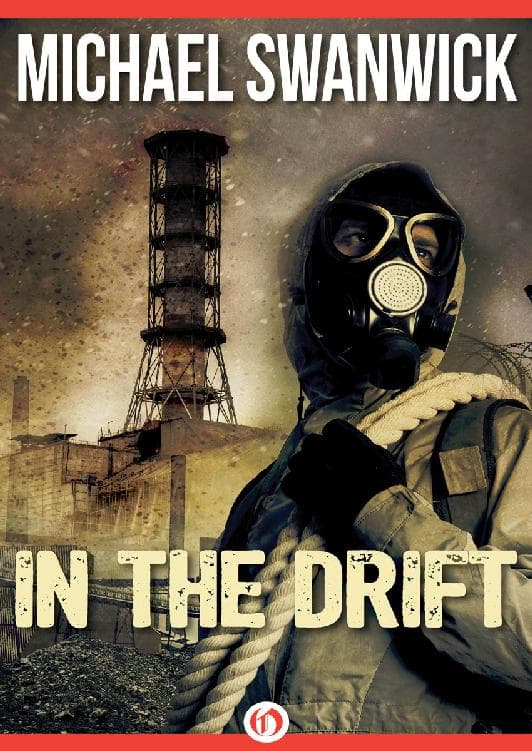
Michael Swanwick's *In the Drift* is a fix-up, stitched from stories written as early as the 1980s and assembled into this 2002 edition with the seams still showing. That's not a flaw. The book reads like a transmission from a place that keeps shifting underfoot — which is exactly what the Drift is. Born from the premise that Three Mile Island didn't just partially melt down but went all the way, the novel imagines a swath of eastern Pennsylvania rendered permanently uninhabitable, then stubbornly inhabited anyway. Mutagens in the soil, vampires in the population (biological, not supernatural — a retroviral mutation that makes certain humans obligate blood-drinkers), and a Philadelphia reduced to a walled city-state running on patronage, ethnic tribalism, and the quiet dumping of toxic waste. In 2002 this was speculative fiction. In 2026, after Fukushima's ongoing water releases, after the political rehabilitation of nuclear energy as a "clean" alternative, after PFAS contamination maps started looking like Swanwick's Drift overlaid on real geography, it reads less like alternate history and more like a parallel present slightly out of phase.
What Swanwick got right, with uncomfortable precision, is the sociology of contamination. The Drift doesn't just poison bodies; it poisons social contracts. Keith Piotrowicz navigates a Philadelphia where mutation is policed through genetics laws, where the Janus monster paraded through the Italian Market is both spectacle and scapegoat, and where the people doing the poisoning — dumping waste at the Drift's edge — are the same ones enforcing purity. This is the logic of environmental racism as it actually operates in 2026 America, where cancer clusters in Louisiana's Chemical Corridor and lead-poisoned water in Flint and Jackson, Mississippi, coexist with regulatory frameworks that technically prohibit them. Swanwick understood that the zone of sacrifice doesn't stay put. It drifts. The book's title is doing more work than it first appears.
The vampirism is the element that risks seeming dated — the 2000s and 2010s so thoroughly strip-mined vampire fiction that any appearance of the trope now carries residual exhaustion. But Swanwick's vampires aren't romantic or even particularly monstrous. Samantha, starving on a transport train, unable to eat normal food, watching other displaced women brutalized by bureaucratic processing — she's not Lestat, she's a refugee with a medical condition that makes her legally nonhuman. Read in 2026, after years of discourse about disability, about who gets classified as a person deserving of aid during mass displacement events, Samantha's chapters are almost documentary. The scene in the shed at Morgan's stationhouse, corpses drained for blood harvesting, functions not as horror but as supply chain logistics. Someone has to eat. The system provides, grotesquely.