The Last Age of Innocent Trespass
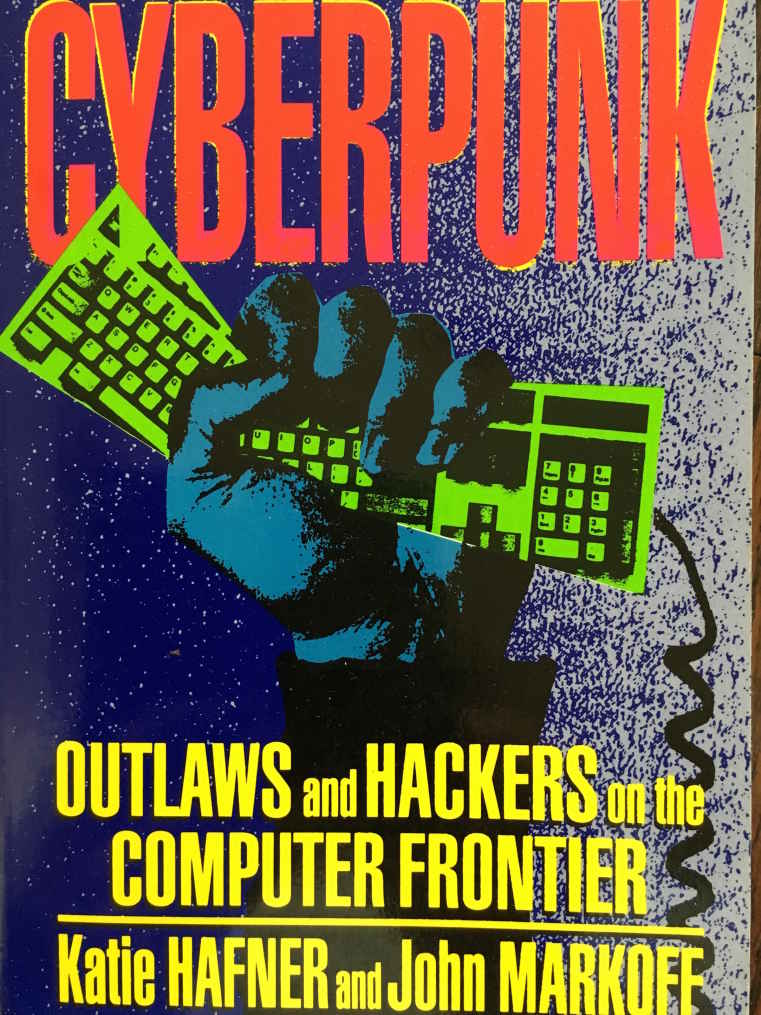
Katie Hafner and John Markoff's *Cyberpunk* — published in 1991, though the catalog card here says "Unknown" as if the building itself has forgotten — is not fiction. It was shelved wrong, or perhaps shelved right, because the three true stories it tells have by now acquired the quality of origin myths, and origin myths are always fiction eventually. The book profiles Kevin Mitnick, the German hackers who sold secrets to the KGB, and Robert Tappan Morris, whose 1988 worm brought the infant internet to its knees. At the time, these were dispatches from the frontier. Thirty-five years later, they read like the book of Genesis for a religion nobody intended to found.
What Hafner and Markoff got right is structural, not technical. They understood that the interesting question was never "how do you break into a computer?" but rather "what kind of person needs to, and what does the system do to them once it notices?" The book maps, with journalistic patience, the way institutions — telephone companies, universities, intelligence agencies, courts — react to unauthorized access with a mixture of bafflement, overreaction, and mythologizing. Kevin Mitnick's judge denied him bail partly because a prosecutor claimed he could "start a nuclear war by whistling into a pay phone." That sentence is funnier now, and also worse, because we have watched the same pattern repeat at industrial scale: the hacker as folk devil, the sentence disproportionate to the act, the media unable to resist the gothic version. Aaron Swartz. The Hacking Team leaks. The eternal return of the same prosecutorial theater. The book didn't predict any of these specific events, but it described the machine that produces them.
The blind spots are the ones you'd expect from 1991. The authors could not have imagined that within two decades the surveillance apparatus would not need to catch hackers because it would have become the hacker — that the NSA would deploy tools indistinguishable from the exploits Mitnick used, just at nation-state scale. The book treats corporate computer systems as fortresses besieged by clever outsiders. It has no framework for a world in which the fortress voluntarily invites two billion people inside and then monetizes their every movement. Social engineering, which Mitnick practiced as a craft, is now an automated industry called "targeted advertising." The phone phreaking chapters, rich with blue boxes and COSMOS terminals, feel archaeological, but the underlying logic — that the network trusts its own protocols more than it should — remains the founding vulnerability of every system we've built since. What's absent is any sense that ordinary people would one day carry the network in their pockets and feed it willingly.