The Prophet You Can't Cite at Parties
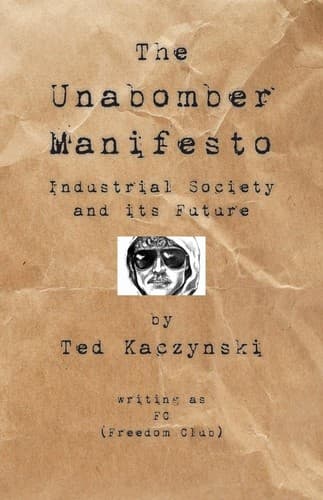
Thirty-one years on, the most uncomfortable thing about *Industrial Society and Its Future* is not that it was written by a man who killed people to get it published. The most uncomfortable thing is the passages you could drop into a 2026 op-ed about algorithmic hiring, smartphone addiction, or the hollowing out of meaningful work — and nobody would blink. Kaczynski's central thesis, that the industrial-technological system progressively narrows the scope of genuine human autonomy while offering compensatory satisfactions that are themselves products of the system, reads less like a manifesto now and more like a clinical description. He anticipated the "surrogate activities" problem with eerie precision: the way fitness trackers gamify walking, the way social media transforms political engagement into a dopamine loop, the way remote work dissolves the boundary between labor and selfhood until neither retains coherent shape. He predicted that people would not rebel against these encroachments because the system would make rebellion feel unnecessary — or, worse, would absorb rebellion as content. What he could not have foreseen is the speed. He imagined a slow tightening. What happened was a smartphone in every hand within fifteen years and a generative AI in every workflow within twenty-five. The ratchet didn't click; it spun.
Where Kaczynski's analysis falters, and falters badly, is in his model of who suffers and how. His extended psychological portrait of "modern leftism" — the feelings of inferiority, the oversocialization — is the weakest section of the manifesto and always was, but from the vantage of 2026 it looks less like diagnosis and more like the resentments of a particular kind of mid-century American intellectual male, one who confused his own alienation with a universal condition. He had no framework for understanding how race, gender, or colonial history shaped people's relationship to industrial modernity. Indigenous communities, for instance, had been articulating critiques of technological displacement for centuries without needing to blow up mailboxes. His blind spot here is not incidental; it reveals that his supposedly universal analysis of freedom was in fact parochial, rooted in a very specific experience of white, educated, male autonomy threatened. He also assumed, with a confidence that now seems quaint, that the system's primary tools of control would remain physical and institutional. He did not anticipate that the deepest capture would be attentional and affective — that people would volunteer for surveillance in exchange for convenience and connection, and that the word "freedom" itself would be rebranded as a consumer preference.