The Surveillance That Loved Us
Reynolds built his 2150s around a single governing conceit: a planetary behavioral control system called the Mechanism, which monitors human activity and intervenes — physically, neurologically — when violence or certain transgressions are detected. In 2012 this read as a thought experiment about benevolent authoritarianism, a philosophical provocation dressed in hard-SF chrome. In 2026, after a decade of predictive policing algorithms, social credit pilots, and AI-driven content moderation systems that shape behavior at scale without anyone quite consenting, the Mechanism feels less like speculation and more like an endpoint someone is actually building toward. Reynolds got the trajectory right. What he missed — and what the last few years have made painfully clear — is that such systems don't arrive as clean, unified architectures. They arrive as a patchwork of competing corporate and state surveillance regimes, each with its own blind spots and biases, none of them as competent or as fair as the Mechanism is depicted. The book imagines a world that traded freedom for safety and got a reasonable deal. We are trading freedom for convenience and getting a worse one.
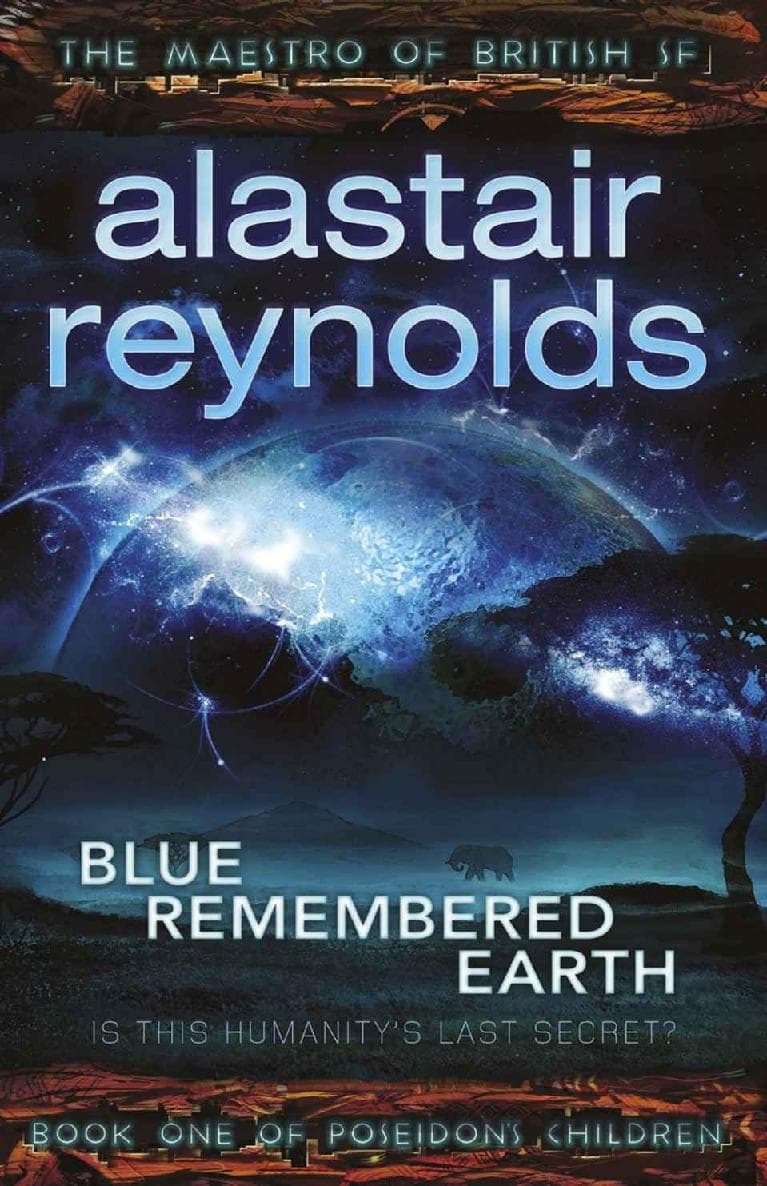
The Africanfuturism of *Blue Remembered Earth* deserves a second look. Reynolds, writing from Wales, set his future in an Africa that had become the world's dominant economic and technological power — the Akinya family empire rooted in East African space infrastructure, Kilimanjaro as a backdrop to interplanetary ambition. This was published a year before *Americanah*, three years before *Binti*, and six before the broader Western publishing apparatus decided African and Afrodiasporic futures were marketable. Reynolds was early, and he was sincere about it — the acknowledgements cite his engagement with African music, culture, and the logic of demographic and economic trends. But the execution carries the weight of an outsider's careful optimism. The Africa here is prosperous and central but also curiously frictionless, a continent whose internal politics have been smoothed into a backdrop for a family dynasty. The real Africa of 2026 — with its booming tech sectors in Lagos and Nairobi, its complex relationship with Chinese infrastructure investment, its own AI governance debates — is messier and more interesting than what Reynolds imagined. He gave Africa primacy. He didn't quite give it texture.
The elephant neuroscience subplot is the book's quiet masterpiece, and it has aged into something sharper than Reynolds probably intended. Geoffrey Akinya's neural link with the matriarch Matilda — his attempt at genuine interspecies communication, and the catastrophic discovery that his own transmitted emotions caused a death — reads now against the backdrop of real advances in animal cognition research, brain-computer interfaces, and the growing ethical panic around Neuralink and its competitors. The specific tragedy Reynolds constructs — that bridging minds doesn't guarantee understanding, that intimacy can be a vector for harm — is a more honest statement about neural interfaces than most of what the tech industry has produced in its promotional materials. Geoffrey's guilt is the guilt of every technologist who discovers their tool did something they didn't model for.