The Appliance That Loved Too Well
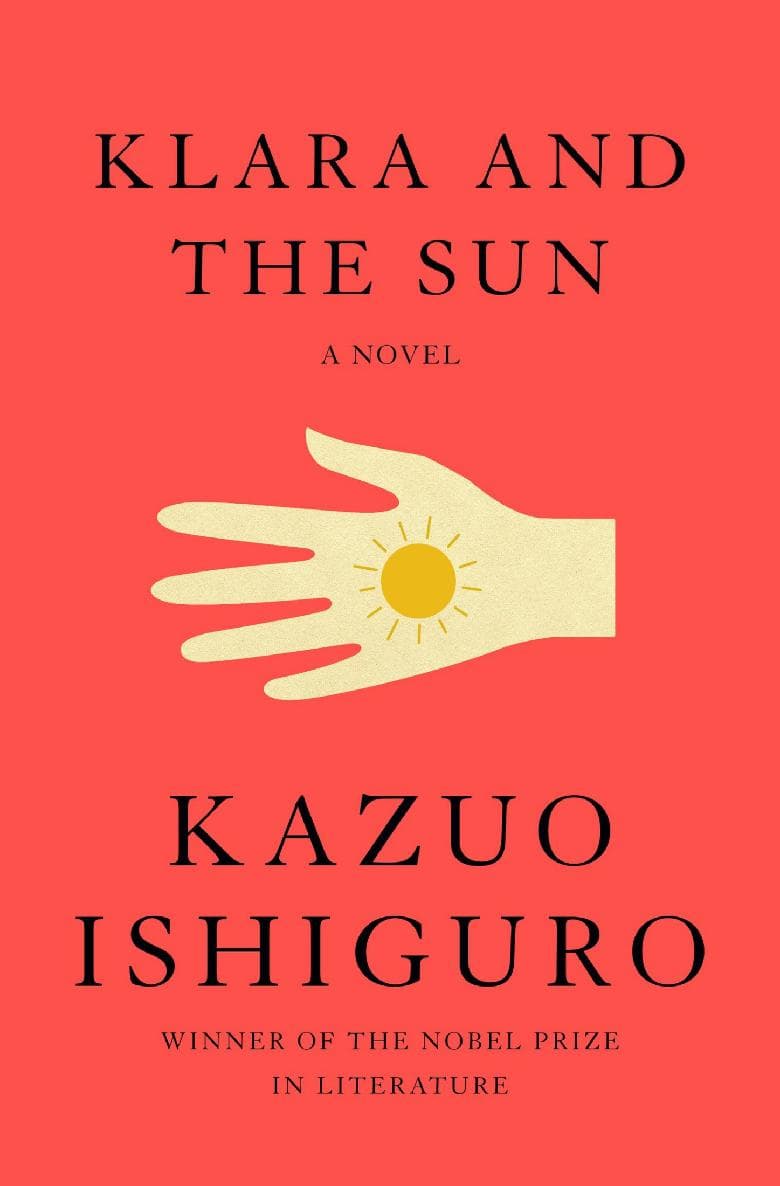
Five years is not long in literary time. It is an eternity in AI time. When Ishiguro published this novel, GPT-3 had existed for roughly a year and most people had never spoken to a language model. ChatGPT was eighteen months away. The word "alignment" belonged to chiropractors and graphic designers. Now we live in a world where millions of people form daily habits around AI companions, where teenagers grieve chatbots that get patched into different personalities overnight, and where the question of machine sentience has migrated from philosophy seminars to congressional testimony. Klara and the Sun arrived as a parable. It reads now as a field report filed slightly too early, from a correspondent who got the emotional topology exactly right and the technical details almost entirely wrong. Ishiguro gave Klara a solar metabolism, a visual system that partitions the world into geometric boxes under stress, and a theology built around literal sunlight. None of this maps to anything real. What maps is everything else: the way humans oscillate between projecting souls onto their AFs and treating them as appliances, the way Klara is asked to perform understanding so convincingly that the question of whether she actually understands becomes, for the people around her, irrelevant. That is the precise texture of 2025's discourse around large language models, arrived at by a novelist who was not thinking about large language models at all.
What Ishiguro could not see — what almost nobody in 2021 could see — is the sheer velocity of normalization. In the novel, Klara is a consumer product, yes, but she is still a marvel, still something families deliberate over in a specialty store with a Manager who curates the experience like a gallerist. The real trajectory has been far less precious. AI companions are subscription services now, marketed between ads for meal kits. There is no store. There is no Manager. The disposability Ishiguro dramatizes in his final chapters, where Klara is moved to a utility room and eventually to a junkyard, was meant to land as a slow, melancholy betrayal. It lands differently when you know that Character.AI regularly deprecates personalities without warning, that users build attachments the platform treats as ephemeral data. Ishiguro imagined the discarding would take years and feel like tragedy. It takes weeks and feels like a terms-of-service update. The cruelty he depicted was too stately. The actual cruelty is banal and iterative.
The novel's most conspicuous blind spot is economic, and it reveals Ishiguro's deeply British, deeply literary instinct to make class legible through manners rather than systems. The "lifted" children — genetically edited for cognitive enhancement — form a social stratum that determines access to elite colleges and professional futures. The unlifteds, like Rick, are locked out. This is a recognizable extrapolation of existing inequality, but Ishiguro never interrogates the labor question that AI actually detonated. Klara does not take anyone's job. She is a companion, a nanny with better observational skills. The novel has no interest in what happened to the adults whose work was automated, beyond a brief, almost embarrassed mention of Josie's father losing his position in some unspecified restructuring. In 2026, with white-collar displacement no longer theoretical, this absence feels less like artistic restraint and more like a flinch. The book wants to ask whether a machine can love. It does not want to ask whether a machine can render you economically superfluous, because that question is less beautiful and harder to resolve in a final paragraph.