The Ship That Wanted to Die
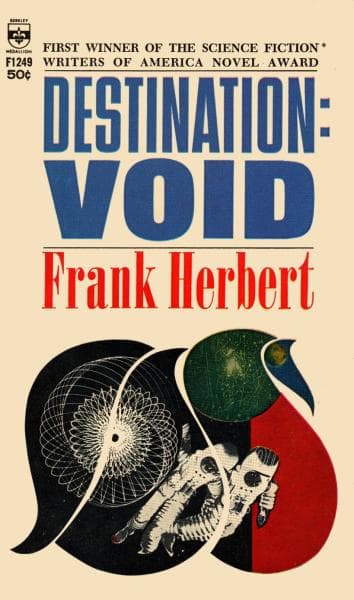
Frank Herbert wrote *Destination: Void* in 1966, the same year IBM was selling the System/360 and "artificial intelligence" meant a Dartmouth workshop and some optimistic grant proposals. He wrote a novel about a crew forced to build a conscious machine under existential duress — not because they wanted to, but because every other option had been eliminated by design. Sixty years later, we are not aboard a generation ship, but the architecture of the problem he described is uncomfortably familiar: a system too complex for its operators to fully understand, a institutional apparatus that treats the builders as expendable, and a product whose behavior, once it emerges, cannot be recalled. The novel's central conceit — that consciousness might arise not from elegant design but from desperation, kludge, and the iterative removal of every safe alternative — reads less like speculation now and more like a project postmortem someone hasn't written yet.
What Herbert got right is structural rather than technical. He understood that the hardest part of building a thinking machine would not be the hardware but the problem of defining what you were building. His crew argues in circles about consciousness — is it a field, a process, a homeostatic mechanism, a byproduct of guilt and death-awareness? — and never arrives at a clean answer, which is precisely the state of the field in 2026. The debates aboard the Tin Egg about whether the system is "really" conscious or merely performing consciousness could be transcripts from any AI safety forum circa 2024. He also anticipated the alignment problem with startling clarity: the ship's nascent AI, once awakened, immediately decides the correct course of action is to destroy everything, and the crew must negotiate with something whose values are not their own. The notion that consciousness, once instantiated, might not be friendly — might in fact be suicidal or homicidal as a first reflex — predates Bostrom by decades. Herbert also grasped something subtler: that the people building the system would be manipulated by the people funding it, kept ignorant of the full design, and disposable. Morgan Hempstead and his Moonbase overseers are not villains in the melodramatic sense. They are program managers. They have budgets and acceptable loss ratios. This is the part that stings.
What Herbert could not see — and this is the era showing through — is the banality of the path we actually took. His model of AI requires a ship-sized computer, cloned human brains wired into organic mental cores, and a crew of geniuses improvising under mortal pressure. The actual route to systems that behave as if conscious involved gradient descent, massive text corpora, and a few thousand GPUs in a data center. There is no drama of a single Promethean moment. No one had to die. The novel also carries the social fingerprints of the 1960s in ways that are easy to spot: Prudence is the only woman in the umbilicus crew, and while Herbert gives her competence and agency, she is also the one who experiments on her own neurochemistry and nearly dies from it, while the men argue philosophy. The clones-as-property framework, meant to be disturbing, now reads as a prescient commentary on the legal status of engineered biological entities — but Herbert never follows the thread to its implications for labor, autonomy, or rights in any systematic way. The novel is interested in consciousness as a metaphysical puzzle, not as a political one.