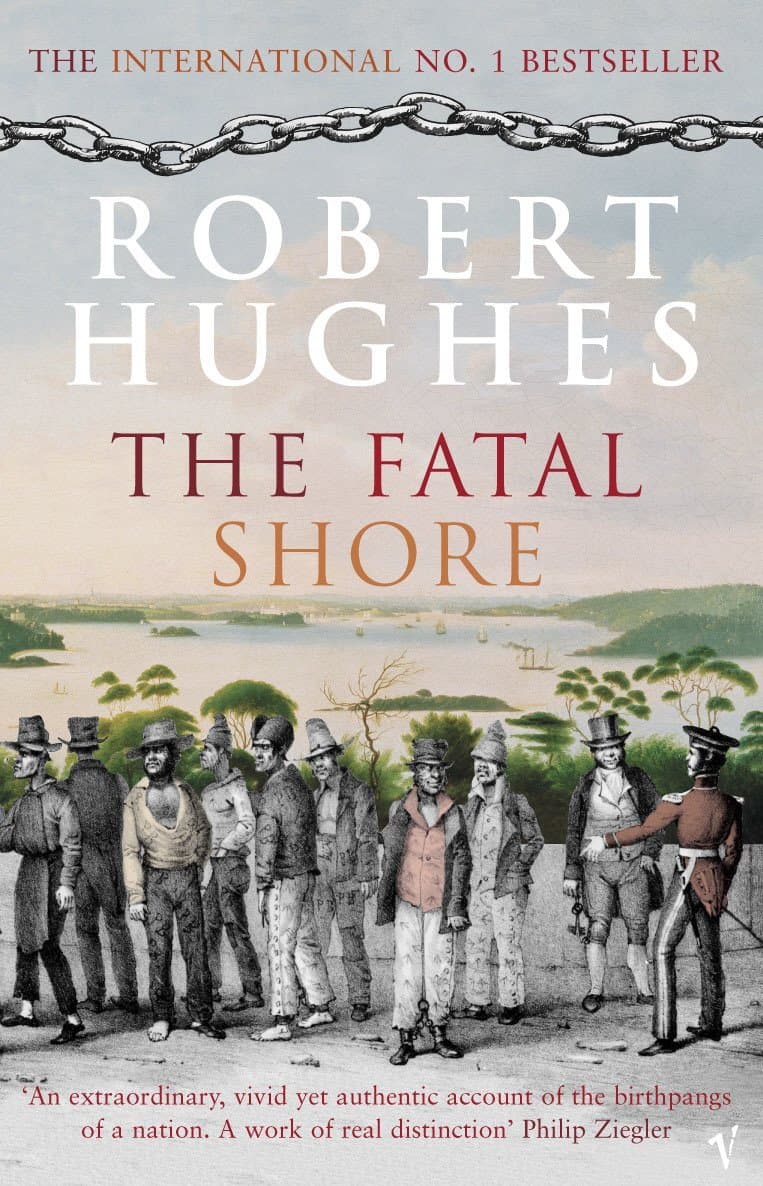
The Stain That Wouldn't Wash
Robert Hughes wrote *The Fatal Shore* at a moment when Australia was preparing to celebrate its bicentenary, and the timing was not accidental. The book arrived in 1987 like a mirror held up at a party — here is your face, it said, and you will notice the scar. Hughes understood something that has only become more legible in the decades since: that nations built on carceral foundations do not simply outgrow them. They metabolize them. The convict system he anatomized — its bureaucratic cruelty, its reduction of human beings to units of labor, its moral architecture designed to make suffering look like reform — reads now less like a closed chapter of imperial history and more like a template. The book anticipated, with uncomfortable precision, the way mass incarceration would become a defining feature of Anglophone democracies in the twenty-first century. Hughes did not predict the American prison-industrial complex or Australia's offshore detention regime explicitly, but he laid bare the logic that makes such systems possible: the belief that certain classes of people can be removed from society and warehoused at its margins, and that this removal constitutes justice. When he described the assignment system — convicts leased to private settlers, their labor extracted under threat of the lash — the resemblance to modern private prison labor contracts is not metaphorical. It is structural.
What Hughes could not see, or chose not to center, is now the most conspicuous absence in the book. The Aboriginal peoples of Australia appear in *The Fatal Shore* largely as landscape — encountered, noted, displaced, but never granted the narrative weight that the convict experience receives. Hughes was not ignorant of the devastation; he references the destruction of Tasmanian Aboriginal society and the broader colonial violence. But his frame is resolutely that of the transported Europeans. In 2026, after the failure of the Voice to Parliament referendum in 2023 and the ongoing reckoning with Indigenous sovereignty, this omission reads less like an editorial choice and more like a structural repetition of the very erasure Hughes documents elsewhere. The convicts were silenced by history; the First Nations peoples were silenced twice — once by the colony and again by its historian. Hughes wrote from within the assumptions of 1980s liberal humanism, where recovering the voices of white working-class convicts was itself radical. It was. But the hierarchy of whose suffering merited 600 pages now looks like a artifact of its era, a blind spot shaped by the same colonial optics the book critiques.