The Instruction Manual for a Machine That Changed Its Own Blueprints
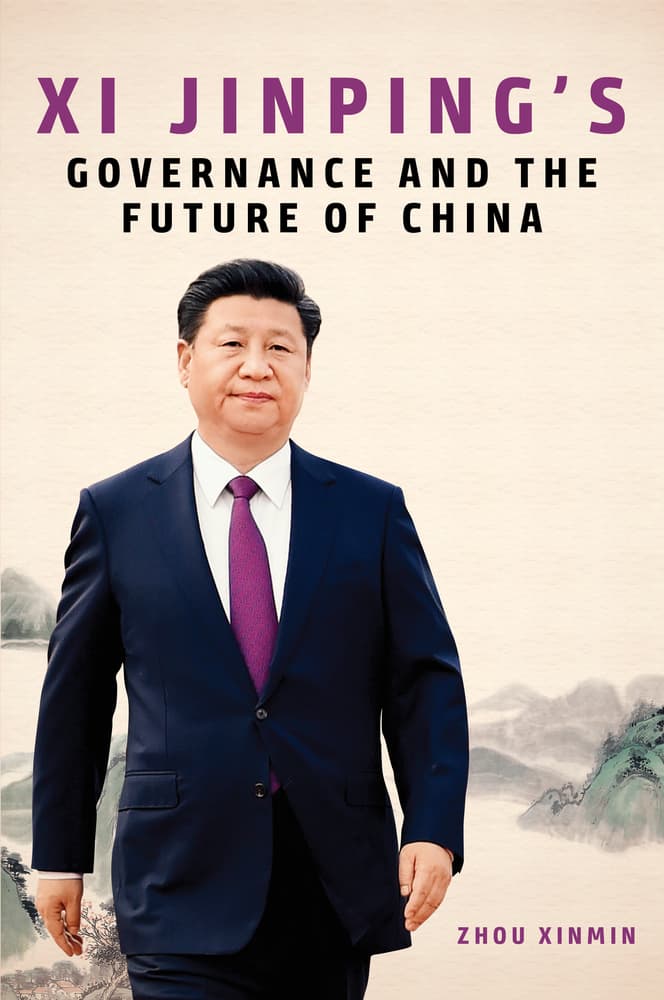
Zhou Xinmin's 2017 study of Xi Jinping's governance reads, nine years later, less like political analysis and more like a liturgical text — one whose devotional architecture reveals as much about the faith as about the deity. The book was written in the narrow window between the consolidation of Xi's first term and the abolition of presidential term limits in 2018, a fact that saturates every page with an unintentional dramatic irony. Zhou presents Xi's "core capabilities" — vision, tenacity, charisma, philosophical grounding — as qualities to be studied, systematized, and replicated across the cadre system. The premise is that governance excellence can be taxonomized and taught. What the subsequent decade demonstrated is that the system Zhou described was not building a replicable leadership framework; it was building a singular, irreplaceable center. The book anticipated the intensification of Party discipline, the deepening of anti-corruption campaigns, and the expansion of China's diplomatic footprint through Belt and Road — all of which accelerated precisely as described. It correctly identified that Xi's governance would be comprehensive, touching every sector simultaneously. What it could not anticipate, because the premise forbade it, was the cost of that comprehensiveness: the zero-COVID debacle, the real estate crisis that metastasized from Evergrande outward, the demographic cliff that no amount of "top-level design" could reverse, or the degree to which diplomatic assertiveness would curdle into isolation across multiple fronts.
The blind spots are structural, not incidental. Zhou writes extensively about "the New Normal" of slower but more sustainable economic growth, treating it as a managed transition rather than what it partly became — a euphemism for stagnation in key sectors, youth unemployment crises, and a consumer confidence problem that persisted well into the mid-2020s. The chapter on diplomacy and a "new world order" frames China's global posture as one of "pragmatic, inclusive diplomacy" oriented toward mutual benefit. Reading this after the deterioration of relations with the EU over Lithuania and Taiwan, after the effective decoupling of semiconductor supply chains, after the geopolitical freeze following Russia's invasion of Ukraine and China's studied ambiguity — the word "inclusive" does extraordinary rhetorical work. The book contains no mention of Taiwan as a flashpoint, no serious engagement with technological competition as a domain of great-power rivalry, no anticipation that AI governance and data sovereignty would become the defining battlegrounds of the 2020s. The internet barely exists in these pages. Social media, surveillance infrastructure, the social credit experiments already underway — absent. The "Chinese Dream" is discussed at length; the dreams of Chinese citizens who might not share it are not discussed at all.