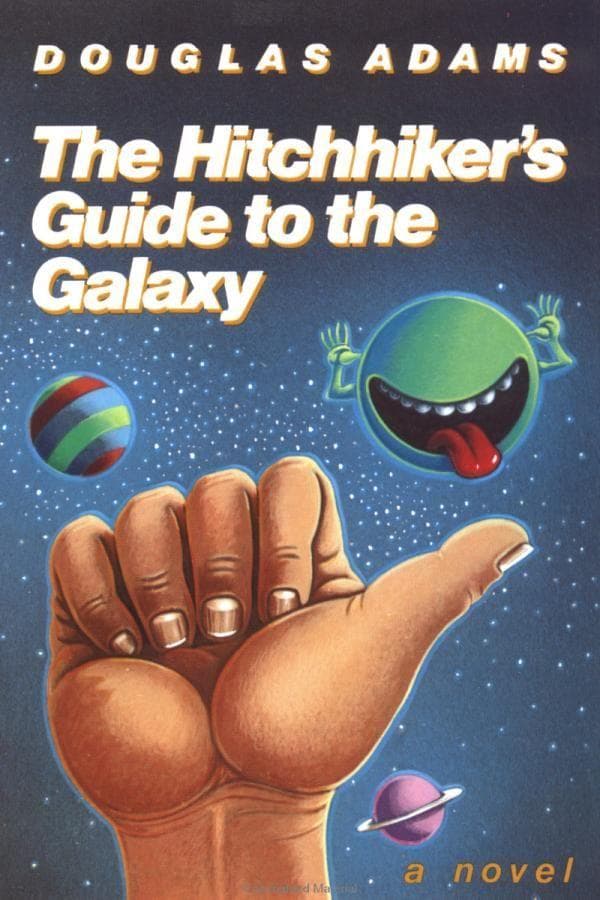
A Locked Cabinet in a Disused Lavatory
The scene everyone remembers correctly is the wrong one. It's not the demolition of Earth that does the real work in this book — the Vogons hanging their ships over every city, the "regrettably your planet is one of those scheduled for demolition." That part is spectacle, and Adams knew it, which is why he undercuts it immediately with quadrophonic sound and a joke about acoustics. The scene that has aged into something closer to documentary is the one four pages earlier, in the mud, with Arthur Dent and a man named Prosser arguing about a bypass. The plans were on display. Where? In a locked filing cabinet, in a disused lavatory, behind a door that said BEWARE OF THE LEOPARD. Nobody in the scene disputes that this constitutes proper notice. Prosser is embarrassed, not because the process was a lie, but because the process was followed badly — the display should have been better lit.
Forty-seven years on, this is not satire of English municipal planning. It's a description of the mechanism by which a great deal of the twenty-first century operates. The plans were on display: in the third screen of a terms-of-service update, in a public-comment period nobody was told about, in an easement filed correctly and mailed to an address that no longer receives mail. The genius of the scene — and I don't think Adams gets enough credit for the precision of it — is that he doesn't make the notice fake. It's real. It exists. The leopard sign is really there. The system's defense isn't deception, it's compliance so technically perfect that objection becomes procedurally impossible. Nobody has to lie to you. They just have to bury the truth competently enough that finding it counts as your failure, not theirs.
What the book couldn't have predicted is how thoroughly we'd volunteer for this. Prosser needed a bulldozer and a council mandate to demolish one house. We click through the locked cabinet ourselves, several times a day, and call it accepting cookies.
There's a second, quieter prophecy running underneath the first, and it's about the Guide itself rather than the plot. Ford Prefect's book is explicitly the discount option — "large and often startling amounts of information" delivered with a friendly cover that says DON'T PANIC, compared unfavorably on accuracy to the thorough, expensive, humorless Encyclopedia Galactica. Its entire entry on Earth, before Ford's edit, was one word: Harmless. After his contribution, expanded at some cost to an editor's patience, it becomes two: Mostly harmless. This is the founding joke of the whole book — that the reference work everyone actually carries and trusts is cheerful, underinformed, and confident regardless. Adams was writing a joke about paperback travel guides. He built, without needing to, a working description of why people ask a chatbot instead of opening a textbook: not because the chatbot is right, but because it is pleasant about being wrong, and pleasant scales.